Both cars look affordable, compact and economical when you first compare them. The difficult part comes later, when engine size, condition, duty and inland transport change the final Malawi bill.
A Honda Fit may suit family errands around Lilongwe or Blantyre because it uses its cabin flexibly. A Toyota Vitz may make more sense for compact urban commuting. This guide compares space, engine choices, fuel figures, petrol and hybrid ownership, servicing checks and import costs.
Quick Answer
- Choose the Honda Fit if you regularly carry passengers, shopping or luggage.
- Choose the Toyota Vitz if you want a compact petrol hatchback for everyday town driving.
- In 2022, Honda’s official archive listed 20.4km/L WLTC for one petrol Fit grade and 28.6km/L WLTC for one e:HEV grade (Honda Japan, 2022 Fit archive).
- Engine size, vehicle condition and landed cost matter more than the badge alone.
How do the Honda Fit and Toyota Vitz compare at a glance?
Both are five-seat Japanese hatchbacks, but the Fit leans towards flexible family use while the Vitz leans towards compact simplicity. Toyota Japan’s 2019 Vitz catalogue lists five seats, five doors and engine sizes from 996cc to 1496cc (Toyota Japan, Vitz catalogue, 2019). The exact Fit specification also changes by generation and grade.
The table compares one 2015 Honda Fit Hybrid with one 2014 Toyota Vitz petrol model. It is an illustrative vehicle comparison, not a universal comparison of every Fit and Vitz.
| Area |
Honda Fit HV example |
Toyota Vitz example |
| Year |
2015 |
2014 |
| Powertrain |
Hybrid |
Petrol |
| Engine size |
1,500cc |
1,300cc |
| Model code |
GP5 |
NSP130 |
| Seats |
Five |
Five |
| Transmission |
Automatic |
Automatic |
| Recorded mileage |
52,700km |
26,000km |
| Auction grade |
3.5 |
3.5 |
| Best fit |
Family errands, luggage and mixed driving |
Compact commuting and smaller households |
| Main check |
Hybrid system and battery evidence |
Engine, transmission and parts compatibility |
An auction grade is an inspection-based condition rating shown on a Japanese auction sheet. It helps describe the vehicle’s recorded condition, but it does not replace the sheet’s repair marks, corrosion notes, interior comments or inspection report.
The Vitz name is closely connected with the Yaris name used in other markets. That does not make every Vitz and Yaris identical. Always check the model code, engine and generation before ordering parts or comparing fuel figures.
For deeper model-code information, compare the Honda specifications with the Toyota specifications.
Honda Fit: flexible space in a small hatchback
The Honda Fit vehicles for Malawi make sense if you want a small car that can handle passengers, shopping and luggage. Honda’s 2013 Japanese launch information described the Fit’s centre-tank layout as a way to create a roomy interior within a compact body (Honda Global, Fit launch release, 2013). That packaging remains the model’s main appeal.
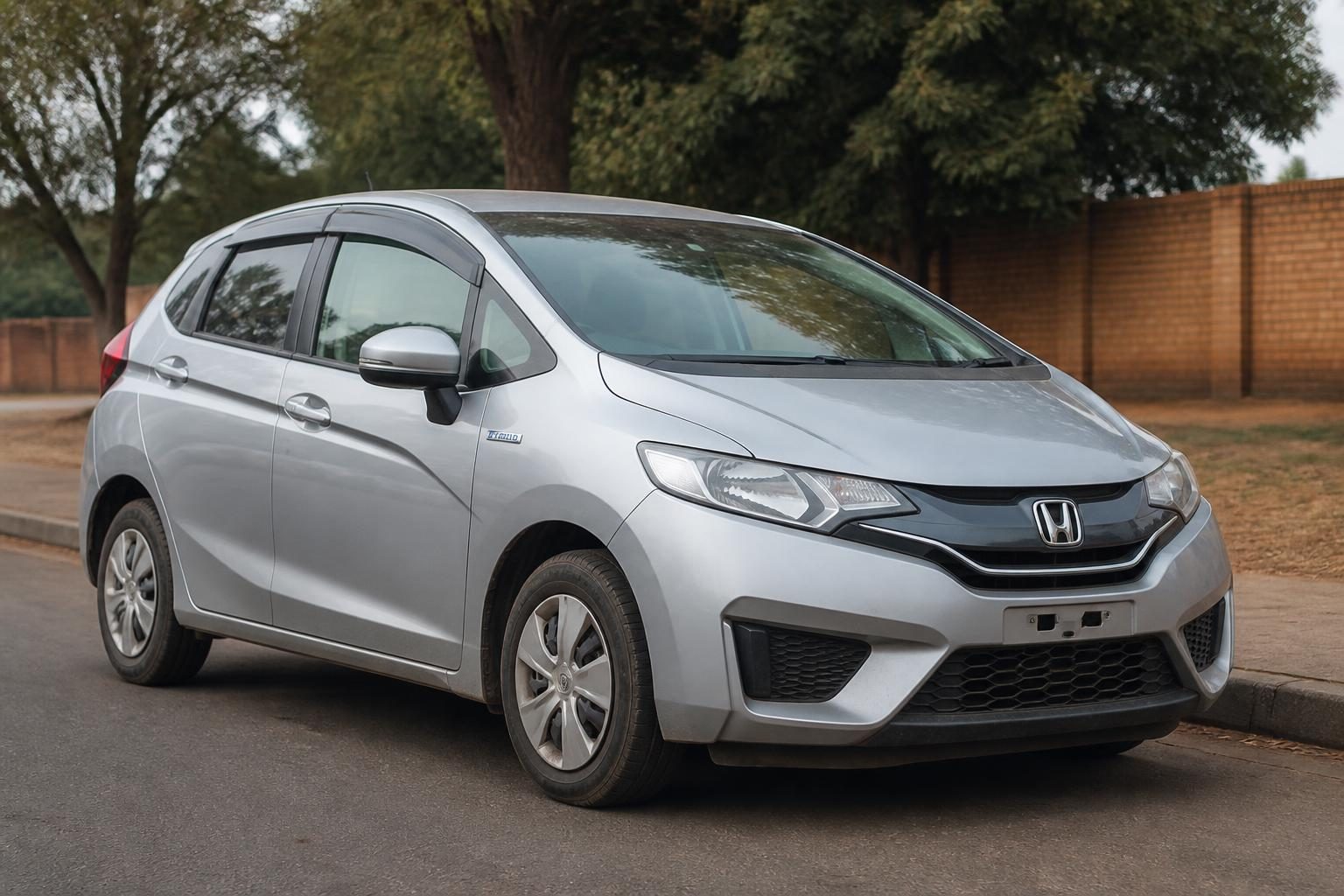 2015 Honda Fit HV
The selected 2015 example uses the GP5 model code and a 1,500cc hybrid powertrain. Its record shows five doors, five seats, automatic transmission, front-wheel drive and 52,700km. The auction grade is 3.5. Those details describe this vehicle only, not every Fit imported from Japan.
The selected Honda Fit HV example
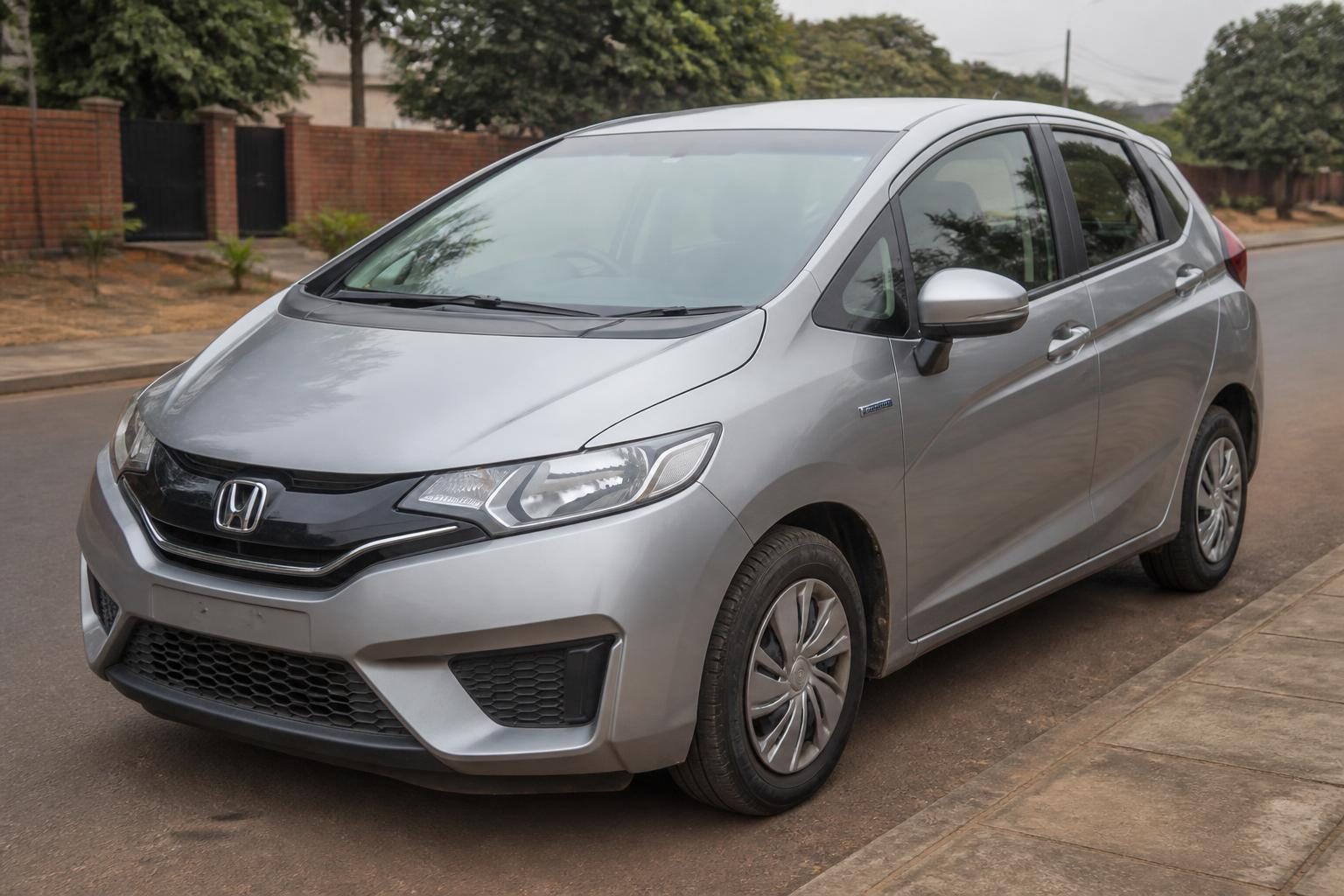 2015 Honda Fit HV
Honda’s 2013 Fit Hybrid used a 1.5-litre engine with a seven-speed dual-clutch hybrid system (Honda Global, Fit launch release, 2013). The selected GP5 record identifies the engine code as LEB and the engine size as 1,500cc. It also records a 40-litre tank and dimensions of 3,955mm long, 1,695mm wide and 1,525mm high.
The Fit is probably the better choice if your weekly routine includes family shopping, work equipment or luggage for a longer trip. Its rear-seat flexibility varies by generation, so confirm the exact arrangement. Skip a hybrid if the battery evidence is unclear or its landed cost stretches your budget.
A flexible cabin is valuable only when the vehicle itself is sound. A lower-grade Fit with unclear repairs can be worse value than a simpler petrol hatchback with cleaner condition evidence.
Toyota Vitz: a compact petrol budget option
The Toyota Vitz vehicles suit buyers who want a smaller urban hatchback and straightforward petrol ownership. Toyota’s official 2019 catalogue lists 996cc, 1,329cc and 1,496cc versions, with five seats and five doors (Toyota Japan, Vitz catalogue, 2019). That range gives Malawi buyers more engine-size choices.
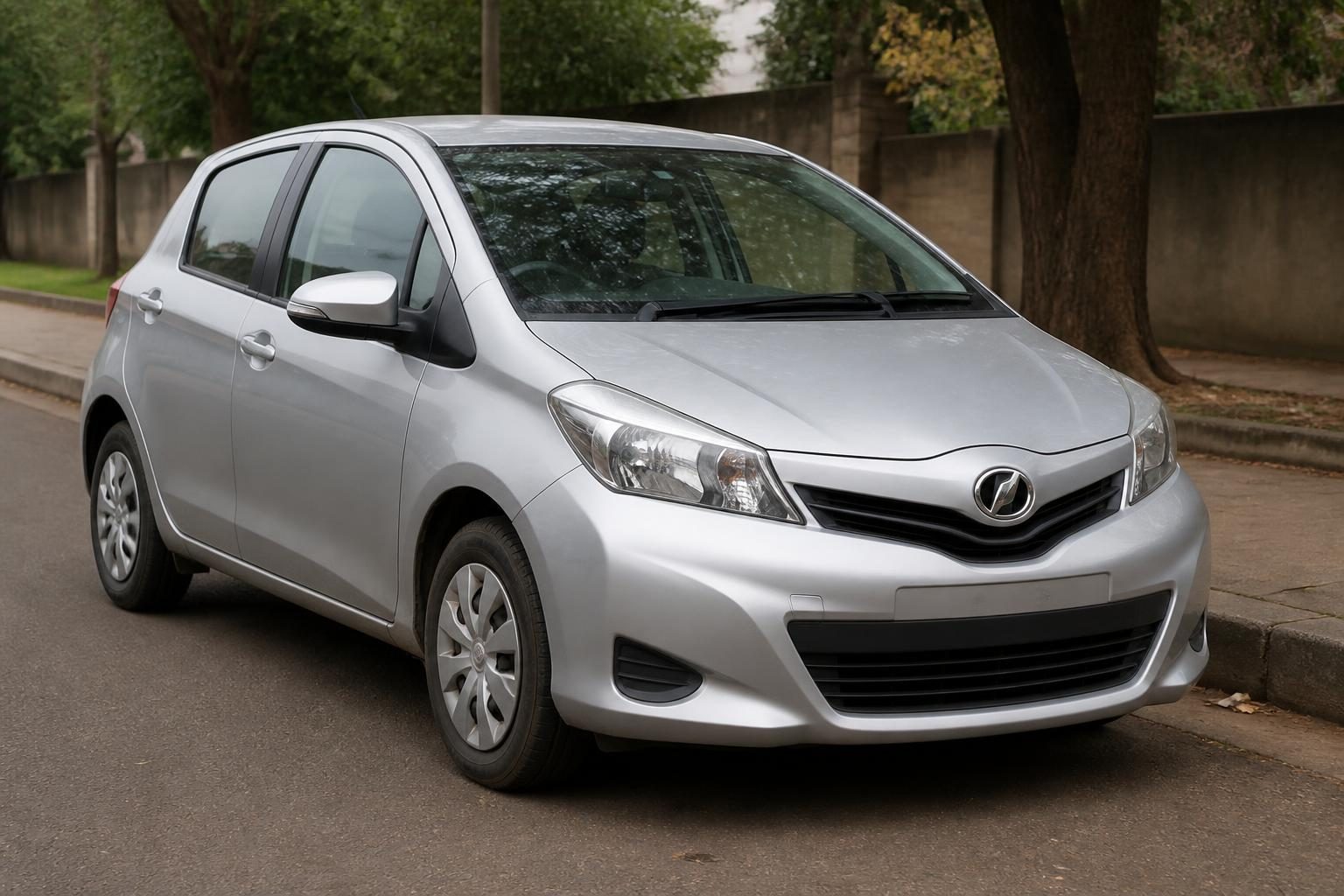 2014 Toyota Vitz
The selected 2014 Vitz uses the NSP130 model code, a 1,300cc petrol engine and automatic transmission. Its vehicle record shows five seats, 26,000km recorded mileage and auction grade 3.5. The compact body should be easy to place in busy streets, smaller parking spaces and regular Lilongwe or Blantyre commuting.
For context, Toyota’s 2019 catalogue gives the 1,329cc NSP130 a rated output of 99 PS and fuel economy of 25.0km/L under the JC08 cycle. Those figures belong to that specific year and grade. They should not be treated as the exact result for the selected 2014 car.
The Vitz is less convincing if you regularly carry bulky luggage or need maximum rear-seat flexibility. Low mileage alone is not enough. Check the auction sheet for repairs, corrosion, interior condition and signs of harsh use.
Why can the cheaper car cost more to import into Malawi?
A lower vehicle price does not guarantee a lower landed cost. Landed cost is the vehicle price plus shipping, taxes, customs clearance and inland transport. A 2024 Malawi Revenue Authority FAQ says that larger engine size can result in higher motor-vehicle duty (Malawi Revenue Authority, Frequently Asked Questions, 2024). Treat that as a warning, not a full calculation: the current tariff classification, customs value and vehicle details determine the final bill.
Think in price bands, not fixed figures. These are Japan vehicle or stock-price bands, not the complete Malawi bill. One example may sit under MWK10 million, another in the MWK10–15 million range, while a newer hybrid may move towards the MWK20 million mark. Treat them as budgeting guidance because listings change, and add duty, VAT, customs clearance and inland charges separately.
The vehicle price is not the complete Malawi cost. You must also consider shipping, customs valuation, duty, excise, VAT, clearance and inland transport. Tax treatment can vary by vehicle specification and current rules, so confirm the exact calculation before payment.
Carbarn’s current commercial import guidance says there is no general age limit and that ordinary imported vehicles must be right-hand drive, with special-purpose exceptions such as ambulances and fire engines (Carbarn Malawi import rules). This is not a government ruling, so confirm the applicable official requirements before ordering. Older cars still need closer checks on corrosion, service needs, parts and resale.
For current eligibility, tax and document guidance, see Malawi import rules and regulations.
Which uses less fuel, the Honda Fit or Toyota Vitz?
The Honda Fit and Toyota Vitz cannot be ranked fairly from one fuel figure because their official results use different test cycles. WLTC is a fuel-economy test cycle used for newer Japanese-market vehicles, while JC08 is an older Japanese test cycle. Honda’s 2022 archive lists 20.4km/L WLTC for the petrol Basic FF and 28.6km/L WLTC for the e:HEV Home FF (Honda Japan, 2022 Fit archive). Toyota’s October 2019 Vitz catalogue lists approximately 17.2–34.4km/L across that model period’s engines and powertrains under JC08, including 21.6km/L JC08 for a 1.0-litre petrol version and 25.0km/L JC08 for a 1.3-litre petrol version (Toyota Japan, Vitz catalogue, October 2019). These figures apply to specific grades, years and powertrains, not every Fit or Vitz.
WLTC and JC08 are different test systems. Do not place a Fit WLTC result beside a Vitz JC08 result and call it a fair winner. Traffic, air-conditioning, passengers, tyre pressure, gradients and driving style also affect actual consumption.
Some buyers may prefer a hybrid for stop-start town use, but this is a buying consideration rather than a promise of lower real-world fuel use. Battery condition, repair history and the purchase premium still matter. A clean petrol car can be better value than a cheaper hybrid with unclear system evidence.
Which car is better for family use, servicing and daily driving?
The Fit generally suits family errands and luggage better, while the Vitz is easier to justify as a compact daily commuter. Toyota’s 2005 Vitz release highlighted flexible seat arrangements and increased luggage space within compact dimensions (Toyota Global, redesigned Vitz release, 2005). Exact seat folding still depends on the grade and generation.
The Fit’s hatchback shape is useful for shopping, work equipment and occasional longer trips. The Vitz has a smaller footprint, which can help when parking or moving through crowded urban streets. Both are more naturally suited to ordinary paved-road journeys around Lilongwe and Blantyre than to rough-road work. Neither is a rough-road SUV.
Servicing requires more than checking the badge. Confirm the engine code, transmission, drivetrain and generation before ordering parts. Filters, tyres, suspension items and routine service components may be easier to source than model-specific parts, but availability can vary between Lilongwe, Blantyre and other locations.
For a hybrid, request any battery-related inspection notes, warning-light history and service records. A five-seat petrol Vitz with clear condition evidence may be the safer financial choice for a buyer who wants simpler ownership.
A useful inspection habit is to read the auction sheet before admiring the photographs. Start with the grade, odometer, accident marks, corrosion notes, interior comments and tyre condition.
Which one makes more sense for your budget?
The Honda Fit is the stronger choice if you carry passengers, shopping or luggage regularly. The Toyota Vitz is the simpler fit for compact city commuting and smaller households. Toyota’s 2019 Vitz catalogue lists engine sizes from 996cc to 1496cc, while the selected Fit uses a 1,500cc hybrid powertrain (Toyota Japan, Vitz catalogue, 2019). Engine capacity can therefore be part of the budget decision, not just a performance detail.
A 1.0-litre or 1.3-litre Vitz may appeal if keeping engine capacity lower is important. A Fit Hybrid or Vitz Hybrid can suit urban driving, but only when the battery evidence, auction history and full landed cost make sense.
Avoid either model when the inspection evidence is weak, the auction history is unclear or expected repairs remove the purchase saving. The cleanest, properly documented car with a manageable final cost is more important than the model badge.
Compare Honda Fit model years and configurations and Toyota Vitz petrol and hybrid options.
How can you compare an import before paying?
A reliable comparison should include two condition records, the exact vehicle specification and a written cost breakdown. It should also show where the vehicle is located, how it will travel and which charges remain separate.
Check the auction grade, odometer, accident or repair history, corrosion, interior condition, tyres, warning lights, hybrid notes, engine code and transmission. Then compare the vehicle price with the estimated landed cost. Do not assume the cheapest listing is the cheapest complete purchase.
The journey also matters. Malawi is landlocked, so the vehicle travels from Japan to Dar es Salaam before continuing by road. The final inland transport arrangement should be clear before payment.
In the final paragraph, Carbarn’s Japanese vehicle sourcing service provides Japan-based vehicle sourcing for Malawian buyers, lists Japan-stock vehicles, and supplies an official Japanese auction sheet plus a Carbarn inspection report before payment. Its vehicle price includes the vehicle, shipping and inspection, while duty, VAT and customs clearance remain separate.
Vehicles travel by RoRo from Japan to Dar es Salaam. Carbarn’s published estimate is about 24 to 34 days to the port, while inland delivery into Malawi takes additional time and can vary with shipping and transport arrangements. Buyers can use the dashboard for invoices, inspection reports, bill of lading, certificates and vessel tracking, with payment arranged through an official proforma invoice.
Read how the Japanese import process works for selection, payment, inspection, shipping and tracking.
Conclusion
The Honda Fit is the better fit for flexible cabin space, family errands and regular luggage. The Toyota Vitz suits compact commuting, smaller households and buyers considering lower-capacity petrol options.
Hybrids can reduce fuel use, but only after checking battery evidence, condition and the complete landed cost. Before choosing, compare the auction sheet, inspection report, engine size and proforma invoice. The cheapest-looking car is not always the cheapest vehicle to bring into Malawi.