


For hybrid vs electric cars in Malawi, a hybrid suits more driving patterns, while an EV suits prepared owners with dependable home charging. Fuel prices can make an electric car look like the obvious choice. Yet charging access, power cuts and longer journeys can change the calculation quickly.
A hybrid still uses petrol, so it can refuel at most ordinary petrol stations. A full electric vehicle, or EV, uses no petrol, but it needs dependable charging. That difference matters when you travel between Lilongwe, Blantyre, Mzuzu, Zomba and smaller districts.
This guide compares purchase and import costs, energy bills, home charging, public infrastructure, battery checks and servicing. It also explains where a Toyota Aqua, Nissan Note e-POWER or Nissan Leaf may fit. If importing is new to you, start with this guide to the vehicle buying process.
Quick Answer
- A conventional hybrid is the safer practical choice if you lack dependable home charging or travel frequently between districts.
- A full EV can cost less to energise when home charging is safe, affordable and dependable.
- In 2024, a regional brief reported no public chargers for electric cars or buses in Malawi at the time of its assessment.
- Power cuts may delay an EV’s next recharge. They do not stop a charged EV from driving.
- Compare the vehicle price, landed cost, energy bill, battery condition, servicing and route flexibility together.
What Is the Difference Between a Hybrid and an Electric Car?
In 2026, Nissan’s official e-POWER explanation describes a system where the electric motor provides 100% of wheel drive, while petrol powers the generator. A conventional hybrid can use both engine and motor drive. A full EV uses only electricity and must be charged externally. (Nissan, “e-POWER overview and differences”, 2026)
A conventional hybrid combines a petrol engine, a smaller battery and one or more electric motors. The battery charges through regenerative braking and engine operation. Regenerative braking means the car captures some energy while slowing down, rather than wasting all of it as heat through the brakes.
You normally do not plug in a conventional hybrid. That makes it simple for daily driving, especially when you do not have secure parking or reliable electricity at home. It can still save fuel in stop-start traffic around Lilongwe or Blantyre.
A series hybrid uses a different arrangement. The electric motor drives the wheels, while a petrol engine generates electricity. Nissan calls this system e-POWER. It can feel closer to an EV because the motor controls the driving response, but it still burns petrol.
A battery EV, also called a BEV, has no petrol engine. Its traction battery powers the electric motor through an inverter. The vehicle must receive electricity from a household socket, wallbox, workplace charger or public charging point.
| Vehicle type | Uses petrol? | Needs external charging? | Power-cut flexibility | Public charging dependence |
|---|---|---|---|---|
| Conventional hybrid | Yes | No | High | Low |
| Series hybrid | Yes | No | High | Low |
| Plug-in hybrid | Usually | Yes for best results | Medium to high | Medium |
| Full EV | No | Yes | Depends on battery charge | High without dependable private charging |
The Toyota Aqua hybrid is an example of a conventional hybrid. A Nissan Note listing should be checked for its exact variant before you call it e-POWER. The Nissan Leaf electric car range is a full EV category, but the model page’s dynamic data and fuel labels still require individual verification before publication or import.

A compact car drives through a busy urban street during the day.
Citation capsule: A conventional hybrid uses petrol and electric assistance without requiring external charging. Nissan’s e-POWER system uses a petrol engine as a generator, while a high-output electric motor drives the wheels. A full EV removes the petrol generator entirely, so every journey depends on stored battery energy and access to electricity. (Nissan, “e-POWER overview and differences”, 2026)
Which Is Cheaper to Buy and Import in Malawi?
In 2026, Malawi Revenue Authority customs measures revise vehicle-tax treatment through classifications and engine-capacity bands, rather than one simple rule for every electrified car. The purchase winner therefore depends on age, battery condition, engine size, customs value and the final landed-cost assessment. (MRA, “New Customs and Excise Tax Measures for the 2026/2027 Financial Year”, 2026)
A vehicle’s advertised price is only one part of the import decision. You also need to consider shipping, inspection, customs valuation, import duty, excise duty, VAT and customs clearance.
Duty, VAT and clearance are separate from the vehicle and shipping price shown on an import quote. The exact result can vary between a small hybrid, a larger hybrid and a battery EV. Current tax guidance has changed, so do not rely on an old calculator or an outdated blog figure.
Malawi’s published tariff classifications include vehicles older than eight and 12 years, but that page alone does not establish eligibility for every vehicle type (Malawi Trade Portal). Confirm the exact vehicle’s eligibility and current tax treatment with MRA before shipping. Age still matters, though. An older vehicle may have more battery wear, fewer remaining parts or weaker resale demand, depending on the model and local support.
Use this checklist when comparing two imported vehicles:
- Vehicle price in MWK.
- Model year and age.
- Engine size or battery capacity.
- Auction grade and auction-sheet comments.
- Odometer reading.
- Inspection-report findings.
- Estimated landed cost.
- Expected battery and servicing costs.
- Charging equipment required.
- Likely resale demand in Malawi.
A lower purchase price can hide a higher ownership cost. An older Leaf may look affordable until you add a charger, battery diagnosis, transport planning and possible battery work. A hybrid may cost more at the start but give you simpler refuelling and broader route flexibility.
[UNIQUE INSIGHT] Import tax can also change the technology decision. A small hybrid may benefit from a different treatment than a larger hybrid, while an EV may be assessed under another classification. The safest comparison is vehicle-specific, not based on a general percentage copied from an older article.
For current rules, review the Malawi import rules and regulations and request the final figures on the proforma invoice. Treat any online estimate as an estimate until the exact vehicle has been assessed.
Citation capsule: Imported hybrid and EV costs cannot be compared from vehicle price alone. Malawi’s 2026/2027 customs measures revise treatment by vehicle classification and engine-capacity bands. Buyers should compare the exact vehicle, customs value, inspection evidence and estimated landed cost, then confirm the final duty, VAT and clearance amounts before payment. (MRA, “New Customs and Excise Tax Measures for the 2026/2027 Financial Year”, 2026)

A buyer reviews receipts and bills at a desk with calculator, car keys and laptop.
Which Costs Less to Run: a Hybrid or an EV?
In 2026, Toyota’s official Aqua specification lists 27.2 km/L under the WLTC test cycle for one specification, while Nissan lists 28.4 km/L WLTC for a 2WD Note configuration. A full EV can use less energy, but the result depends on fuel prices, electricity tariffs, charging losses and driving conditions. (Toyota, “Aqua specification comparison”, 2020; Nissan, “Note environmental information”, 2026)
The official figures are useful comparisons, not promises. Air-conditioning, traffic, hills, speed, tyre pressure and passenger load all affect real-world consumption. WLTC and JC08 are also different test cycles, so they should not be mixed in one table without clear labels.
For a hybrid, use this formula:
Annual fuel cost = annual kilometres ÷ km/L × petrol price
For an EV, use this formula:
Annual charging cost = annual kilometres × kWh per kilometre × electricity tariff × 1.10
This scenario treats charging losses as an explicit 10% additive assumption, so it multiplies the vehicle-energy estimate by 1.10. The figure of 0.145 kWh per kilometre is derived from 40 kWh ÷ 275 km. It is not Nissan’s official wall-to-wheel consumption figure, and 275 km is a variant-specific laboratory/WLTP range. Replace the electricity tariff with the current, verified domestic rate before calculating a Malawi bill.
Use the formulas above as a dated template rather than a permanent saving claim. Insert the current petrol price, verified electricity tariff, annual distance, vehicle efficiency and charging-loss assumption, then compare the result with installation, battery, tax and servicing costs.
An EV may produce the lower energy bill when the verified tariff and vehicle inputs favour it. That result is not the same as proving that the EV is cheaper to own. The calculation excludes home wiring, solar panels, battery storage, specialist diagnostics, public-charging fees, battery degradation, taxes, tyres and the initial vehicle-price difference.
Fuel prices and electricity tariffs can change. Use a current MERA petrol price and a reachable, official electricity tariff as dated scenario inputs, not permanent prices.
A hybrid may remain the cheaper ownership decision if you value flexible refuelling and drive long distances. An EV may win if your electricity supply is dependable and your daily routes are short and predictable.
Citation capsule: An EV can have a much lower energy cost than a hybrid, but the saving depends on local inputs. Using a 27.2 km/L WLTC Aqua figure, a 40 kWh/275 km Leaf scenario, a verified Malawi electricity tariff and 10% charging losses, the EV may use less paid energy. Installation, battery and route costs remain outside the calculation.
Can You Charge an Electric Car Safely at Home in Malawi?
In a 2024 Malawi household survey based on 2023 conditions, 74.3% of grid-connected households reported electricity availability for more than 22 hours per day. That is encouraging, but it still leaves a significant minority facing less consistent supply. Home charging therefore needs a practical backup plan. (Malawi Ministry of Energy, “Malawi Multi-Tier Framework Country Diagnostic Report”, 2024)
Home charging may be possible if you have secure parking, suitable wiring and a qualified electrician who can assess the circuit and earthing. A standard household socket can support slow charging, but its safety depends on the condition and capacity of the electrical installation.
A dedicated circuit is preferable to using a permanent extension cable. The vehicle’s charging speed and plug type must also match the equipment available at your home. Confirm these details before importing the vehicle.
Solar panels and a battery system can make EV ownership more resilient. They also add an upfront cost. Include the installation, maintenance and battery-replacement allowance in your ownership calculation.
Before importing an EV, answer these five questions:
- Do you have secure off-street parking?
- Can a qualified electrician inspect the wiring and earthing?
- Can the vehicle charge overnight at a safe speed?
- Do you have solar, battery or generator backup?
- Can you charge at work or at your usual destination?
A power cut does not stop a charged EV from driving. It may stop the next recharge, which matters if you use the vehicle all day or face an emergency journey.
The Ministry of Energy is expanding access through grid extension and mini-grid projects. Electricity access, however, is not the same as dependable vehicle charging at a specific home. Ask a local electrician to assess your actual connection rather than relying on national averages.
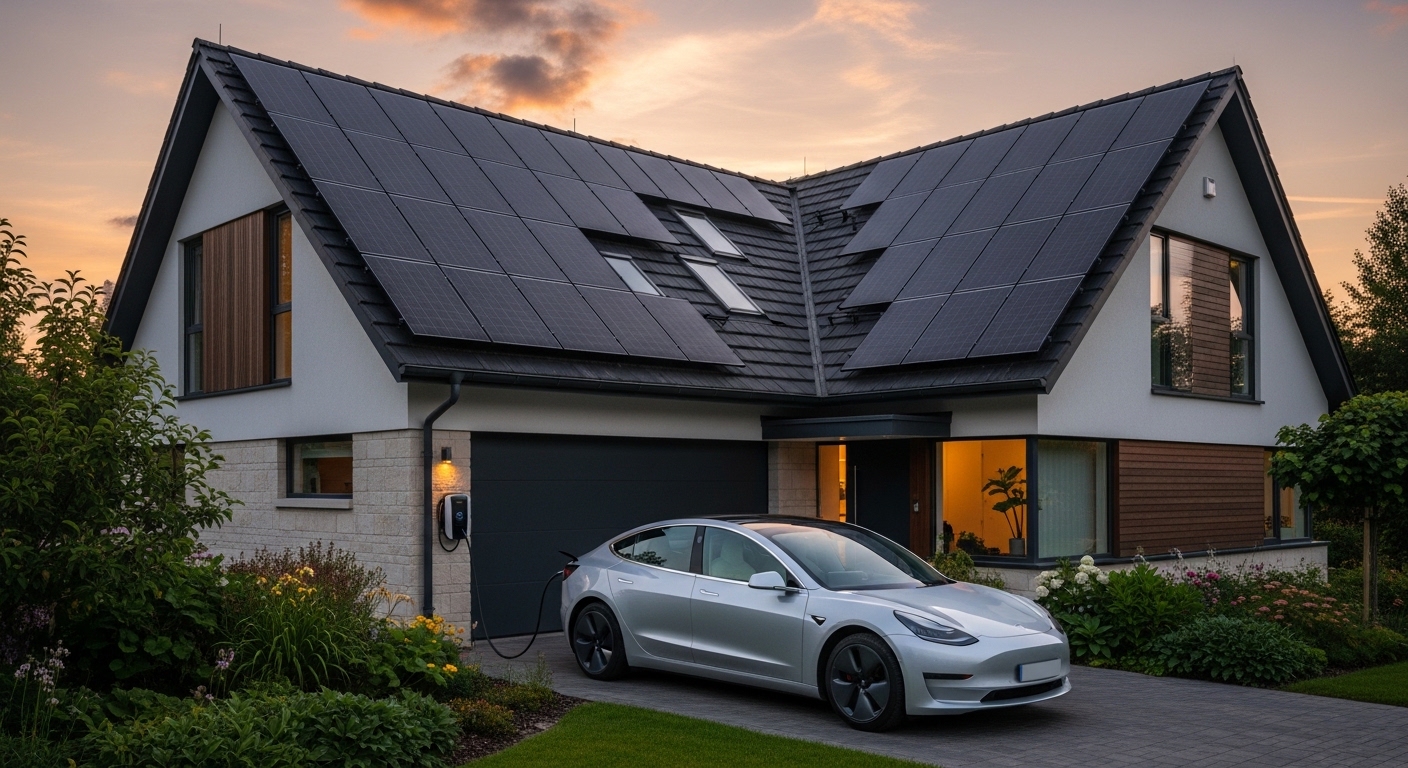
An electric car charges outside a modern home with solar panels on the roof.
Citation capsule: Home charging is the main condition for practical EV ownership in Malawi. The 2024 Malawi household survey found that 74.3% of grid-connected households had electricity available for more than 22 hours daily, but that does not guarantee reliable charging at every property. Safe wiring, secure parking and backup power still matter.
How Practical Is Public EV Charging for Long Trips in Malawi?
In 2024, the Africa E-Mobility Alliance reported no public chargers for electric cars or buses in its Malawi country assessment at that time. The brief did identify charging activity for electric motorcycles. This is a dated snapshot, not proof that no passenger-car charger exists today. (Africa E-Mobility Alliance, “Malawi Country Brief”, 2024)
Public charging is the main weakness for drivers who travel beyond predictable urban routes. A charger advertised online may not support your vehicle, may require a different connector or may not be operating when you arrive.
Before relying on any charger, confirm:
- Passenger-car compatibility.
- Connector type.
- Charging speed.
- Exact location.
- Operating hours.
- Access rules.
- Payment method.
- Recent operating status.
- A backup option if the charger is occupied or offline.
This matters on routes between Lilongwe, Blantyre, Mzuzu and Zomba. A full EV may work well for a short daily commute, then become difficult during an unplanned intercity trip.
| Use case | Hybrid fit | Full EV fit |
|---|---|---|
| Daily urban commuting | Strong | Possible with home charging |
| Frequent intercity travel | Strong | Requires careful route planning |
| Rural district travel | Generally easier | Depends on destination charging |
| Home solar charging | Not needed | Improves practicality |
| Emergency or unplanned trips | Flexible | Depends on battery charge |
[ORIGINAL DATA] This route matrix is an editorial assessment based on charging dependence, not measured road testing. It shows why route flexibility deserves the same attention as energy cost.
Public passenger-car charging in Malawi remains limited. Treat online charger references as point-in-time information until the connector, access and operating status are confirmed.
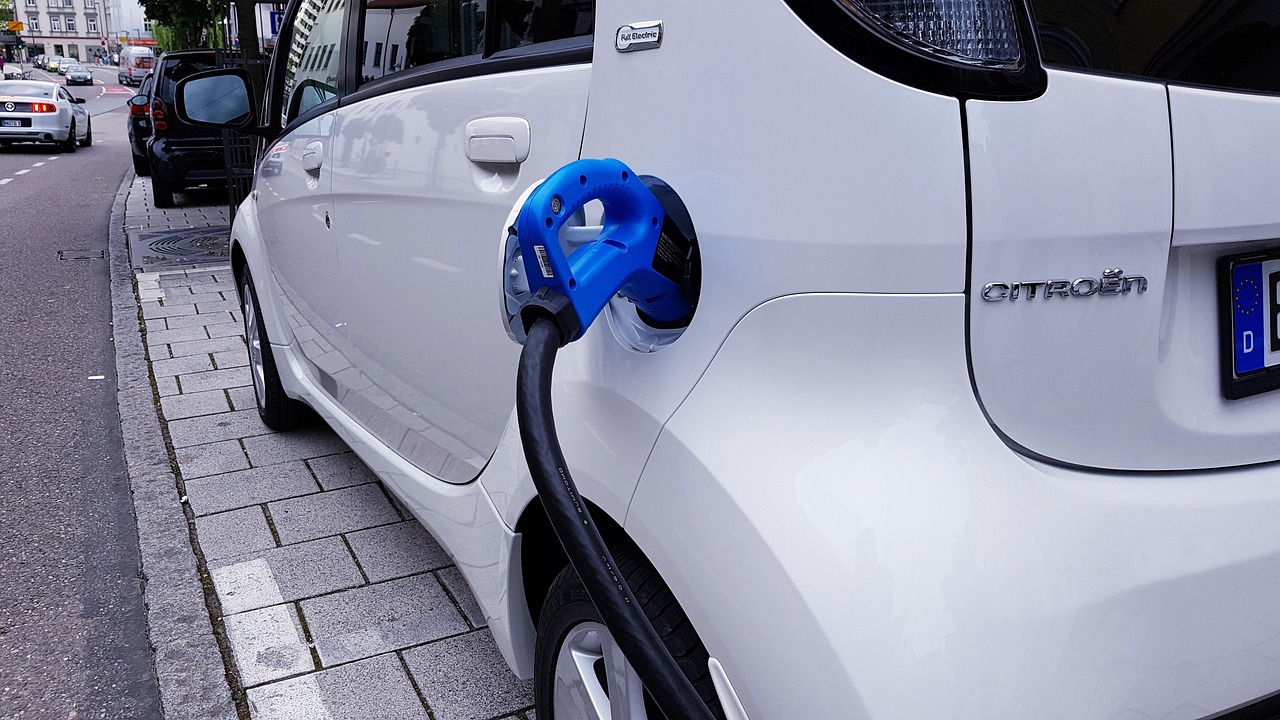
Public charging must be checked for compatibility, access and operating status before a long trip.
Citation capsule: Public EV charging in Malawi should be treated as a developing service rather than a dependable national network. The Africa E-Mobility Alliance’s 2024 assessment reported no public chargers for electric cars or buses at that time. Buyers should verify passenger-car compatibility, connector type, access and operating status before planning a long journey.
Power Cuts and Electrified Cars
In the 2024 Malawi household survey, 14.9% of grid-connected households reported between four and 14 or more outages per week lasting more than two hours in total. A separate institutional survey found 90.2% of grid-connected health facilities experienced four to 14 unscheduled outages weekly. (Malawi Ministry of Energy, “Malawi Multi-Tier Framework Country Diagnostic Report”, 2024; Malawi Ministry of Energy, “Access to Energy by Institutions”, 2024)
The health-facility figure is not a household average. It is useful as an indicator of wider electricity reliability, especially for buyers considering a vehicle that needs regular charging.
A hybrid can continue driving through a power cut because it refuels with petrol. A full EV can also continue driving while its battery has enough charge. The problem begins when the next recharge is delayed.
A commuter travelling a short, predictable distance may manage with an EV. A family that needs emergency transport, or a business using one vehicle all day, may value the hybrid’s fuel backup more.
Solar and battery storage can reduce the risk. A generator may also help, but charging through a generator requires a safe, compatible installation. Do not improvise with unsafe cabling.
Ask yourself a simple question: if the power goes off tonight, must the vehicle be ready for a long trip tomorrow morning? If the answer is yes, a hybrid gives you more options.
Citation capsule: Power cuts affect hybrids and EVs differently. A hybrid can refuel with petrol during an electricity interruption, while an EV can only recharge when suitable electricity is available. Malawi’s 2024 energy data records both household outages and wider institutional reliability problems, making backup charging important for EV buyers.
Hybrid and EV Servicing in Malawi
The Nissan Leaf model page’s market-intelligence section assesses parts and service support as limited, giving buyers a reason to inspect each EV carefully rather than relying on age or price alone. Listing counts, years and odometers are dynamic, so verify the exact vehicle page and its data on the publication date. (Nissan Leaf model page, Carbarn Malawi)
A hybrid combines familiar petrol-car maintenance with high-voltage components. You still need engine oil, filters, cooling-system checks, tyres and brake inspections. The hybrid battery, inverter and electric motor also require attention.
Regenerative braking can reduce conventional brake wear, but it does not remove the need for inspection. Brake callipers, tyres, suspension and underbody components still matter on Malawi’s roads.
An EV has fewer engine-related parts. It does not need engine oil or exhaust-system maintenance. Yet high-voltage diagnosis, charging faults and battery repairs may require specialist equipment and training.
Do not assume an EV is automatically cheap to maintain. Fewer moving engine parts can reduce some routine work, while a battery or charger problem can be more difficult to diagnose locally.
What should you check on a used hybrid?
- Battery diagnostic report.
- Auction-sheet comments.
- Warning lights.
- Cooling fans and battery ventilation.
- Smooth petrol-electric transitions.
- Regenerative braking behaviour.
- Accident or flood history.
- Odometer and service records.
- Inverter and hybrid-system condition.
What should you check on a used EV?
- Battery state-of-health report.
- Remaining driving range.
- Charging behaviour.
- Charging-port type.
- Warning lights.
- Underbody and battery-case damage.
- Flood or accident history.
- Diagnostic support.
- Replacement-module availability.
- Compatibility with your home electricity setup.
A low odometer reading does not prove strong battery health. Battery condition depends on age, usage, climate, charging history and storage. Ask for evidence rather than accepting a general statement about reliability.
The same rule applies to a hybrid. A Toyota Aqua page can show an auction grade, odometer, fuel type and inspection notes, but that does not replace a battery-health assessment.
Citation capsule: EVs have fewer engine parts, but battery and high-voltage support can be harder to access. Carbarn’s Nissan Leaf model page assesses parts and service support as limited. Buyers should verify the exact listing, then request battery evidence, charging information and accident history before comparing price.
Which Is Better for Your Driving in Malawi?
In 2024, 74.3% of grid-connected households reported electricity availability for more than 22 hours per day, but 14.9% also reported frequent longer outages. That mixed picture supports a qualified verdict: a full EV suits prepared owners, while a hybrid suits more driving patterns. (Malawi Ministry of Energy, “Malawi Multi-Tier Framework Country Diagnostic Report”, 2024)
A conventional hybrid makes more sense when you travel between cities, drive in several districts or cannot guarantee home charging. It saves petrol without changing how you refuel.
A full EV becomes more attractive when you have secure parking, reliable electricity, safe home charging and predictable daily routes. Solar or battery backup improves the case further.
A series hybrid such as a confirmed Nissan Note e-POWER variant can suit buyers who like electric-motor response but still need petrol flexibility. Check the exact model code because not every Nissan Note listing is e-POWER.
| If you… | More suitable direction |
|---|---|
| Commute in town but cannot guarantee charging | Conventional hybrid |
| Have reliable electricity and home charging | Full EV may fit |
| Travel frequently between Lilongwe and Blantyre | Hybrid is simpler |
| Have solar, secure parking and predictable routes | EV becomes more practical |
| Want electric-motor driving without plugging in | Series hybrid |
| Want to eliminate petrol use completely | Full EV |
| Want lower charging risk on an older import | Hybrid, subject to inspection |
| Rely only on public charging | Consider a hybrid instead |
You should probably delay an EV purchase if you have no secure parking, rely only on public chargers, travel frequently outside urban areas or lack a plan for power cuts.
[UNIQUE INSIGHT] The full EV may have the lowest energy cost, but the hybrid can be the cheaper ownership decision when you value emergency flexibility, route freedom and easier refuelling. A saving on electricity does not help if the vehicle cannot be charged before an important trip.
A conventional hybrid is likely to suit buyers who lack dependable home charging or travel frequently between districts. An EV can be a strong fit for someone who can charge safely every day and plan longer journeys carefully.
Citation capsule: A conventional hybrid suits buyers who need fuel flexibility and cannot depend on charging infrastructure or uninterrupted electricity. A full EV can be cheaper to energise, but it suits buyers with secure parking, reliable home charging, predictable routes and a practical backup plan.
How Can Carbarn Malawi Help You Compare a Hybrid or EV?
Carbarn’s buying guide says buyers receive two condition reports, including the Japanese auction sheet and an in-house inspection report. That evidence is more useful than an advertised price alone when comparing an older hybrid, a series hybrid or a full EV. (Carbarn Malawi buying guide, 2026)
[PERSONAL EXPERIENCE] When checking imported electrified vehicles, the most useful question is not simply, “How efficient is it?” It is, “Can the owner use it every day when electricity, charging access and longer routes are considered together?”
Carbarn Malawi’s imported vehicle listings cover Japan-sourced vehicles for Malawian buyers. The vehicle journey is by RoRo from Japan to Dar es Salaam, followed by road transport into Malawi.
Transit to Dar es Salaam is about 24 to 34 days, followed by inland transport. Check the individual proforma invoice for the vehicle, shipping and inspection inclusions. Duty, VAT and customs clearance are separate costs, and the vehicle page may show an estimated landed cost.
The buying guide says buyers receive the Japanese auction sheet and inspection report before payment. Confirm the payment terms and applicable service conditions for the exact vehicle before proceeding.
You can compare imported cars for Malawi, review Nissan Leaf vehicles, check vehicle specifications, and read how the buying process works. Compare the exact battery or engine details, auction grade, inspection report and estimated landed cost before deciding.