Fuel is the bill that never stops. At MK 5,661 a litre in September 2026, according to MERA-tracked pump prices compiled by DailyFuels, a modest 1.5-litre petrol car doing 1,000 km a month burns through roughly MK 340,000 before you've serviced anything. That's the number that makes people start reading about electric cars.
The Nissan Leaf is the one they land on. It's the most common used EV on the Japanese export market, it's right-hand drive, and Malawi has no import age limit, so even the early cars are legally fair game. But the Leaf is also the EV with the least forgiving battery design in hot countries, and that single fact decides whether it's a bargain or a headache.
This guide works through the real electricity maths at ESCOM's published tariff, compares the three battery generations you'll actually find, and is honest about where the Leaf falls short in Malawi, parts, resale and long-distance range.
The Bottom Line
- Charging a Leaf at home costs roughly MK 1,800 to MK 2,100 per 100 km at ESCOM's above-50 kWh domestic rate of MK 122.25/kWh (ESCOM tariffs, effective February 2025; the February 2025 hike confirmed by Nation Online).
- The same 100 km in a 1.5-litre petrol car costs about MK 34,000 at September 2026 pump prices. That's a gap of roughly 16 to 1.
- The Leaf has no liquid battery cooling, so hot-climate degradation is the main risk. First-generation packs have lost 25 to 40% capacity in 5 to 7 years in comparable hot regions (AmpAuto, 2026).
- Second-generation 40 kWh cars are far steadier: 8 to 18% loss by 160,000 km.
- Malawi had around 30 registered electric cars as of the 2026 Annual Economic Report. Public charging is effectively zero, so a home supply is not optional.
How Much Does the Nissan Leaf Cost to Run in Malawi?
A Leaf costs roughly MK 1,800 to MK 2,100 per 100 km in electricity at home. That comes from ESCOM's domestic prepaid tariff of MK 122.25 per kWh above the first 50 units (ESCOM, February 2025; hike confirmed by Nation Online), applied to real-world consumption of 15 to 17 kWh per 100 km once you account for air conditioning in Malawian heat.
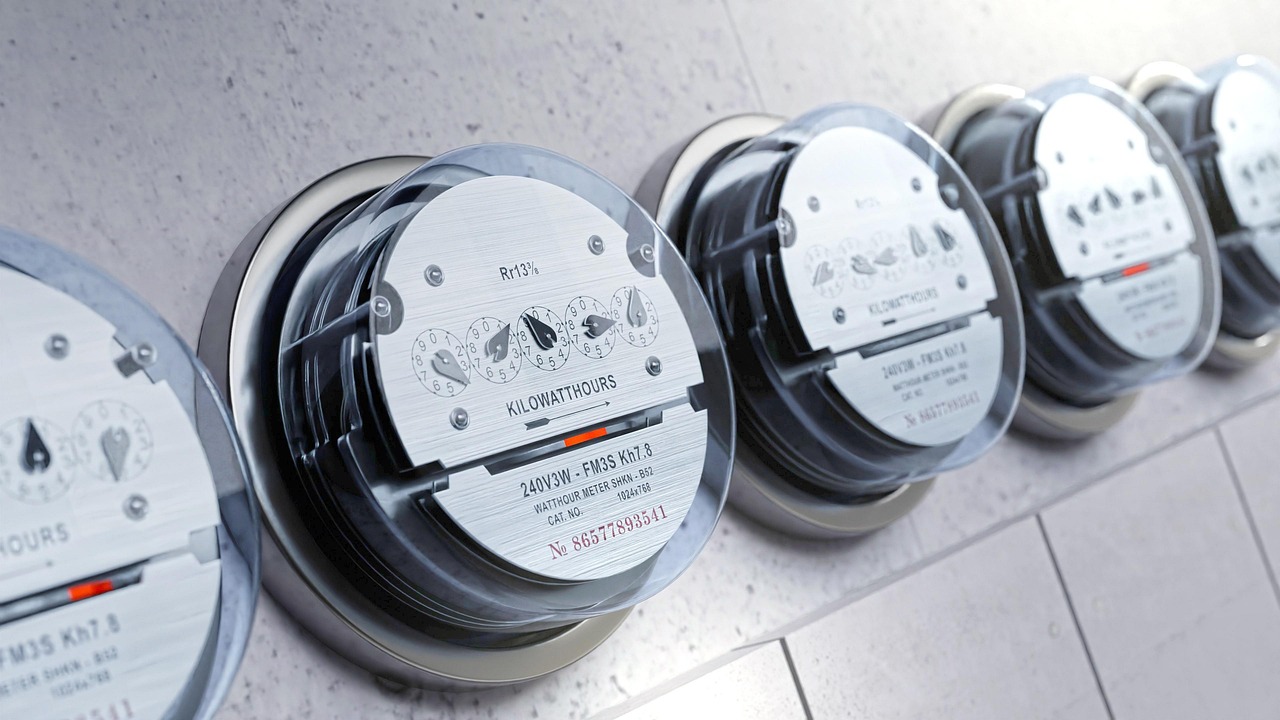 Analogue electricity meters measure electricity use in kilowatt hours.
The tier matters more than people expect. ESCOM's domestic prepaid rate is MK 79.90/kWh for the first 50 units each month, then MK 122.25/kWh after that. Your household already eats the cheap first tier with lights, a fridge and a kettle. Every unit the car draws lands in the upper band, so the higher figure is the honest one to plan with.
| ESCOM domestic prepaid tier |
Rate |
What it covers in practice |
| First 50 kWh per month |
MK 79.90/kWh |
Household basics, already used before you plug in |
| Above 50 kWh per month |
MK 122.25/kWh |
Almost all of your car charging |
| National blended average (2025–2026 est.) |
MK 151.20/kWh |
A composite across all tariff classes, including commercial |
Those tariffs are not frozen either. The same MERA-approved four-year plan that delivered the 16% rise in February 2025 has additional tranches scheduled, as Nation Online reported at the time. Even with that applied, the gap against petrol stays enormous. Electricity would have to roughly quadruple before a Leaf lost its advantage.
Petrol vs Electric: The Numbers Side by Side
The comparison is not close. At MK 5,661 per litre, a mid-size petrol hatchback costs about 18 times more per kilometre to fuel than a Leaf charged at home on ESCOM's upper-tier domestic rate. Even a Toyota Aqua hybrid, the usual efficiency benchmark in Malawi, costs around 12 times more.
| Vehicle |
Energy use per 100 km |
Cost per 100 km |
Cost per 1,000 km |
| Nissan Leaf, mild conditions |
15 kWh |
~MK 1,834 |
~MK 18,340 |
| Nissan Leaf, A/C on in the heat |
17 kWh |
~MK 2,078 |
~MK 20,780 |
| Toyota Aqua hybrid |
~4.5 L petrol (real-world est.) |
~MK 25,475 |
~MK 254,750 |
| Standard 1.5-litre petrol |
6.0 L petrol |
~MK 33,966 |
~MK 339,660 |
Electricity at MK 122.25/kWh (ESCOM, Feb 2025); petrol at MK 5,661/L (MERA via DailyFuels, Sep 2026).
A full charge is cheap enough to feel strange the first time. The 40 kWh pack costs roughly MK 4,890 to fill from empty. The 24 kWh car, about MK 2,934. Even the big 62 kWh e+ pack comes in around MK 7,580, which is about a litre and a third of petrol per 100 km of range.
Here's the part most comparisons miss. Those savings only exist if you own the socket. Rent a flat with a shared meter, park on the street, or rely on a landlord's supply, and the whole case collapses. The Leaf isn't a cheap car to run in Malawi. It's a cheap car to run at a house you control.
Which Nissan Leaf Generation Is Right for Malawi?
Malawi-eligible Leaf stock spans 2013 to 2022 across three battery sizes, and the differences are not cosmetic. Pack capacity ranges from 24 kWh to 62 kWh, nearly a threefold spread in range, while the official EV Database figures put the 40 kWh car's real-world range at 235 km in mild weather against a WLTP claim of 270 km.
| Generation |
Years |
Battery |
Real-world range (mild) |
Realistic Malawi range |
Best suited to |
| First generation |
2013–2017 |
24 kWh / 30 kWh |
~120–160 km when new |
70–110 km after degradation |
Short urban commutes, second car |
| Second generation (ZE1) |
2018–2022 |
40 kWh |
~235 km |
170–200 km |
Daily Lilongwe or Blantyre driving |
| Second generation e+ (ZE1) |
2019–2022 |
62 kWh |
~330 km |
240–280 km |
The only version worth considering for longer runs |
Malawi figures adjust official data downward for heat, air conditioning and degradation. Treat them as planning estimates, not specifications.
Odometer readings across Malawi-eligible Leaf stock run from 9,620 km to 114,710 km, and auction grades sit at 4 or 4.5. An auction grade is the Japanese inspector's overall condition score on the official auction sheet, where 4 means good condition with only minor cosmetic faults. For a petrol car that grade tells you nearly everything. For a Leaf it tells you nothing about the battery, which is the expensive part.
Gen 1: The 24 kWh Leaf, 2013 to 2017
The oldest Leaf on offer, a 2013 Nissan Leaf showing just 16,000 km, is the cheapest route into electric driving and the one that needs the most caution. An odometer that low on a thirteen-year-old car usually means long periods parked, and a lithium pack sitting at high state of charge in the heat degrades whether you drive it or not. Calendar ageing is as real as mileage ageing.
Gen 1 models on Carbarn's Nissan listings are the most affordable entry point, typically priced under MK15 million, though the exact figure varies with auction grade, mileage and shipping timing.
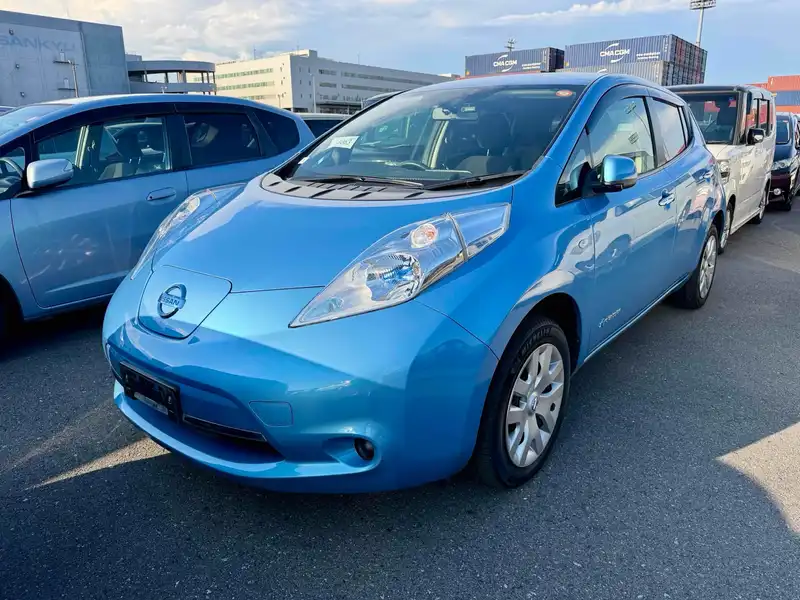 Blue first-generation Nissan Leaf in a vehicle storage lot.
Mechanically the first-generation car is simple and solid. An 80 kW front motor driving the front wheels, 254 Nm of torque available instantly, a single-speed reduction gear, no clutch and no gearbox to wear out. Regenerative braking means the friction brakes barely get used, so pads and discs last unusually long. The 24 kWh pack gave about 120 to 160 km of real range when new, and the 2016 to 2017 cars moved to a 30 kWh pack with roughly 170 km.
The problem is the pack itself. First-generation Leafs in hot climates comparable to Malawi have shown 25 to 40% capacity loss within five to seven years, and 30 to 50% by 100,000 to 130,000 km, according to AmpAuto (citing NHTSA and manufacturer disclosures, 2026). Apply 30% loss to a 24 kWh car and you have a 70 to 100 km commuter. For a short run into town and back that's genuinely workable. For anything else it isn't, and you should buy it knowing that rather than hoping otherwise.
Also listed in this bracket is a 2017 Nissan Leaf 30G Thanks Edition at 38,000 km, with a noted broken rear bumper the Carbarn inspection report records plainly rather than hiding. Grade 4 on the auction sheet, 3 mm of tread front and rear.
Gen 2: The 40 kWh Leaf, 2018 to 2022
The second-generation 2022 Nissan Leaf with 9,620 km on the clock is the benchmark car in this whole range, and the one most Malawian buyers should start with. It's the ZE1 platform, auction grade 4, black, automatic, front-wheel drive, with the Carbarn inspection recording no damage found, 5 mm of tyre tread front and rear, a clean underbody and no interior faults. On a four-year-old car that's about as good as used stock gets.
Gen 2 40 kWh models on Carbarn's current listings typically sit in the MK20–30 million range, with near-new, low-mileage examples at the upper end.
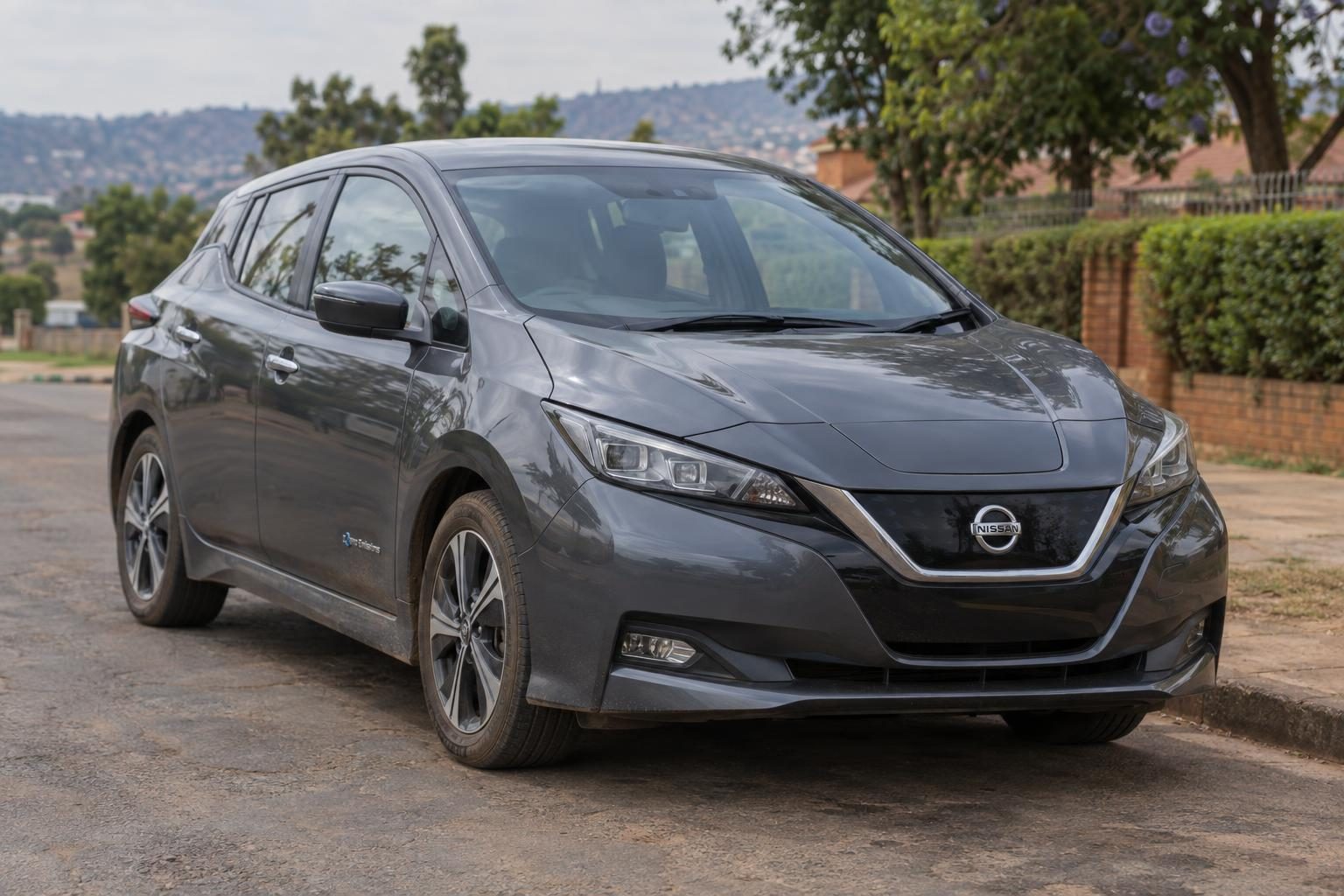 2022 Nissan Leaf
The specification is a real step up from the first generation. The 40 kWh pack holds about 39 kWh usable and feeds a 110 kW motor producing 320 Nm, enough for genuinely brisk acceleration and no struggle at all on the climb out of Blantyre. EV Database records 270 km WLTP and 235 km real-world in mild weather, which works out to 171 Wh per kilometre. It's a five-seat hatchback measuring 4,490 mm long, 1,790 mm wide and 1,530 mm tall on a 2,700 mm wheelbase, with 1,185 mm of cabin height and a folding rear seat. The X V Smart variant adds Nissan's Pro-Pilot driver assistance, plus the usual driver, passenger and side airbags, ABS, traction control, EBD and brake assist.
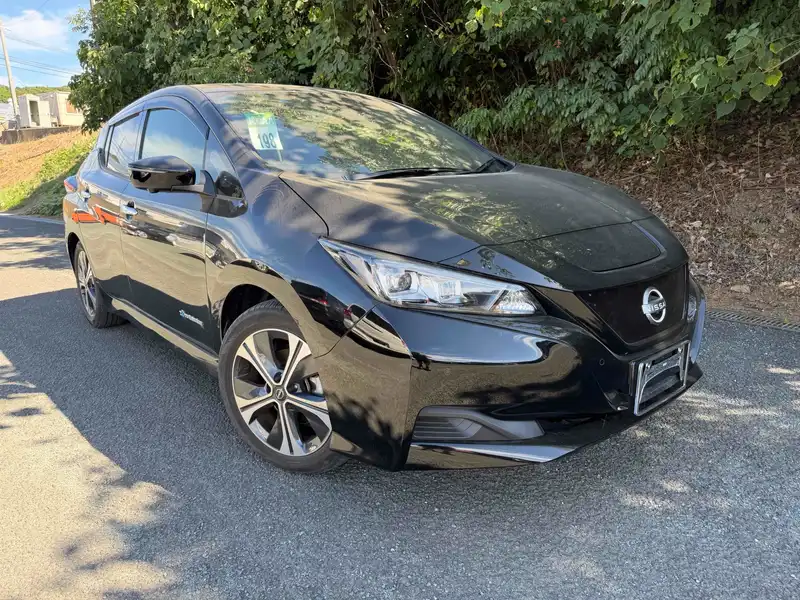 Black Nissan Leaf ZE1 shown from the front three-quarter angle.
Charging is the one place the 40 kWh car asks for patience. On a standard 3.6 kW domestic connection a full charge takes about 12 hours 45 minutes, dropping to roughly 7 hours on a 6.6 kW wallbox if the car has the optional onboard charger. Overnight, that's fine. Mid-day, it isn't. The battery news is much better: Gen 2 packs lose only 8 to 18% capacity by 160,000 km, around 2 to 3% a year in moderate climates, a dramatic improvement on the first generation. Lower-km Gen 2 options also exist, including a 2021 Nissan Leaf at 28,000 km with only light front bumper marks recorded.
| Pack |
Full charge cost at MK 122.25/kWh |
Time on 3.6 kW socket |
Time on 6.6 kW wallbox |
| 24 kWh (Gen 1) |
~MK 2,934 |
~8 hours |
~4 hours |
| 40 kWh (Gen 2) |
~MK 4,890 |
~12 h 45 m |
~7 hours |
| 62 kWh (e+) |
~MK 7,580 |
~18–19 hours |
~9–10 hours |
40 kWh charge times from EV Database; 24 kWh and 62 kWh derived from pack size divided by charger output.
Gen 2 e+: The 62 kWh Leaf, 2019 to 2022
The long-range 2021 Nissan Leaf e+ X is the only version with enough headroom to treat distance casually, though at 114,710 km it's also the highest-mileage Leaf available. Gold, five seats, grade 4, with the Carbarn inspection noting minor surface marks and light scratches on the lower front bumper and 3 mm of tread at both ends. Slightly taller than the standard car at 1,565 mm, because the bigger pack sits lower in the floor.
The e+ carries a price premium over the standard Gen 2, generally in the MK25–40 million range on Carbarn's listings, reflecting the larger pack and its stronger long-term range retention.
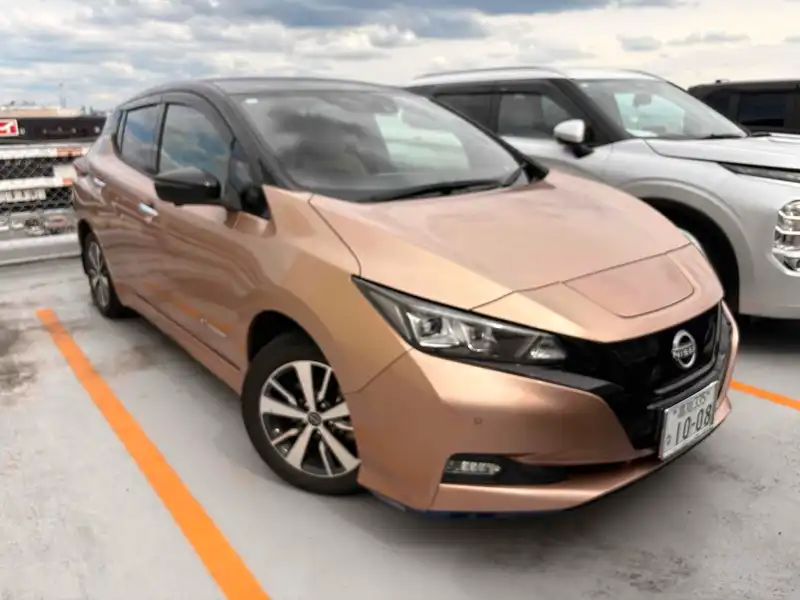 Gold second-generation Nissan Leaf shown from the front left.
The e+ gets a 160 kW motor and 340 Nm, plus a 62 kWh pack, roughly 55% more capacity than the standard Gen 2 car. Real-world range sits near 330 km in mild conditions. Call it 240 to 280 km in Malawian heat with the air conditioning working, and the e+ becomes the one Leaf that can handle an intercity trip without serious planning. Recurrent's real-world tracking puts e+ packs at around 88% capacity retention at 130,000 km, the best degradation record in the Leaf family, largely because a bigger pack cycles less deeply for the same distance.
One listing in the range is even advertised as an "e+G 87% SOH" variant, meaning the state of health has been measured and stated. If you can get a measured figure before paying, take it. It removes the single biggest unknown in a used EV purchase, and it's a far better basis for a decision than the odometer.
How Does Malawi's Heat Affect the Leaf Battery?
Heat is the Leaf's defining weakness. Unlike almost every modern EV, the Leaf's pack is air-cooled with no liquid thermal management at all, which is exactly why first-generation cars in hot regions lost 25 to 40% capacity in five to seven years while temperate-climate examples retained 91% at five years, according to Recurrent Auto's long-term tracking.
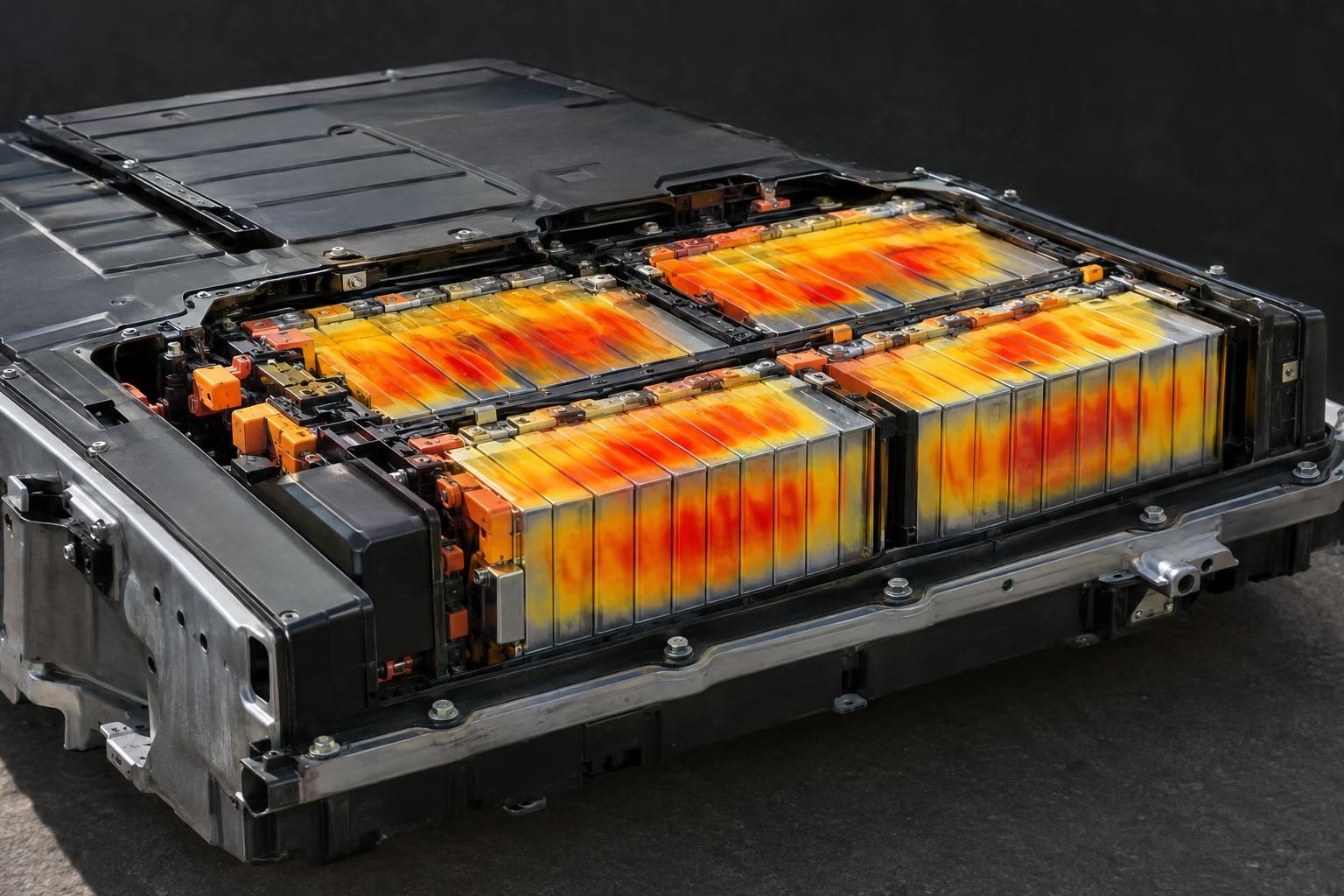 Heatmap-style overlay highlights hot areas across an exposed EV battery module.
Malawi's hot season regularly pushes ambient temperatures into the mid-thirties, and a dark car parked in the sun runs hotter still. A liquid-cooled EV pumps coolant through the pack to hold cell temperature down. The Leaf relies on ambient air moving past the case, which works well enough in Japan and poorly in Lilongwe in October.
| Generation |
Temperate climate, ~8 years |
Hot climate, ~8 years |
| Gen 1, 24 kWh |
~78% |
~55–65% |
| Gen 2, 40 kWh |
~85% |
~75–82% |
| Gen 2 e+, 62 kWh |
~88% |
Limited data, expected mid-80s |
Temperate figures from Recurrent Auto and AmpAuto 2026 data. Hot-climate figures extrapolated from comparable US Sun Belt regions, not measured in Malawi.
A second heat effect catches owners out: DC fast charging throttles hard once the pack is warm. Real-world owner testing documented by Recurrent Auto and AmpAuto shows a hot 40 kWh car accepting 35 to 40 kW on the first DC session, dropping to 26 kW on the second and 15 to 19 kW by the third. Nicknamed "rapidgate" by owners, it means repeated fast charging on a long drive gets progressively slower. In Malawi, where DC fast chargers for cars barely exist anyway, this matters less than elsewhere. It's still worth knowing before you plan anything ambitious.
The practical defences are simple, and they work. Park in shade whenever you can. Charge to 80% for daily use rather than 100%. Avoid leaving the car sitting fully charged in the sun for days. Use slow AC charging as your default. None of this stops degradation, but it meaningfully slows it.
How to Check Battery Health Before You Buy
The twelve capacity bars on the Leaf's instrument display are your fastest check, and losing the twelfth bar means the pack has dropped below roughly 85% of its original capacity. Nissan's own warranty threshold historically sat at 9 of 12 bars, around 73% state of health, as documented in VoltChek's Leaf battery health guide.
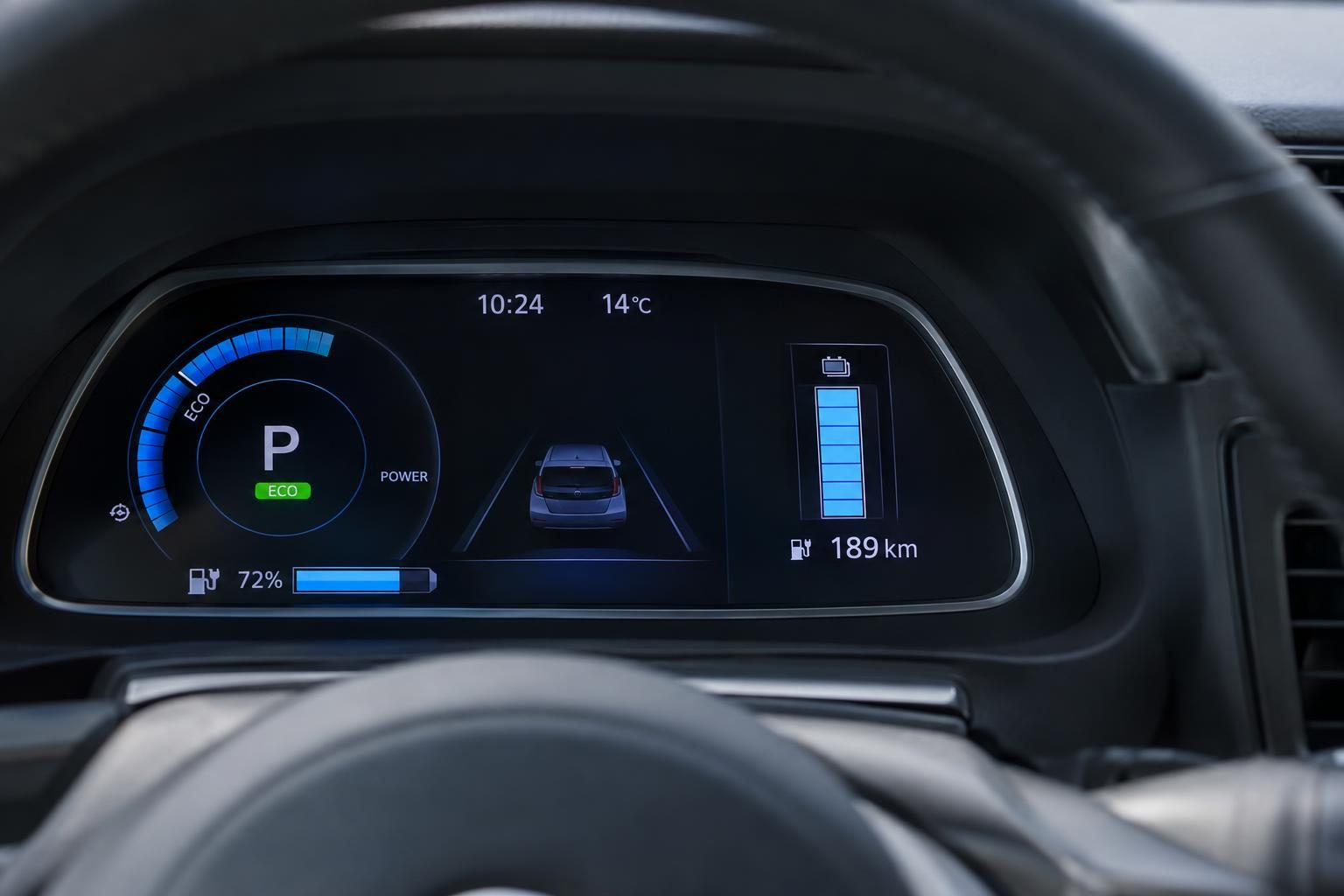 An EV dashboard display shows charge level, estimated range and a battery graphic.
The bars are coarse, though. They lump several percent of capacity into each step, so a car showing eleven bars could be at 84% or 78%. For a precise figure you need the LeafSpy app with a cheap OBD2 Bluetooth adapter, which reads the battery management system directly and reports state of health as a percentage, along with cell-level voltage balance and the pack's internal resistance.
The single most useful request a buyer can make is straightforward: ask for a dashboard photo showing the capacity bars and the odometer in the same frame. It takes the seller thirty seconds and tells you more than a page of description. If a measured state-of-health figure is available — as with the e+G listing — that is better still.
What should you accept? Above 90% on a Gen 2 car is good. Anything below 80% on a car you intend to drive daily deserves hard thought, because range in the heat with air conditioning will be noticeably worse than the number suggests.
Where Can You Charge a Nissan Leaf in Malawi?
Public charging is not a realistic plan yet. Malawi had roughly 30 registered electric cars and around 280 electric motorcycles as of the 2026 Annual Economic Report covered by allAfrica, and the three motorcycle charging stations in Lilongwe at Gateway, Capital Hill and Kanengo — part of a four-station SVG and TotalEnergies rollout — were designed for electric motorcycles.
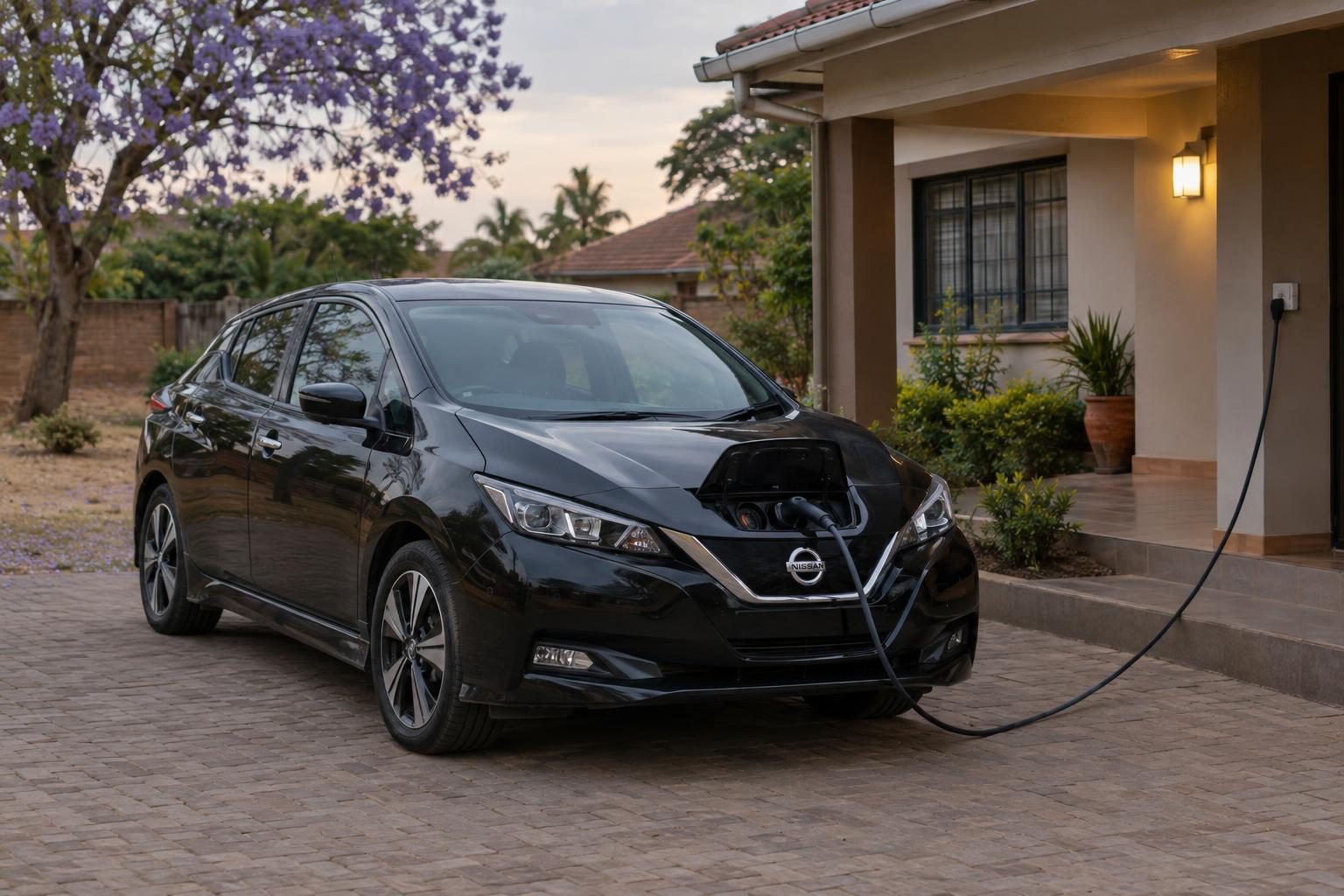 A Nissan Leaf charges from a home wall socket outside a suburban house.
Something is coming. MERA's phased plan requires designated fuel outlets in major cities to install at least one fast-charging station, though no fixed national deadline has been published, and a 2025 report from EV24.africa pointed to a target of ten charging stations across Lilongwe, Blantyre, Zomba and Mzuzu by 2031, though that figure predates more recent reporting and no firm national deadline has been confirmed since. That's useful context. It doesn't help you next month.
So the setup is domestic, and it's genuinely straightforward. The Leaf's Type 1 cable plugs into a standard household socket and draws about 2 to 3 kW, or roughly 10 to 15 km of range per hour. Eight hours overnight adds 80 to 120 km, which covers almost any normal day's driving. A dedicated 7 kW wallbox installed by a competent electrician roughly halves the time.
Load shedding is the real complication. If your area loses power for stretches of the evening, plan charging around the blackout window rather than assuming a clean overnight run. Owners with solar and battery storage have a genuine advantage here, because daytime charging from your own panels makes the running cost per kilometre lower still.
Can the Leaf Do Lilongwe to Blantyre?
Not in one go, with one honest exception. The M1 between Lilongwe and Blantyre runs roughly 320 km, which is beyond the real-world range of every Leaf except a healthy 62 kWh e+, and even that would arrive with very little margin on a hot day with the air conditioning running.
A 40 kWh Gen 2 car managing 170 to 200 km in Malawian conditions gets you comfortably past Ntcheu and then needs several hours plugged into something. Since there's no public charging on that route, "something" means a socket at a place willing to host you overnight. A degraded first-generation car won't even reach halfway.
The sensible verdict: the Leaf is a city car in Malawi for now. Around Lilongwe or Blantyre it's excellent, quiet, cheap and quick off the line in traffic. For regular intercity running, a petrol or hybrid car remains the practical choice, and plenty of households buy a Leaf precisely as the second car that handles the daily commute while something else handles distance.
Parts, Servicing, and Resale in Malawi
This is where candour matters. Carbarn's own Malawi market intelligence scores the Leaf at 1 out of 5 for parts and service support, 1 out of 5 for resale value, and 1 out of 5 for rough-road suitability, with an overall market fit of 1.9 out of 5. Fuel efficiency scores 4 out of 5 and safety 3 out of 5. Those are the published numbers, not a softened version.
The good news is that an EV needs far less than a petrol car. No oil changes, no filters, no spark plugs, no timing belt, no exhaust, no gearbox fluid. Brake pads last unusually long because regenerative braking does most of the slowing. Routine service is essentially tyres, brake fluid, cabin filter, suspension and air conditioning, all of which any competent Malawian workshop handles.
The bad news is the parts that are specific to an EV. Few local technicians have high-voltage training. Diagnostic equipment for the battery management system is rare. If the pack or the inverter fails outside of what a general mechanic can touch, you're looking at specialist work or imported parts, and both take time. The low rough-road score is also fair: a Leaf has modest ground clearance and a flat battery floor, which makes it unhappy on badly rutted tracks.
Resale deserves a plain statement. The buyer pool for a used EV in a country with around 30 registered electric cars is small, so expect to hold the car longer or accept a slower sale. A Leaf makes sense if you intend to keep it and bank the fuel savings over years. If you need to sell within eighteen months, a Toyota or Nissan petrol model will be far easier to move. Worth browsing the wider Nissan range alongside the Leaf before committing, and the specification database is useful for comparing variants properly.
Which Nissan Leaf Makes Sense for You?
Match the car to the distance you actually drive, not the distance you occasionally imagine driving. At roughly MK 2,000 per 100 km in electricity, the fuel savings are so large that the right question is purely about range and battery condition.
| Your situation |
Best Leaf |
Why |
| Short city commute, tight budget, a second car in the household |
2013 Leaf, 24 kWh |
Cheapest entry, but assume 70–110 km of real range and verify the capacity bars |
| Daily driving around Lilongwe or Blantyre, want the least risk |
2022 Leaf, 40 kWh, 9,620 km |
Near-new condition, grade 4, no damage noted, modern safety kit and the best degradation record per Kwacha |
| Mid-budget, still want Gen 2 reliability |
2021 Leaf, 40 kWh, 28,000 km |
Sensible mileage, Gen 2 battery chemistry, only light cosmetic marks |
| Longer trips, occasional intercity running |
2021 Leaf e+, 62 kWh |
The only Leaf with enough range to be relaxed, though its odometer is the highest in the range |
| No controlled electricity supply, or frequent long drives |
None of them |
Buy a hybrid or petrol car instead and revisit EVs in a few years |
One more thing on cost. The listed price for any imported car covers the vehicle, shipping and inspection. It does not include customs duty, excise, VAT or clearance, which are paid separately in Malawi. EV duty treatment differs from petrol cars and the figures move, so check the estimated landed cost panel on the individual vehicle page and read the import rules and regulations rather than working from a rule of thumb. The final figures are confirmed on your proforma invoice, the formal quotation document issued before payment.
How Nissan Leaf Models Reach Malawian Buyers
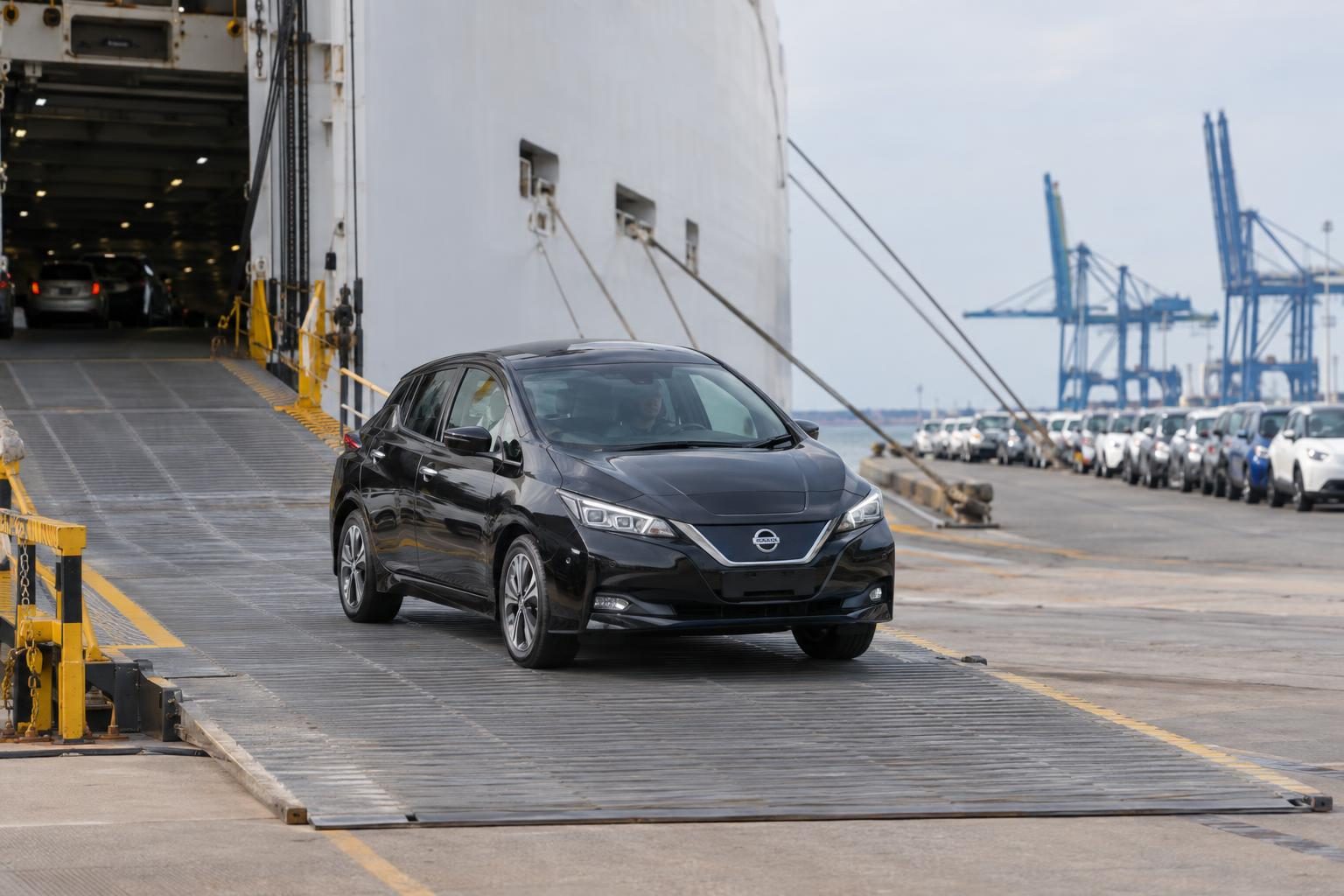 A Nissan Leaf ZE1 on a RoRo vessel ramp at a port terminal.
Every Leaf discussed here sits in Japan, ready to order, and reaches Malawi by RoRo vessel to Dar es Salaam, then by road, a journey of about 24 to 34 days to port plus inland transport. No local yard and no test drive means the evidence you get before paying is what counts. Each car comes with two reports: the official Japanese auction sheet carrying the grade, and an in-house inspection report with the detail the grade leaves out, tyre tread in millimetres, underbody condition, interior notes and any bumper or panel faults recorded individually rather than glossed over.
Carbarn owns every vehicle it lists, which means no broker cancellations, and sells direct from Yokohama under Japanese Motor Dealer License 452570013005. The listed price covers the vehicle, shipping and inspection; duty, VAT and clearance are paid separately, with each vehicle page showing an estimated landed cost so you can budget before committing. Payment is full and upfront by bank transfer or card, arranged only on an official proforma invoice, and financing is not offered at present. There are no manufacturer warranties on imported vehicles, though the team can recommend trustworthy service centres and help arrange local inspections. Once an order is placed, a self-service dashboard holds your proforma invoice, inspection sheets, bill of lading, certificates and vessel tracking, and the how to buy guide walks through all five steps. For a car as specialised as an EV, that paper trail is the difference between a calculated purchase and a gamble.