A car that handles Lilongwe traffic may not feel as comfortable on a steep, wet highland approach. A vehicle that carries your family towards the Lakeshore also needs sensible clearance, traction and space for luggage.
The Subaru Forester XT addresses those needs with turbo power and all-wheel drive. Its turbo powertrain and larger tyres can mean more attention to fuel use, parts and maintenance than a simpler naturally aspirated SUV. This review explains where the XT fits, what to inspect and how to think about the full import cost. For broader tax and eligibility details, see the Malawi vehicle import rules.
Quick Answer
- The Japanese SJ 2.0XT combines a 1,998cc turbo engine, AWD and 220mm ground clearance.
- In Subaru’s 2015 catalogue, official output is 280PS and 350Nm (Subaru, “Forester 2.0XT EyeSight” catalogue, 2015).
- In the same 2015 catalogue, its official fuel figure is 13.2km/l under the JC08 test cycle.
- The 1,998cc engine matters for customs classification, but it does not guarantee a fixed final tax bill.
- Choose it for power and traction, not for the lowest running costs.
What does a Subaru Forester cost in Malawi?
A Japanese-market Forester XT usually needs to be judged in the MK15–25 million vehicle-price range, depending on year, auction grade, mileage and specification. That is not the landed or on-road total: duty, VAT and customs clearance are paid separately. Check the current Subaru Forester listings for the vehicle price and landed-cost estimate, then confirm the final bill through the proforma invoice.
What Is the Japanese-Market Subaru Forester XT?
In Subaru’s 2015 official catalogue, the Japanese-market Subaru Forester SJ 2.0XT EyeSight uses a 1,998cc FA20 turbo engine, producing 280PS and 350Nm. It is a five-seat SUV with full-time 4WD, a Lineartronic CVT and a performance-focused XT specification (Subaru, “Forester 2.0XT EyeSight” catalogue, 2015).
The XT badge means turbocharged performance, not a different body style. Its torque arrives across a broad 2,000 to 5,600rpm range, which can make loaded climbs and overtaking feel easier. The trade-off is more mechanical complexity than a naturally aspirated Forester.
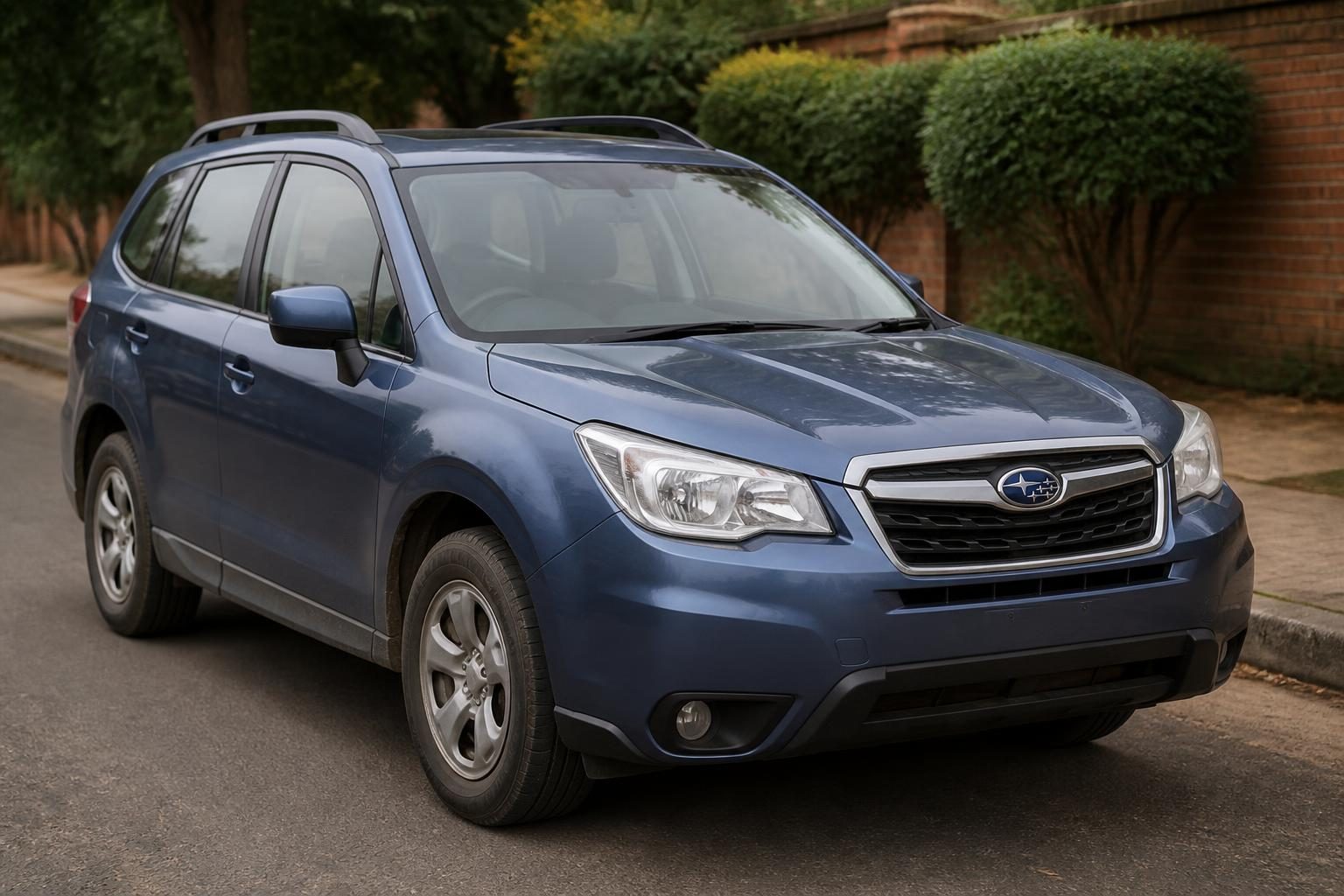 2015 Subaru Forester
The selected 2015 vehicle record shows a petrol automatic vehicle with 78,000 kilometres, four-wheel drive and auction grade 3.5. The shortlist identifies its variant as 2.0XT EYESHIGHT 4WD, while the matching XT grade is a five-seat model. Because the vehicle page does not expose every technical field, confirm the five-seat status, engine code and equipment against the auction sheet or vehicle-specific technical record before payment.
| Specification |
SJ 2.0XT reference |
| Engine |
FA20 direct-injection turbo |
| Displacement |
1,998cc |
| Maximum power |
280PS at 5,700rpm |
| Maximum torque |
350Nm at 2,000–5,600rpm |
| Drive |
Full-time 4WD |
| Transmission |
Lineartronic CVT |
| Ground clearance |
220mm |
| Seating |
5 |
| Fuel figure |
13.2km/l, JC08 |
The XT should also be separated from the newer SK5 XT-EDITION. In the current Forester specification database, that later model uses a 1,795cc CB18 engine and is a different powertrain.
Is the Forester XT Suitable for Malawi’s Highlands and Lakeshore Roads?
Subaru’s fourth-generation Forester reference lists 220mm of ground clearance, five seats and active-torque-split AWD. Those figures make the XT a credible mixed-road SUV for steep approaches, wet gravel and rough access roads, but they do not turn it into a heavy-duty 4x4 (Subaru, “4th Generation Forester”, 2012).
The highland case is conditional. AWD can help the tyres maintain traction when a surface becomes loose or slippery, but it does not replace suitable tyres or careful driving. The turbo engine may provide more reserve power when carrying passengers uphill. Still, tyres, pressure and speed matter just as much as the drivetrain.
The 220mm clearance may give useful extra space over ruts, stones and uneven road edges. It does not protect the vehicle from every pothole or hidden rock. Larger 18-inch tyres may feel less forgiving on rough surfaces, and replacement cost will depend on the tyre brand and local supply.
For Lakeshore and intercity travel, the five-seat layout may suit a family that wants one practical SUV. Buyers should check the boot space against their usual luggage, while those needing seven or eight seats should look elsewhere. This is a specification-based assessment, not evidence of the XT being tested on a particular Malawian road.
| Highlands strengths |
Lakeshore trade-offs |
| AWD supports traction on wet or loose surfaces |
Five seats limit passenger capacity |
| Turbo torque may help on steep climbs |
Turbo fuel use can rise on loaded trips |
| 220mm clearance may help over rough access roads |
Larger tyres may cost more to replace |
| SUV body suits mixed road use |
Not a dedicated off-road vehicle |
Good fit for:
- Buyers travelling on steep, wet or uneven roads.
- Families wanting a five-seat SUV.
- Drivers who value acceleration and traction.
Poor fit for:
- Buyers focused mainly on low fuel and repair costs.
- Owners without access to Subaru-capable servicing.
- Buyers needing seven or eight seats.
- Drivers seeking the simplest possible 4WD system.
Forester XT Running Costs in Malawi
The official Japanese figure is 13.2km/l under the JC08 test cycle, while the factory specification calls for premium unleaded petrol. That makes the XT a performance choice rather than an economy-focused SUV (Subaru, “Forester 2.0XT EyeSight” catalogue, 2015).
JC08 is a controlled Japanese test, not a promise of everyday consumption. Lilongwe or Blantyre traffic, hills, air-conditioning, passenger load, tyre pressure and turbo driving can all change the result. Avoid turning the laboratory figure into an annual fuel bill without a verified local fuel price and annual mileage.
Maintenance deserves equal attention. Ask about the correct engine oil, turbocharger condition, intercooler system, direct-injection hardware and CVT fluid history. The AWD system also needs four suitable, evenly matched tyres, because different rolling diameters can create drivetrain stress.
Before importing, confirm that you can access a technician familiar with Subaru systems. The question is not whether the XT is serviceable. It is whether the right knowledge, fluids and parts are practical for your location.
Does the 1,998cc Engine Change the Import-Cost Picture?
In Subaru’s 2015 specification, the XT’s engine measures 1,998cc, or cubic centimetres. For the relevant tariff wording, that is a vehicle not exceeding 1,999cc, but the figure alone cannot establish the final amount payable. Tariff classification, customs value and MRA assessment control (Subaru, “Forester 2.0XT EyeSight” catalogue, 2015).
A vehicle’s cost can include the vehicle or CIF value, import duty, excise, VAT, customs clearance and inland transport. These are separate parts of the calculation. The vehicle price is not the same as the final landed or on-road cost.
Carbarn’s published under-2000cc guidance states import duty of 25%, excise of 15% and VAT of 16.5%. These figures are a planning guide, not a final assessment: excise rises with engine capacity, while the MRA determines the payable amount from the vehicle’s classification and customs value. Confirm the applicable rates and tax base on the proforma invoice and with the MRA before payment. The MRA “New Tax Measures” notice and MRA vehicle FAQ are reachable, but their relevant content should be checked manually before being treated as evidence.
Treat the 1,998cc figure as useful information, not a guaranteed saving. Customs valuation, vehicle documents, tariff treatment and the official assessment still decide the final bill. Review the current import guidance, but treat the individual vehicle’s landed-cost panel as an estimate only. Reconcile its tariff version, tax base and excise treatment with the latest MRA assessment before relying on the figure.
What Should You Inspect Before Importing a Forester XT?
The 2015 vehicle record shows 78,000 kilometres and auction grade 3.5, so condition checks matter more than the XT badge. An auction grade records overall condition, but it does not promise perfect turbo, CVT or suspension health (2015 Subaru Forester vehicle record, 2026).
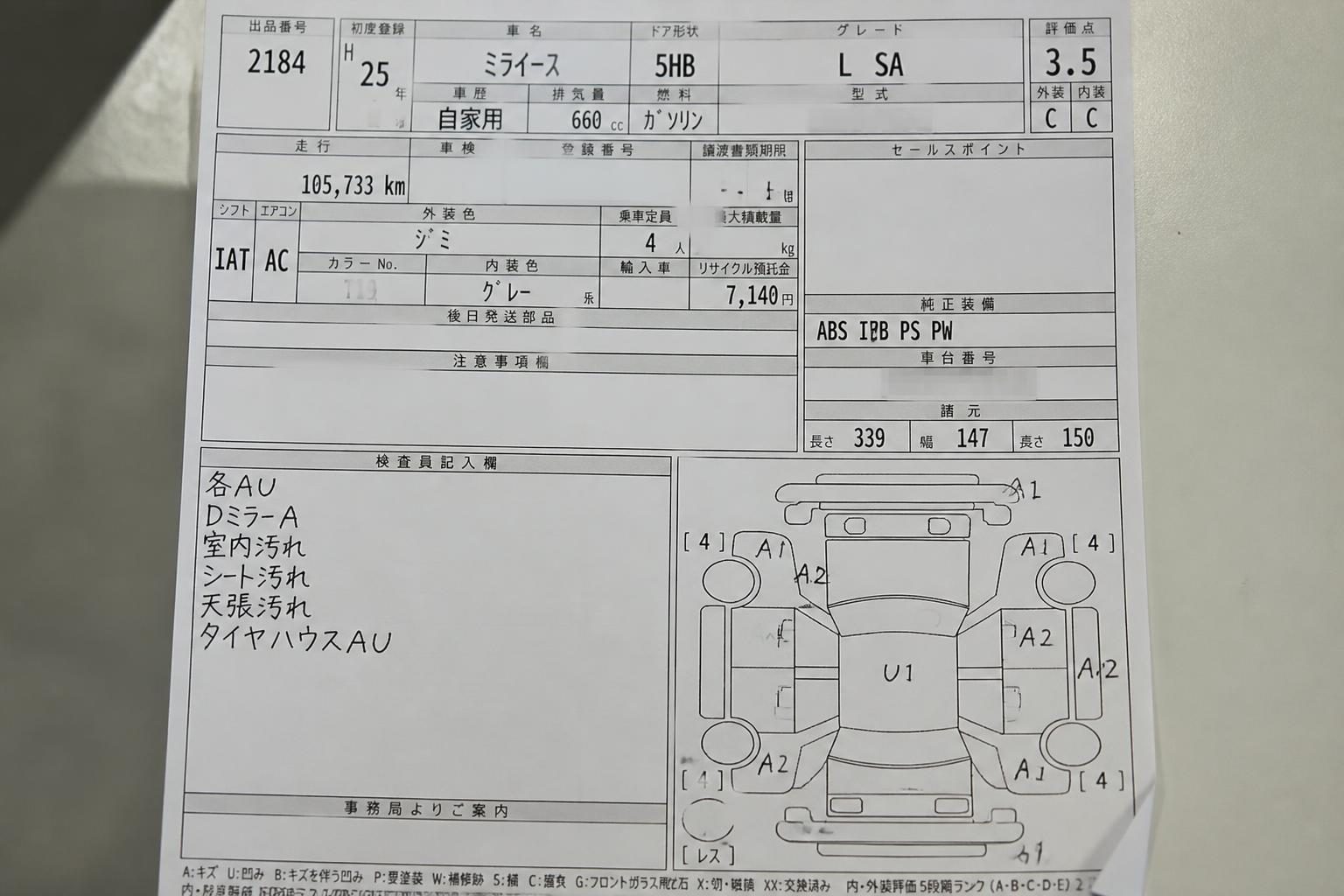 Japanese vehicle auction inspection sheet showing grade, mileage and condition markings
Check the exact variant, engine code, odometer and auction sheet. Look for turbo smoke, unusual exhaust haze, oil leaks, dashboard warning lights, CVT shuddering, hesitation, abnormal noise, uneven tyre wear and underbody impact damage.
The supplied inspection record reports a clean underbody, 5mm front and rear tyre tread, no windscreen damage and three exterior notes. Those notes include rear spoiler paint wear, a rear door dent and front bumper marks. Read every note rather than relying on the grade alone.
Also check for flood exposure, accident repairs and missing service records. Japanese-market infotainment may need adaptation for local use. Confirm parts, fluids and servicing arrangements before committing, and treat every report as evidence rather than a warranty or guarantee.
The Japan-to-Malawi Import Process
In 2026, the import-rules page describes RoRo shipping with an estimate of about 24 to 34 days to Dar es Salaam, plus inland road transport into Malawi. That is a port-transit estimate, not a guaranteed end-to-end delivery time, so a Japanese import needs document checks before payment and a separate plan for customs clearance (import-rules page, 2026).
Start with the Subaru Forester records, then check the exact vehicle page for its year, variant, engine size, odometer, auction grade, reports and estimated landed cost. The Malawi government’s Malawi vehicle import duties and documentation page also explains importer registration, customs declarations, licensed clearing agents and assessment through ASYCUDA World.
With Carbarn Malawi, each listed vehicle is Japan stock handled through a Japan-based process, rather than local showroom stock. The buying process describes access to the auction sheet and Carbarn inspection report before payment; check the individual vehicle record because report timing labels can differ. Pricing covers the vehicle and shipping, with a vehicle-specific landed-cost estimate, proforma invoice, 100% payment before shipment, RoRo shipping and dashboard access for invoices, inspection sheets, bill of lading and vessel tracking. Duty, VAT and customs clearance remain separate.
Who Should Choose the Forester XT?
In Subaru’s 2015 catalogue, the XT produces 280PS and 350Nm, compared with 148PS and 196Nm for the same-generation 2.0i naturally aspirated Forester. That makes it a strong fit for buyers who value acceleration and overtaking reserve more than the lowest ownership cost, although those figures are not a Malawi-road performance test (Subaru, “Forester 2.0XT EyeSight” catalogue, 2015).
The XT makes sense if you:
- Regularly travel on steep, wet or uneven roads.
- Want strong acceleration in a five-seat SUV.
- Accept that fuel use and maintenance needs may be higher than with a simpler naturally aspirated model.
- Can confirm suitable Subaru servicing.
Consider another model if you:
- Need the lowest-cost daily motoring.
- Prefer a simpler naturally aspirated engine.
- Need seven or eight seats.
- Want the widest choice of common parts and technicians.
Final Verdict: Is the Turbo Worth It in Malawi?
The Forester XT’s 220mm clearance, AWD and 280PS turbo engine give it genuine ability for mixed road use. It suits buyers who want a confident five-seat SUV for highland routes, rough approaches and longer trips towards the Lakeshore.
The catch is the extra ownership attention it may require. Premium petrol, turbo hardware, CVT servicing, specialist knowledge and matched AWD tyres all deserve attention, and actual maintenance costs will depend on condition, parts and local support. Compare the exact vehicle record, reports, engine capacity and estimated landed cost before deciding.