A car that feels affordable at purchase can become expensive when potholes, fuel, tyres and import charges are added. The right choice depends less on the badge and more on the roads you use every week.
In data from 2017 published by the Roads Fund Administration, Malawi had 15,451 kilometres of classified roads. Only 4,312 kilometres, or about 28%, were paved, while 11,139 kilometres were unpaved and mostly earth-standard (Roads Fund Administration, “Road Networks”, 2017 data). This guide compares SUVs and sedans by route, cost and practical ownership needs.
Quick Answer
- Choose an SUV or compact crossover for regular gravel, deep potholes, steep approaches or rainy-season access roads.
- Choose a sedan for mostly paved city and intercity driving, especially when fuel and tyre costs matter.
- Ground clearance, suspension condition, tyres and drivetrain matter as much as body style.
- About 72% of Malawi’s classified road network was unpaved in the Roads Authority data from 2017, according to the Roads Fund Administration.
- Check engine capacity and confirm the landed-cost items on the proforma invoice before paying.
Which Roads Will You Drive Most in Malawi?
Your regular route should decide between an SUV and sedan: a sedan suits mostly good tarmac, while a compact crossover can suit some mixed roads. Malawi’s 2017 data recorded 4,312 paved kilometres and 11,139 unpaved kilometres (Roads Fund Administration, “Road Networks”, 2017 data).
Ground clearance is the distance between the lowest part of a vehicle and the road. Mostly paved roads in Lilongwe or Blantyre favour a sedan, hatchback or small crossover. These vehicles are usually easier to manoeuvre, park and run through daily traffic.
A paved intercity route may also suit a sedan, provided the car has healthy suspension and suitable tyres. Mixed tarmac and gravel may make a compact crossover a sensible middle ground, depending on its clearance, tyres and suspension.
Frequent rural tracks, steep entrances or rainy-season access roads may justify an SUV or suitable 4WD when the exact route needs it. Check the drivetrain rather than assuming every SUV has four-wheel drive.
| Factor |
SUV or crossover |
Sedan |
| Potholes and uneven roads |
More useful when clearance and suspension suit the route |
Better suited to careful use on manageable roads |
| Ground clearance |
Often higher, but varies by exact variant |
Often lower, but varies by exact model |
| Fuel use |
Can cost more when heavier or fitted with a larger engine |
Often the running-cost choice when lighter and smaller-engined |
| City manoeuvrability |
Choose based on the vehicle’s dimensions |
Often easier in tight urban streets |
| Cargo area |
Many have a taller, flexible load area |
Enclosed boot; capacity varies by model |
| Gravel-road suitability |
Stronger fit when clearance, tyres and drivetrain match the route |
Suitable only when the route and specification allow it |
| Tyre costs |
Depend on size, profile and local availability |
Depend on size, profile and local availability |
| Engine-size cost risk |
Confirm fuel type, engine size and tariff classification |
Confirm fuel type, engine size and tariff classification |
[CHART: Horizontal bar chart showing Malawi’s 4,312 paved kilometres versus 11,139 unpaved kilometres. Source: Roads Fund Administration, “Road Networks”, using Roads Authority 2017 data.]
For a deeper check, compare the exact engine, drivetrain, wheel size and clearance in the Carbarn car specification database, not only the body-style label.
SUV Advantages on Rough Roads
An SUV can make more sense on rough roads when its clearance, tyres, suspension and drivetrain match the route. The Nissan X-Trail 20S specification lists 200mm of ground clearance, although that figure applies only to the cited variant.
That extra height may help with pothole edges, drainage channels and steep approaches. It cannot compensate for worn suspension, poor tyres, unsuitable approach angles or excessive speed.
A taller vehicle may give some drivers a clearer view over traffic, pedestrians and road edges. Visibility still depends on seating position and vehicle design. A taller cargo area can also help families carrying luggage, groceries or equipment.
However, “SUV” covers several different vehicle types. A compact crossover may be front-wheel drive and designed mainly for paved roads. A 4WD SUV can provide extra traction on some routes, but fuel, tyre and maintenance costs depend on the exact engine, weight, drivetrain, wheel size and vehicle condition.
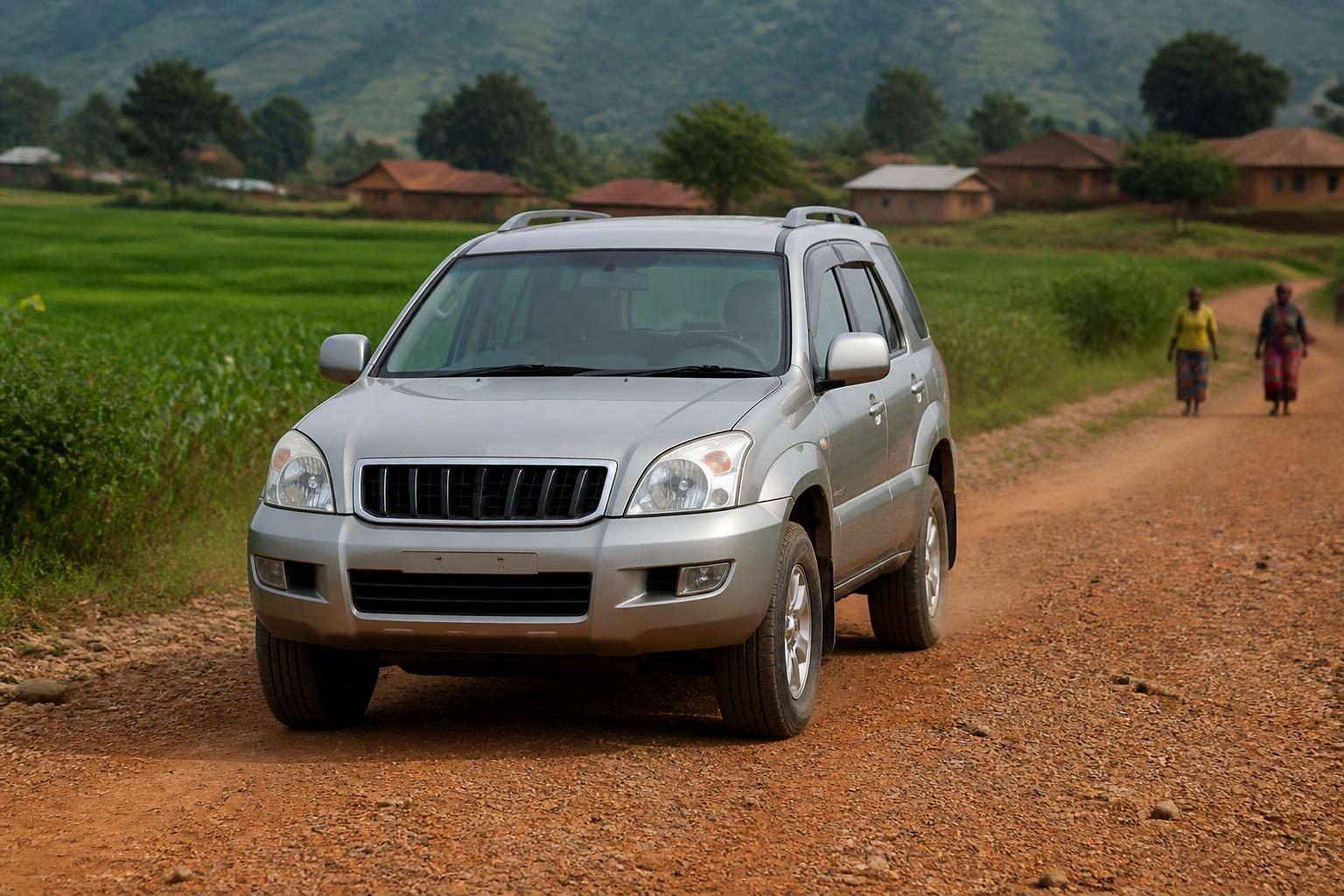 A silver SUV on a rural dirt road near fields and village homes.
The Nissan specification gives a useful illustration, not a universal rule. Its 20S example has 200mm clearance, a 1.997-litre engine and 11.8km/L on Japan’s JC08 test cycle (Nissan, “X-Trail Grade Details”, archived specification). Other X-Trail years and drivetrains can differ.
When a Sedan Makes More Sense
A sedan makes more sense when you mostly drive paved roads and want easier urban manoeuvring. Clearance varies by exact Toyota Corolla model year and variant, so check the manufacturer specification before judging whether it can handle careful gravel-road use.
A sedan may feel more settled on good roads, depending on its suspension, tyres and weight distribution. Smaller engines and lighter bodies can support lower fuel use in some comparisons. Official figures must still be compared by exact variant and test cycle.
A smaller sedan may be easier to manoeuvre through busy streets in Lilongwe and Blantyre than a larger SUV. Its enclosed boot can protect luggage from dust and rain. For office travel, family commuting and paved long-distance trips, that simplicity can make a lot of sense.
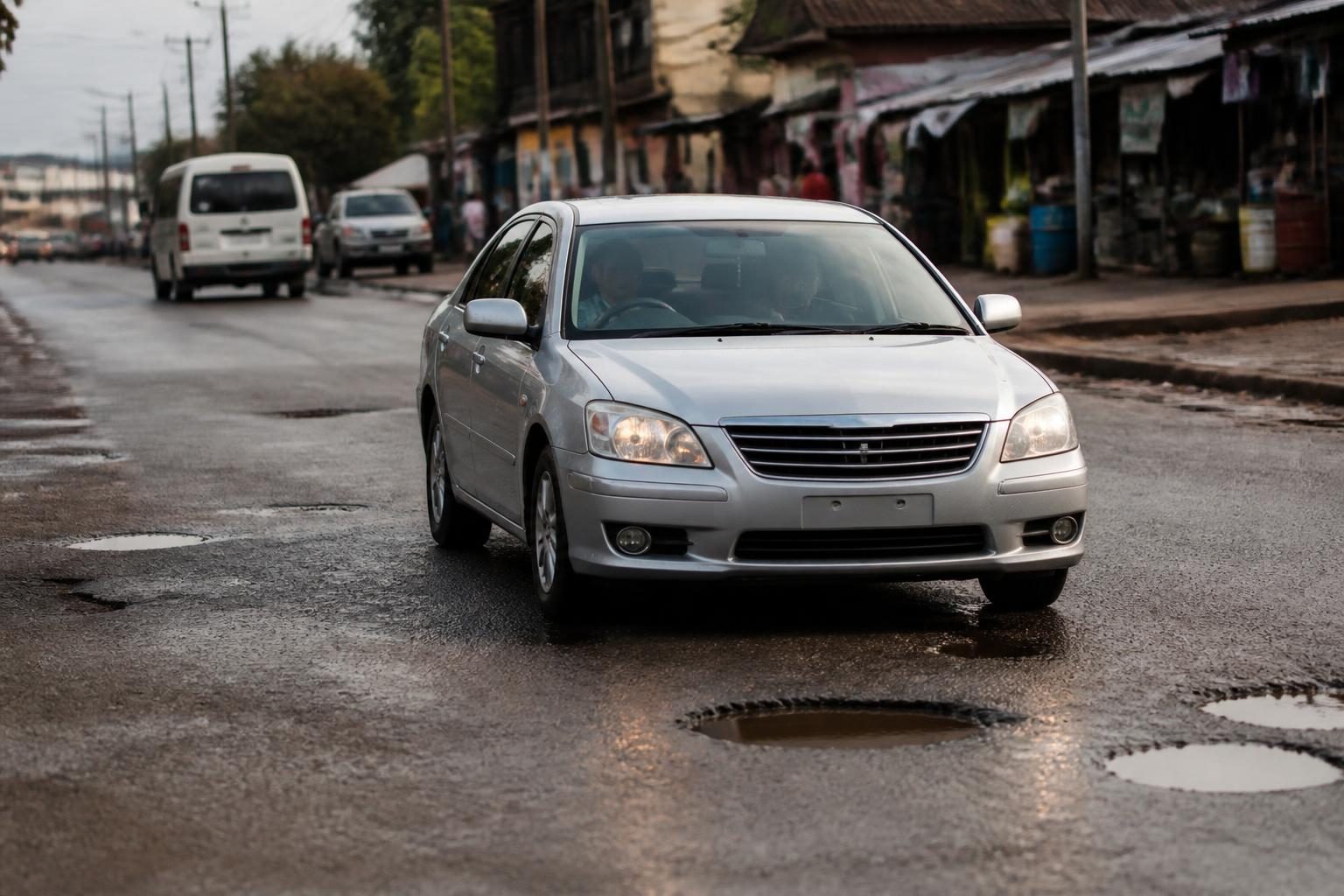 A silver sedan navigates potholes on a rain-darkened city street lined with small shops.
Clearance applies to an exact specification, not every Corolla or sedan. That is why the vehicle’s manufacturer specification and inspection details matter more than assuming every sedan has the same clearance.
How Do Engine Size and Ownership Costs Change the Choice?
Engine size can affect fuel use and import classification, so compare the vehicle’s capacity with its full landed cost. On 27 February 2026, new Malawi Revenue Authority customs and excise measures took effect (Malawi Revenue Authority, “New Customs and Excise Tax Measures for the 2026/27 Financial Year”, 2026).
Landed cost is the total amount paid after the vehicle, shipping, taxes, clearance and inland transport are included. The MRA measure is relevant when checking fuel type and engine capacity, but confirm the applicable tariff and final figures with Malawi Customs before payment.
This measure should not be read as a blanket new engine-capacity charge on every petrol or diesel SUV. For any vehicle, confirm the fuel type, engine size and tariff classification before payment.
Do not treat a purchase price as the full landed cost. The quoted vehicle-and-shipping price may include inspection and export documentation. Malawi duty, VAT, customs clearance and inland delivery are separate costs.
Confirm the exact inclusions on the proforma invoice and applicable Malawi customs requirements. Use the Malawi import rules and duty guidance as a starting point, then confirm the exact figures before payment.
Your budget should include:
- Vehicle price, shipping and inspection
- Duty, VAT and customs clearance
- Tyres and suspension work
- Servicing after arrival
- Possible parts or repairs during ownership
What Should You Inspect Before Choosing Either Body Style?
The individual vehicle’s condition matters more than whether it is called an SUV or sedan. The Roads Fund Administration reports that 22% of Malawi’s paved network was in poor condition in the 2014 Road Condition Survey (Roads Fund Administration, “Road Networks”, 2014 survey).
Check the exact specification first. Confirm engine size, ground clearance, wheel and tyre size, fuel type, passenger capacity and drivetrain.
A front-wheel-drive crossover is not the same tool as a 4WD SUV, even if both use the SUV label. The same applies to sedans, because specifications can change between model years and variants.
Then review the auction sheet, auction grade and inspection report. Look for underbody scraping, suspension notes, uneven tyre wear, previous accident repairs and signs of flood or water exposure.
Photographs help, but written condition evidence often reveals more. A practical checklist includes:
- Confirm right-hand-drive eligibility before importing
- Suspension and underbody condition
- Tyre profile and replacement cost
- Parts and mechanic familiarity
- Estimated landed cost
- Expected resale and long-term servicing needs
How Do Carbarn Malawi Imported Vehicles Compare?
Comparing the exact vehicle, documents and estimated landed cost is more useful than choosing by body style alone. The Carbarn Malawi buying process states that vehicles travel by RoRo from Japan to Dar es Salaam, with transit of approximately 24 to 34 days before inland transport into Malawi.
Buyers receive an official Japanese auction sheet and an in-house inspection report before payment. Vehicle pages show the vehicle specifications, while the proforma invoice sets out the confirmed price and inclusions.
The quoted vehicle-and-shipping price may include inspection and export documentation. Duty, VAT, customs clearance and inland delivery are separate costs. Confirm the exact inclusions on the proforma invoice.
You can browse imported cars, review the import process, and check the Malawi vehicle eligibility rules before selecting a vehicle.
Which One Should You Choose for Malawi Roads?
A sedan is probably the better fit for mostly paved routes and lower running costs, while an SUV or crossover suits rougher access roads when its specification matches the job. Roads Authority data from 2017 recorded 11,139 unpaved kilometres, or about 72% of Malawi’s classified road network (Roads Fund Administration, “Road Networks”).
That historical figure does not make every SUV the right choice. Many buyers spend most of their time on paved roads and gain more from lower running costs.
A sedan may suit you if you mostly drive tarmac, prioritise fuel use and want easier urban manoeuvring. A compact SUV or crossover may suit routes combining tarmac, potholes, gravel and uneven entrances, provided its clearance, tyres, suspension and drivetrain fit those roads.
Consider a larger SUV or 4WD only when your rural access, steep terrain, heavy loads or rainy-season travel genuinely requires its additional clearance or traction. A small crossover may be a practical compromise for some routes, while a well-chosen sedan may suit paved-road commuters.
Before deciding, compare the exact clearance, tyres, suspension condition, drivetrain, engine size and estimated landed cost. You can browse suitable imported cars once you know which route your vehicle must handle.