


A hybrid can use very little fuel and still become an expensive import. Engine capacity, age, battery condition, road use and customs costs can change the calculation quickly.
This guide compares 10 Japanese hybrid models for Malawian buyers in Lilongwe, Blantyre, Mzuzu and beyond. The shortlist is based on buyer fit, not a claim that every model has identical reliability.
Quick Answer
- The Toyota Aqua is the strongest starting point for many urban buyers.
- The Prius suits longer trips, while the Corolla Fielder and Sienta offer more family space.
- In 2025, selected Toyota Aqua grades reached 34.6 km/L under WLTC testing (Toyota, Aqua specification sheet, 2025).
- Engine size, battery evidence, auction grade and landed cost matter as much as fuel economy.
Hybrid Choice Criteria for Malawi
In 2025, Toyota’s Aqua specification listed up to 34.6 km/L under WLTC for selected 1.5-litre grades (Toyota, Aqua specification sheet, 2025). A good Malawi hybrid should combine useful fuel economy with manageable engine capacity, proven technology, suitable road manners and a realistic import cost.
Hybrids can suit stop-start driving around Lilongwe and Blantyre. Regenerative braking recovers some energy when the car slows, then stores it in the hybrid battery. Most models in this article recharge themselves while driving and do not need a home charger.
Nissan e-POWER has a different hybrid layout from Toyota’s conventional hybrids. Confirm the exact drivetrain and variant in Nissan’s technical documentation before comparing models. A plug-in hybrid is different again because it can charge from an external power source. That type is not the main focus here.
Fuel figures also need care. Traffic, hills, air-conditioning, tyre pressure, passengers and driving speed all affect real consumption. A controlled Japanese test result helps compare matching variants, but it isn't a promise of the same figure on Malawi roads. For planning, annual fuel cost = annual kilometres ÷ tested km/L × your local fuel price per litre; use your own distance and current pump price.
This article uses an editorial buyer-fit framework. Fuel economy and engine size receive 20%, reliability and system maturity 20%, parts and servicing 15%, road suitability 15%, space 10%, import representation 10% and value after clearance 10%. Labels such as “best overall” describe this editorial framework, not an objective market ranking or independent laboratory reliability test.
For a broader reference, you can compare Japanese hybrid specifications before choosing between similar models.
Citation capsule: The most suitable hybrid for Malawi is not simply the model with the highest advertised km/L figure. Buyers should balance official fuel data with engine capacity, vehicle condition, road use, parts support, passenger space and the final landed cost.
Hybrid Import Costs by Engine Size
In 2026, Malawi’s Trade Portal stated that imported goods must be declared to Customs and that applicable duties are payable unless an exemption or suspension applies (Malawi Trade Portal, Importation Guidelines, 2026). Engine capacity matters because cubic centimetres, or cc, form part of the vehicle’s classification and duty calculation.
The shortlist ranges from the 1,200cc Nissan Note e-POWER to 1,500cc Aqua, Fit, Corolla, Yaris and Sienta examples. The Prius, Corolla Hybrid and C-HR examples in this guide use about 1,800cc. The linked Corolla pages do not by themselves prove Axio or Fielder model identity, so confirm the exact model code, figure and documents before comparing costs.
Do not assume that a larger hybrid is automatically poor value. A Prius may offer better comfort and space for regular intercity travel. However, its 1,800cc engine and higher purchase band can produce a different total from a smaller Aqua or Note.
The vehicle price is only one part of the calculation. You should separate the Japan vehicle price, shipping and inspection, customs valuation, duty and taxes, clearance charges, inland transport and registration costs. A vehicle page’s estimate can help with planning, but it is not the final cleared or on-road amount.
Malawi’s 2026-27 policy documents discuss separate treatment for electric and hybrid vehicles, but they should not replace the current Customs assessment. The applicable treatment depends on the vehicle’s classification, engine capacity, customs value and current tariff rules. Do not rely on a general hybrid percentage; confirm the current MRA treatment and final assessment before payment. Review the Malawi vehicle import rules.
Citation capsule: Engine capacity should be checked in cc for the exact vehicle. Malawi Customs considers classification, value and applicable tariff rules, so a smaller hybrid may reduce import exposure, but only the current assessment confirms the final duty and tax amount.
Which Compact Hybrid Suits City Driving Best?
In 2026, the selected Toyota Aqua vehicle page recorded a 1,500cc engine, five seats and a 2022 model year (2022 Toyota Aqua vehicle page, 2026). Compact hybrids make the most sense when you mostly drive in town, want easier parking and need to control fuel and import exposure.
Toyota Aqua, best overall starting point for many urban buyers
If you mostly drive around Lilongwe or Blantyre, the Toyota Aqua is probably the best place to start. Its compact hatchback body is easy to manoeuvre, while the 1.5-litre hybrid system suits regular urban commuting.
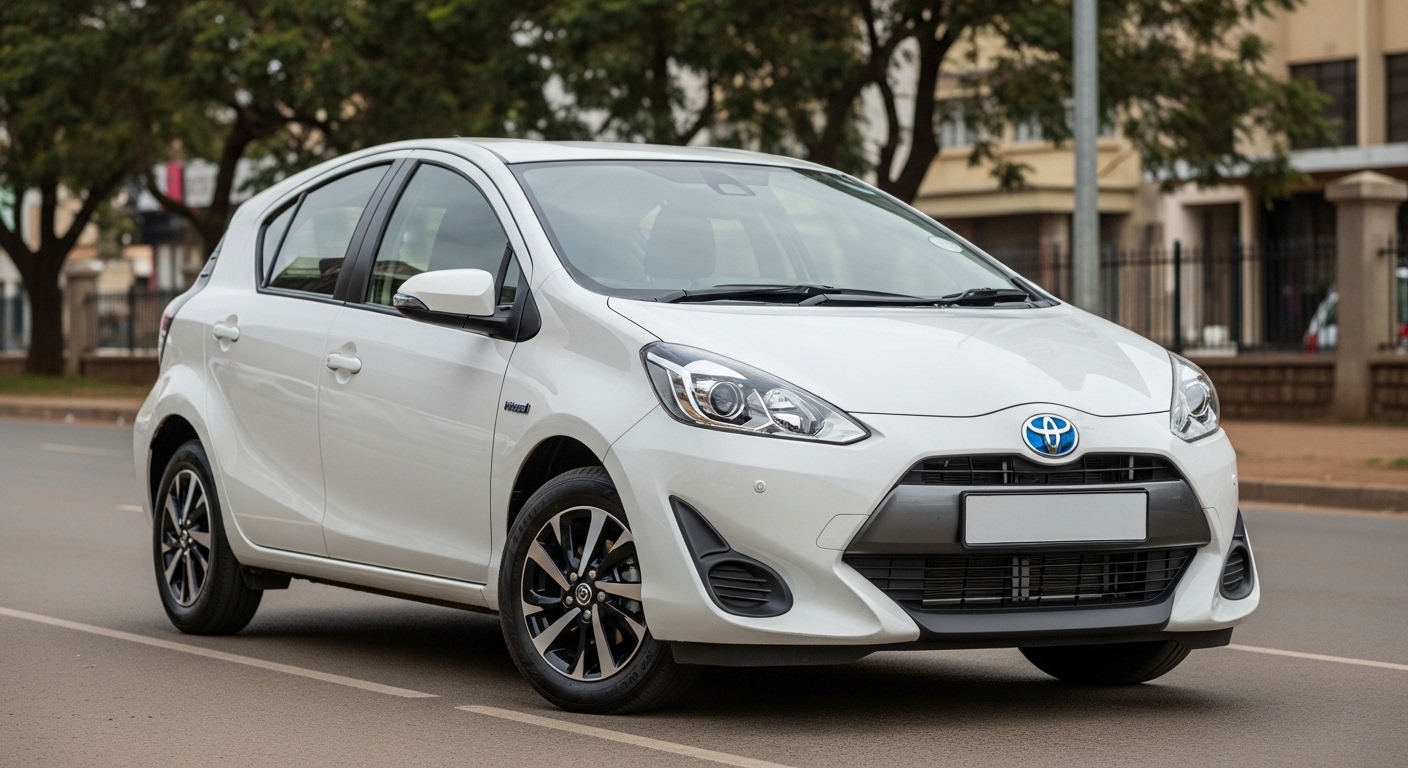 2022 Toyota Aqua
In 2025, Toyota listed up to 34.6 km/L WLTC for selected current Japanese-market grades (Toyota, Aqua specification sheet, 2025). The 2022 example reviewed here has the M15A-FXE engine, 91 PS, automatic transmission, front-wheel drive and a 1,500cc capacity. Its page records 104,000km and auction grade 3.5.
The Aqua is not a high-clearance off-road vehicle. Older examples may offer a lower purchase band, but you should check battery evidence, accident history, auction notes, tyres and underbody condition. It suits urban commuters and first-time hybrid buyers, but larger families may need more boot and rear-seat space. See the Toyota Aqua buying guide for Malawi for a deeper model comparison.
Nissan Note e-POWER, best for electric-style urban driving
The Nissan Note e-POWER is worth considering if you want an alternative hybrid layout without installing a charger. Confirm the exact drivetrain, battery evidence and service requirements for the selected variant.
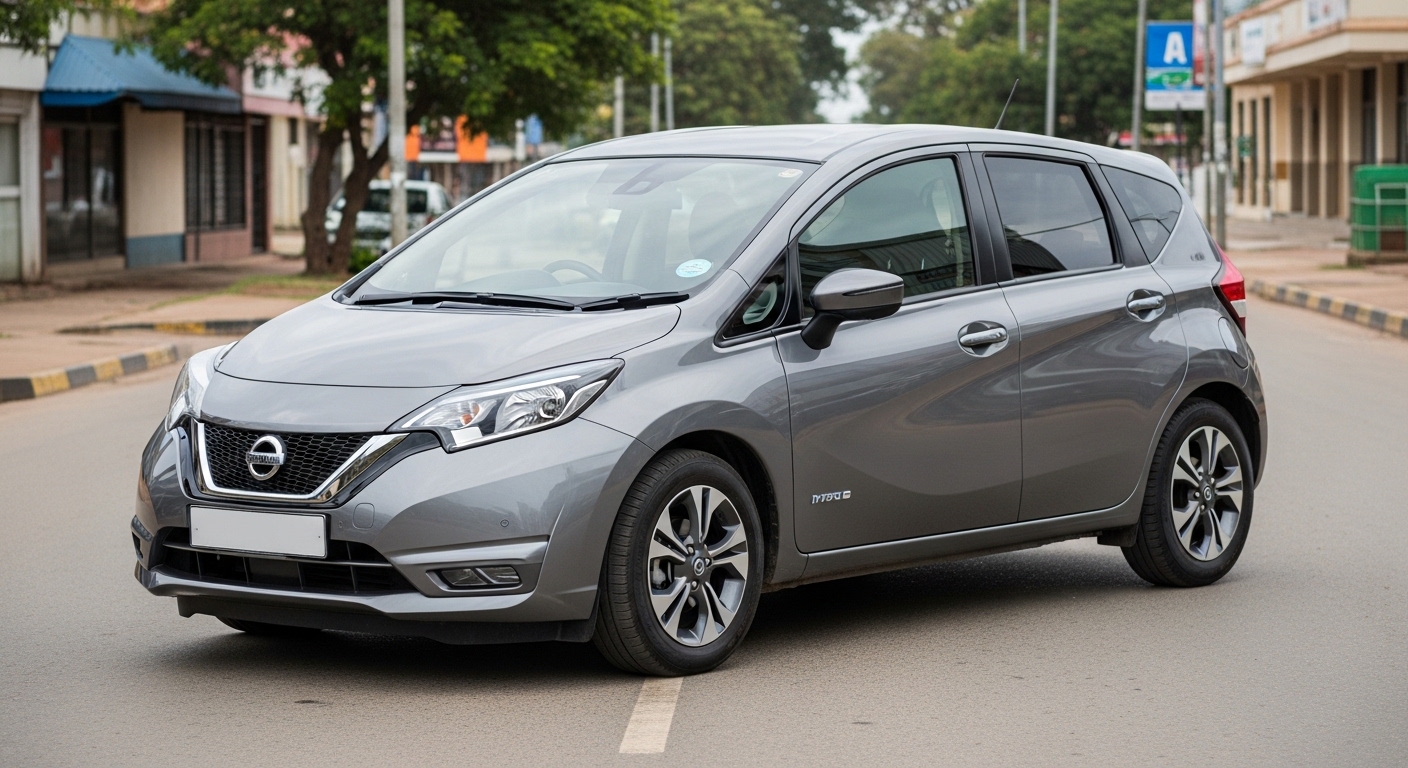 2021 Nissan Note e-POWER
In 2026, the selected vehicle page recorded 1,200cc, 82 PS, front-wheel drive, five seats and a 2021 model year (2021 Nissan Note vehicle page, 2026). Nissan’s E13 documentation lists 28.4 km/L WLTC for selected 2WD versions and 23.8 km/L for selected 4WD versions (Nissan, Note environmental specification, 2026).
The exact generation and drivetrain matter. Check warning lights, battery evidence, inspection notes and local parts support carefully. It suits urban drivers who like its driving response, but buyers should compare technician familiarity and parts access for the exact vehicle before choosing an Aqua, Prius or Note.
Honda Fit Hybrid, best small-car flexibility
The Honda Fit Hybrid is a strong Aqua alternative when flexible interior space matters. Its compact body works well in town, while folding-seat arrangements make it useful for shopping, luggage and small-family duties.
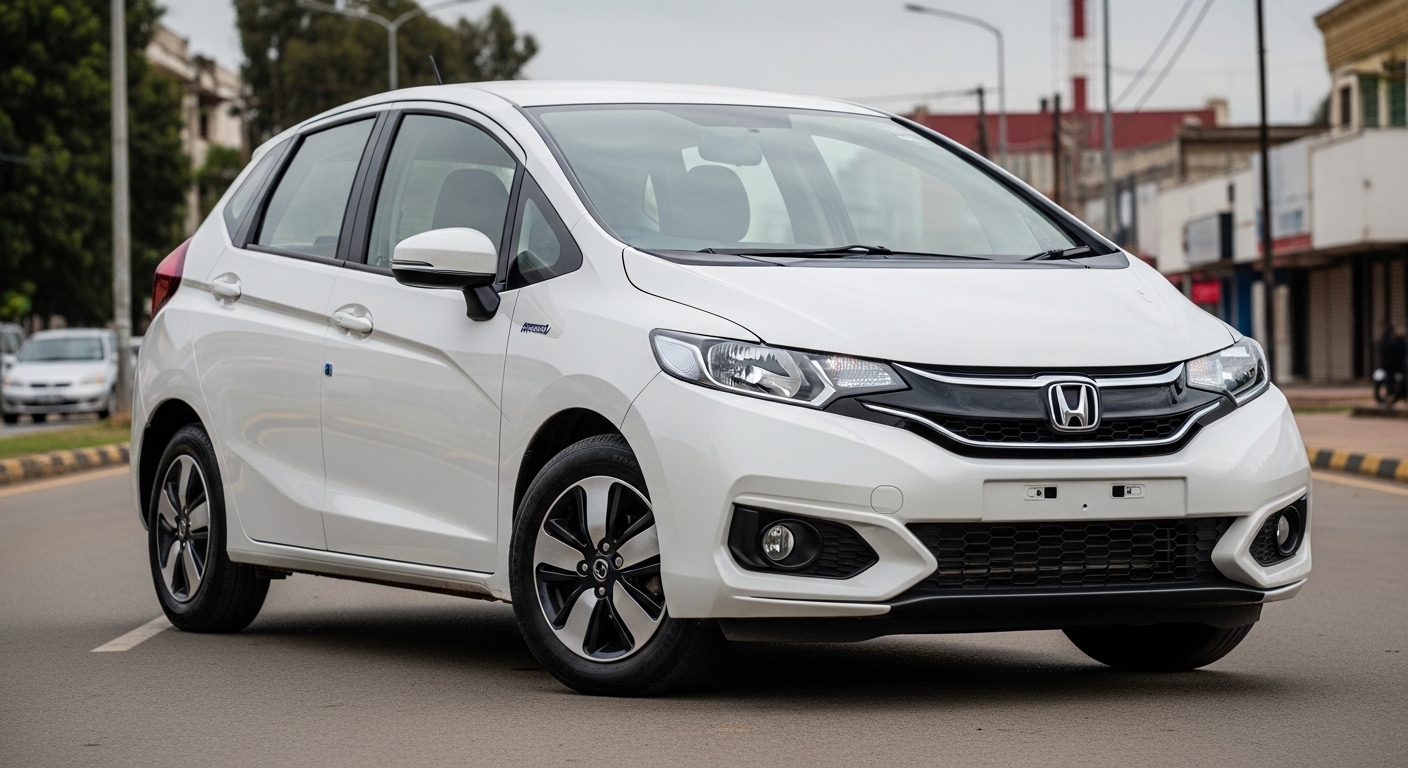 2018 Honda Fit Hybrid
In 2026, the selected 2018 vehicle page recorded a 1,500cc LEB engine, 110 PS, front-wheel drive, automatic transmission and five seats (2018 Honda Fit vehicle page, 2026). Honda’s 2020-2022 e:HEV Basic FF archive lists 29.4 km/L under WLTC, with 30.2 km/L in the city cycle (Honda, Fit official archive, 2022).
The hybrid generation must be confirmed because Japanese-market Fit systems vary by year. The selected page records 109,000km and auction grade 3.5, so battery condition, service evidence, warning lights and body repairs deserve attention. It suits city buyers wanting more cabin flexibility, but compare local technician familiarity and parts access for the exact Fit and Toyota alternatives.
Toyota Yaris Hybrid, best compact newer Toyota
The Toyota Yaris Hybrid suits buyers who want a compact Toyota with newer-generation technology. It is easy to place on narrow urban streets and remains small enough for everyday parking.
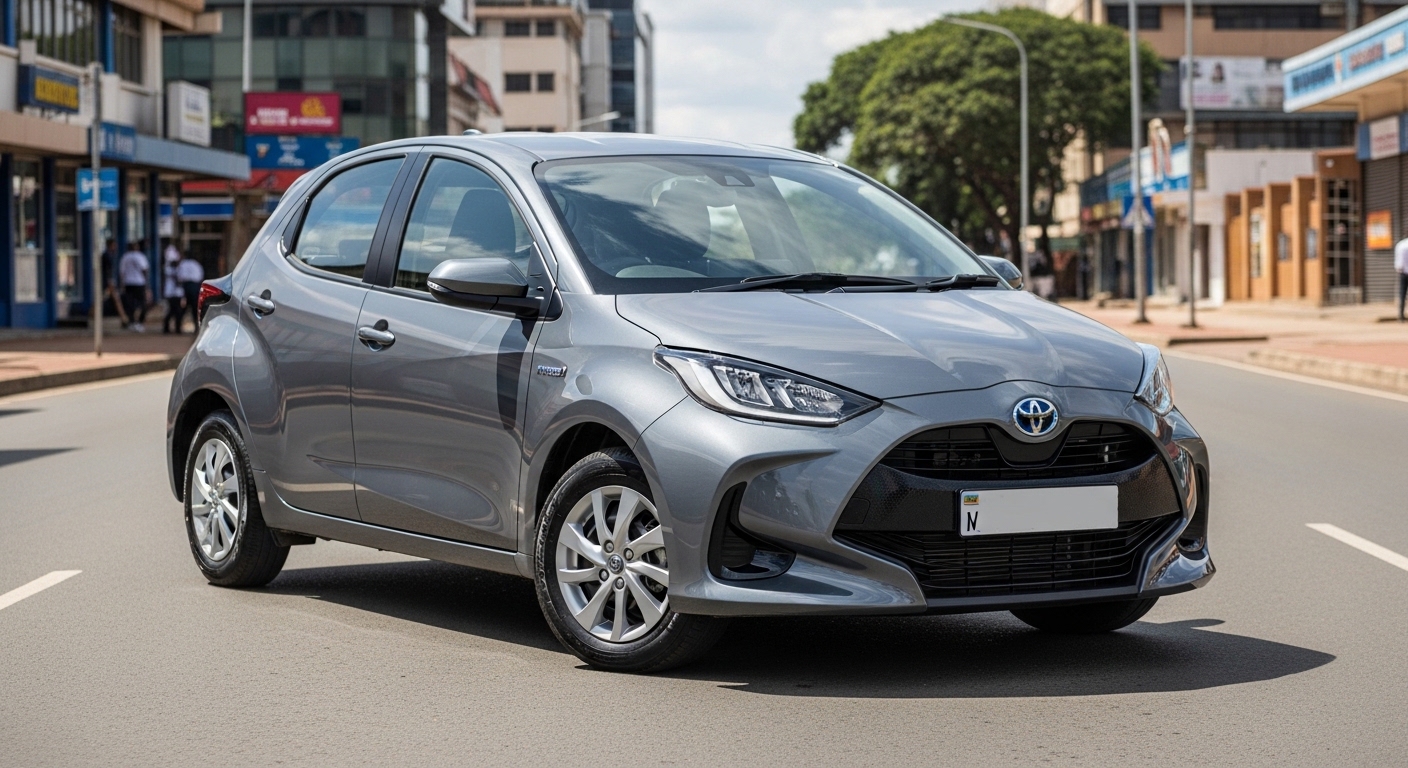 2021 Toyota Yaris Hybrid
In 2026, the selected Yaris page recorded a 1,500cc M15A-FXE engine, 91 PS, front-wheel drive, automatic transmission and five seats (2021 Toyota Yaris vehicle page, 2026). Its 3,940mm length and 2,550mm wheelbase favour city use, but the rear seat and boot are smaller than those of the Prius, Corolla and Sienta.
The selected vehicle records 101,000km and auction grade RA. That grade should be read with the inspection report rather than treated as a complete condition verdict. The Yaris suits urban commuters who want a newer compact Toyota, but it is less suitable for regular full-load family travel.
Citation capsule: Compact hybrids are strongest in urban Malawi because their small bodies suit traffic and parking. The Aqua offers a 1,500cc Toyota system and up to 34.6 km/L WLTC for selected current grades, while the Note and Fit provide alternative layouts with generation-specific fuel figures.
Which Family Hybrid Offers the Best Balance of Space and Running Cost?
In 2015, Toyota’s archived Prius specification listed a 1.797-litre engine and 37.2 km/L under the JC08 test cycle (Toyota, Prius archive specification, 2015). Family buyers should look beyond fuel economy because boot space, passenger comfort, condition and engine size matter on longer trips.
Toyota Prius, best for longer trips and mixed driving
The Toyota Prius is probably the best fit for buyers who combine city driving with regular travel between Lilongwe, Blantyre, Mzuzu and other towns. Its liftback body gives better family practicality than a small hatchback.
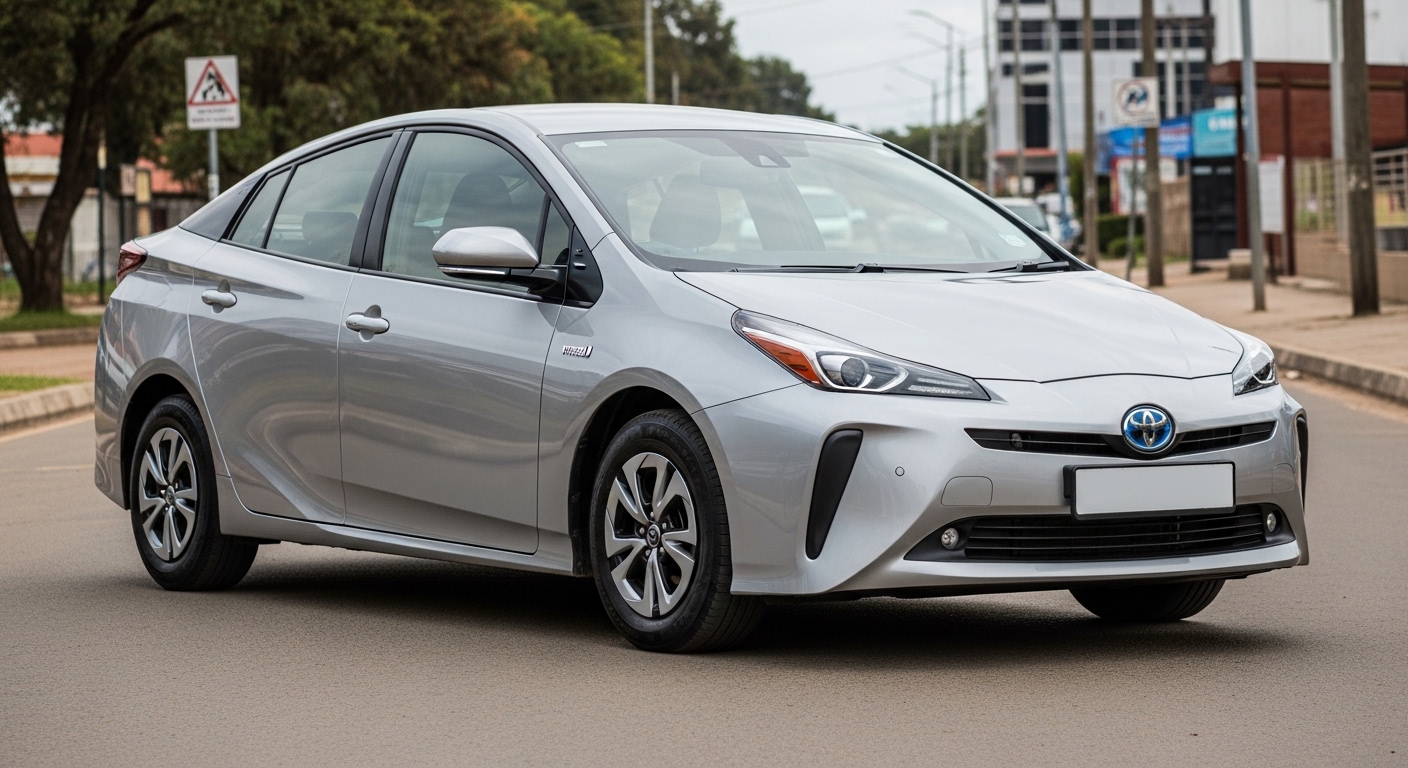 2019 Toyota Prius
In 2026, the selected Prius page recorded a 1,800cc 2ZR-FXE engine, 98 PS, front-wheel drive, automatic transmission and five seats (2019 Toyota Prius vehicle page, 2026). The page records 78,000km and auction grade 3.5. Check battery evidence, suspension, tyres, underbody condition and auction notes before relying on the Prius badge.
Older Prius examples can be considered because Carbarn’s current guidance states that Malawi has no general import age limit. Confirm this regulatory point with the relevant Malawi authority before relying on it. Age still increases the chance of corrosion, worn suspension, battery concerns and harder-to-source trim. The Prius suits regular longer travel, but it may not be the lowest-cost option for a buyer who only needs a small city car.
Toyota Corolla Hybrid example, practical Toyota option
The Toyota Corolla Hybrid example is worth considering when a conventional Toyota layout and familiar driving position matter. Treat this as an editorial buyer-fit recommendation, not proof that the linked vehicle is a Corolla Axio sedan.
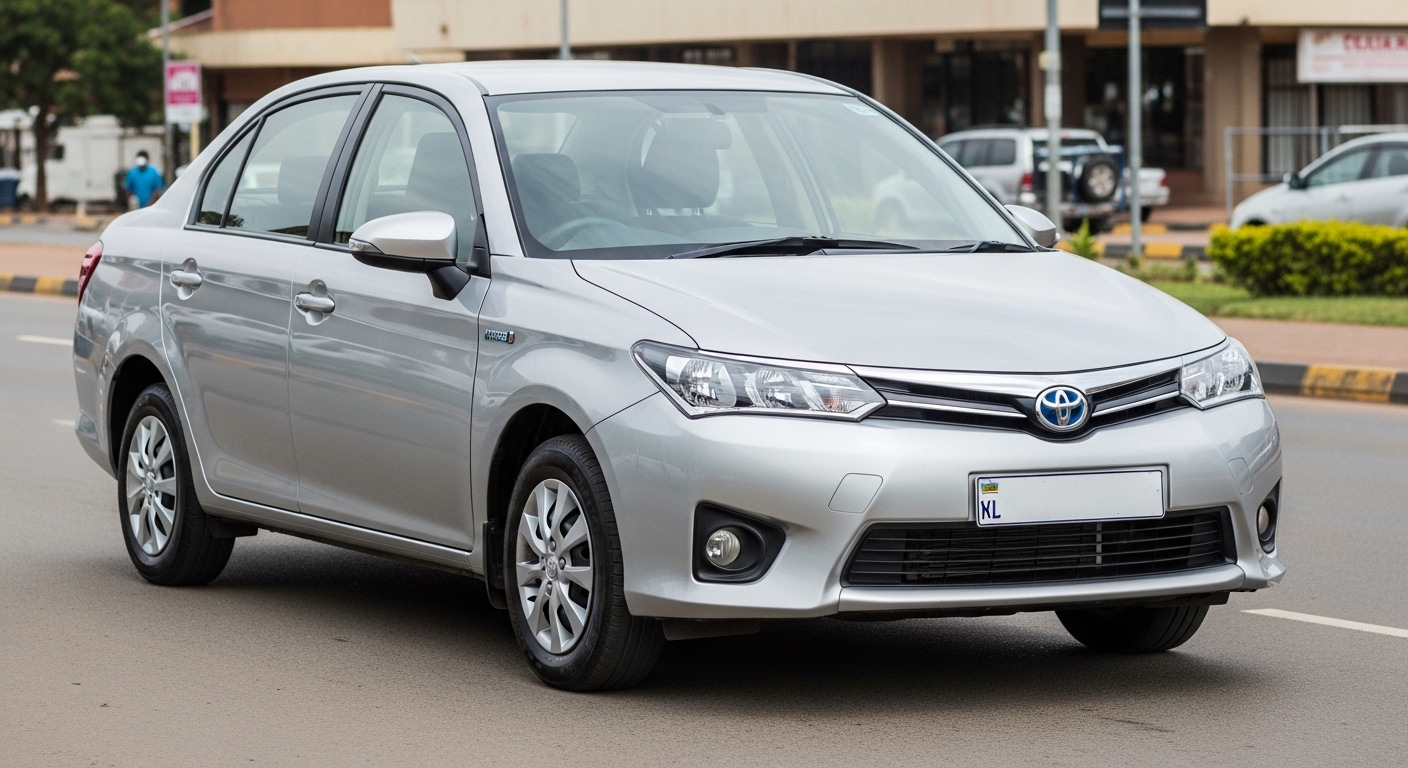 2015 Toyota Corolla hybrid example
In 2026, the selected Corolla page recorded 1,490cc, a 1NZ-FXE engine, 74 PS, front-wheel drive, automatic transmission and five seats (2015 Toyota Corolla vehicle page, 2026). The example records 23,000km and auction grade 4, but those details apply to that vehicle only; the page does not establish an Axio sedan identity.
This Corolla example gives up some cabin flexibility compared with a Fit, Prius or wagon. It can make sense when a modest engine size and Toyota familiarity matter more than maximum cargo versatility. Compare exact variants through the Toyota specification reference.
Toyota Corolla Fielder Hybrid, best hybrid wagon for family and cargo space
The Toyota Corolla Fielder Hybrid offers one of the strongest combinations of family seating, luggage space and manageable engine capacity. Its wagon body is useful for school trips, shopping and small-business loads.
In 2026, the selected Corolla-family vehicle page recorded 1,500cc, a 1NZ-FXE engine, 74 PS, front-wheel drive, automatic transmission and five seats (2014 Toyota Corolla vehicle page, 2026). Toyota’s archived specification for a matching Fielder Hybrid lists 1.496 litres and 34.4 km/L under the JC08 test cycle. Confirm the exact model code before describing the selected vehicle as a Fielder or applying this figure to it.
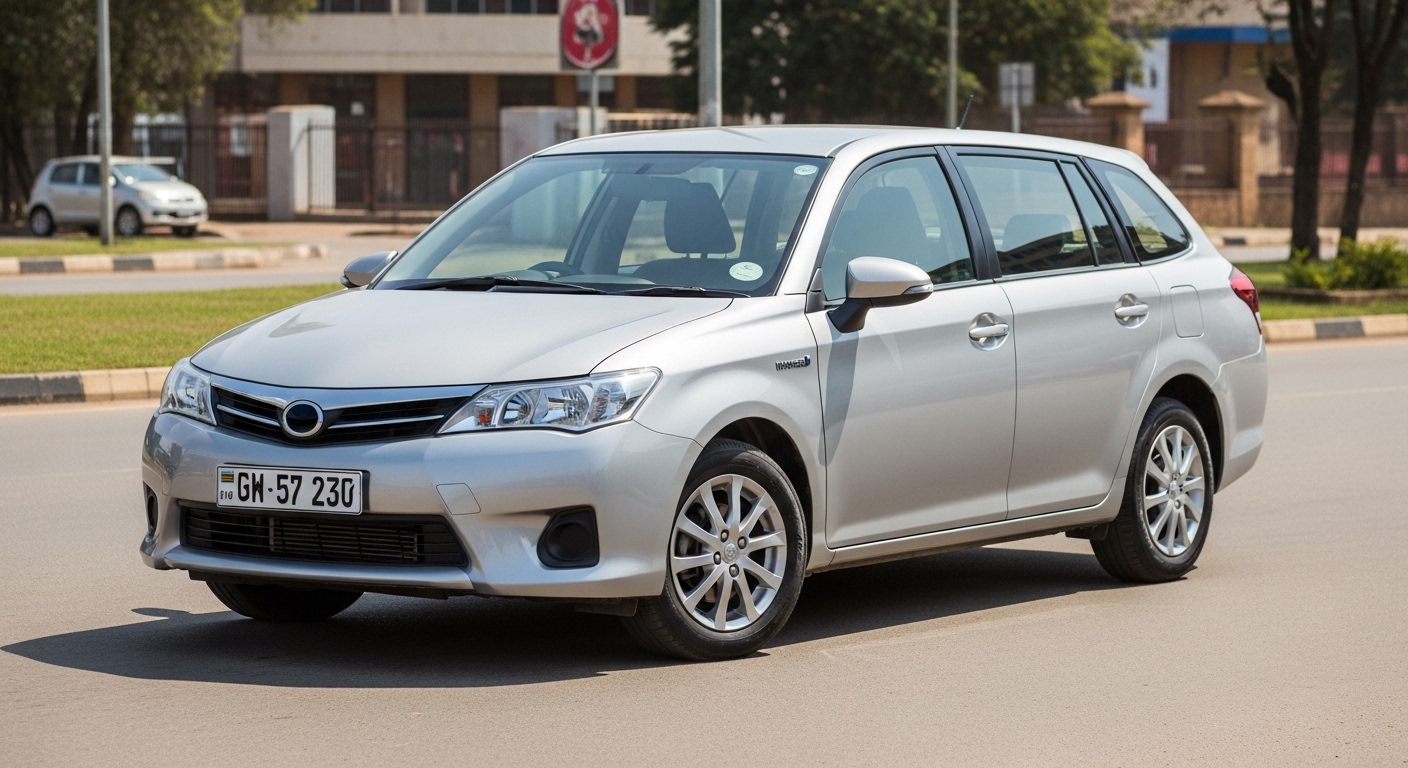 Toyota Corolla Fielder Hybrid wagon profile
The dedicated Fielder Hybrid page reported no current listings when checked in August 2026, so sourceability should be confirmed before you plan around this model. Exact wagon body and trim parts should be checked with a local technician before purchase. It suits families and businesses, but not buyers focused only on the smallest purchase and clearance exposure.
Toyota Corolla Hybrid, best newer family option
The Toyota Corolla Hybrid is a balanced choice for buyers wanting a newer-feeling family Toyota. It offers more road presence and cabin width than an Aqua or Yaris.
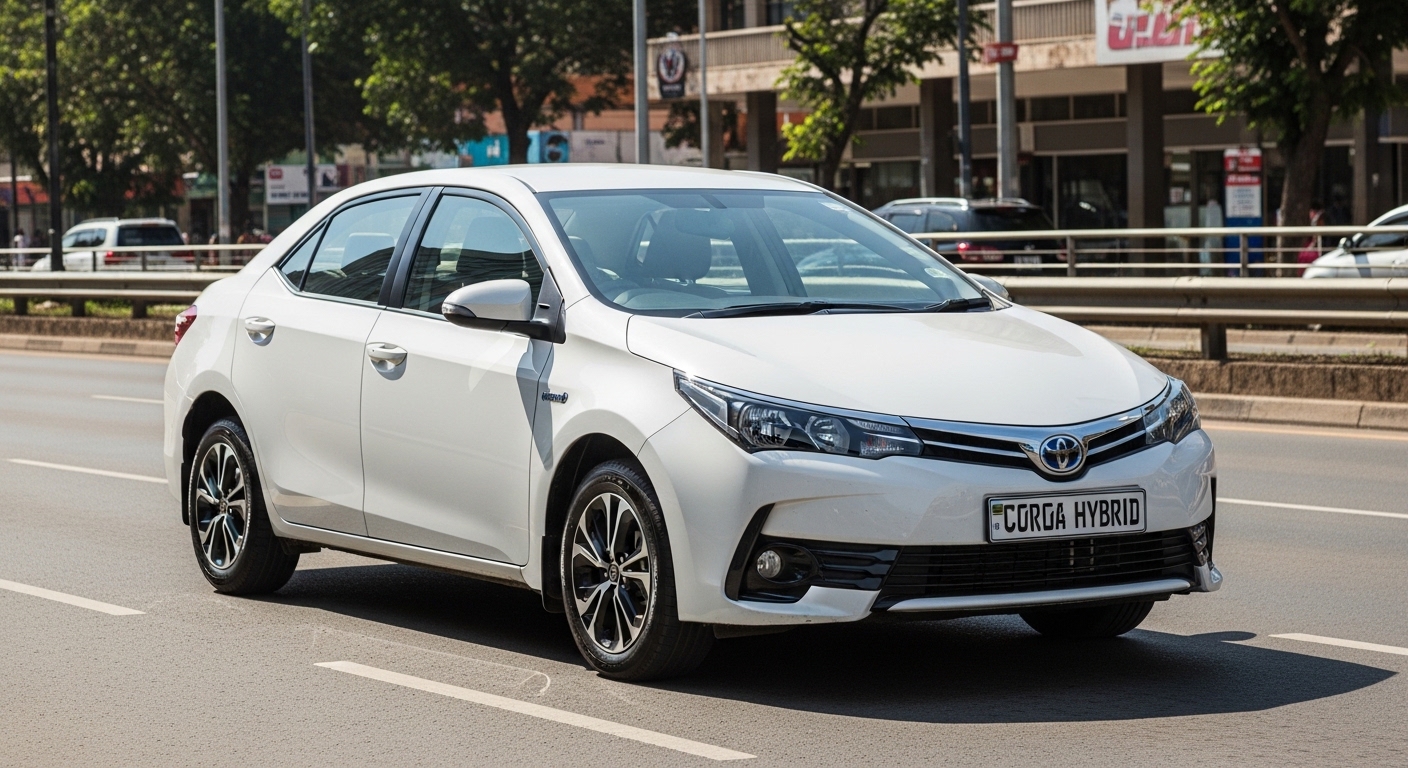 2018 Toyota Corolla Hybrid
In 2026, the selected Corolla page recorded a 1,800cc 2ZR-FXE engine, 98 PS, front-wheel drive, automatic transmission and five seats (2018 Toyota Corolla vehicle page, 2026). The example records 94,000km and auction grade 4. Its larger purchase band can still make the total higher than a smaller hatchback.
The Corolla suits buyers who value a newer family layout and familiar Toyota ownership. It may not suit a buyer whose priority is the lowest possible import exposure. Confirm the exact body style, engine capacity, model code and official fuel figure before comparing it with another Corolla generation.
Citation capsule: The Prius, Corolla examples, Fielder candidate and Corolla Hybrid cover different family needs. Prius offers a longer-trip format, the 2015 Corolla example has a conventional Toyota layout, the Fielder candidate may add wagon flexibility, and the newer Corolla brings a family format. Exact model code, engine size, generation and condition should guide the final choice.
Which Hybrid Body Style Fits a Larger Household or Higher Seating Position?
In 2026, the selected Toyota Sienta page recorded seven seats and a 1,500cc engine (2016 Toyota Sienta vehicle page, 2026). The Sienta adds family flexibility, while the C-HR adds crossover styling and seating height but gives up some practicality.
Toyota Sienta Hybrid, best for buyers who need more seats
The Toyota Sienta Hybrid is the strongest choice in this shortlist for buyers who need seven-seat flexibility. Its compact people-mover shape and sliding doors are useful for larger households.
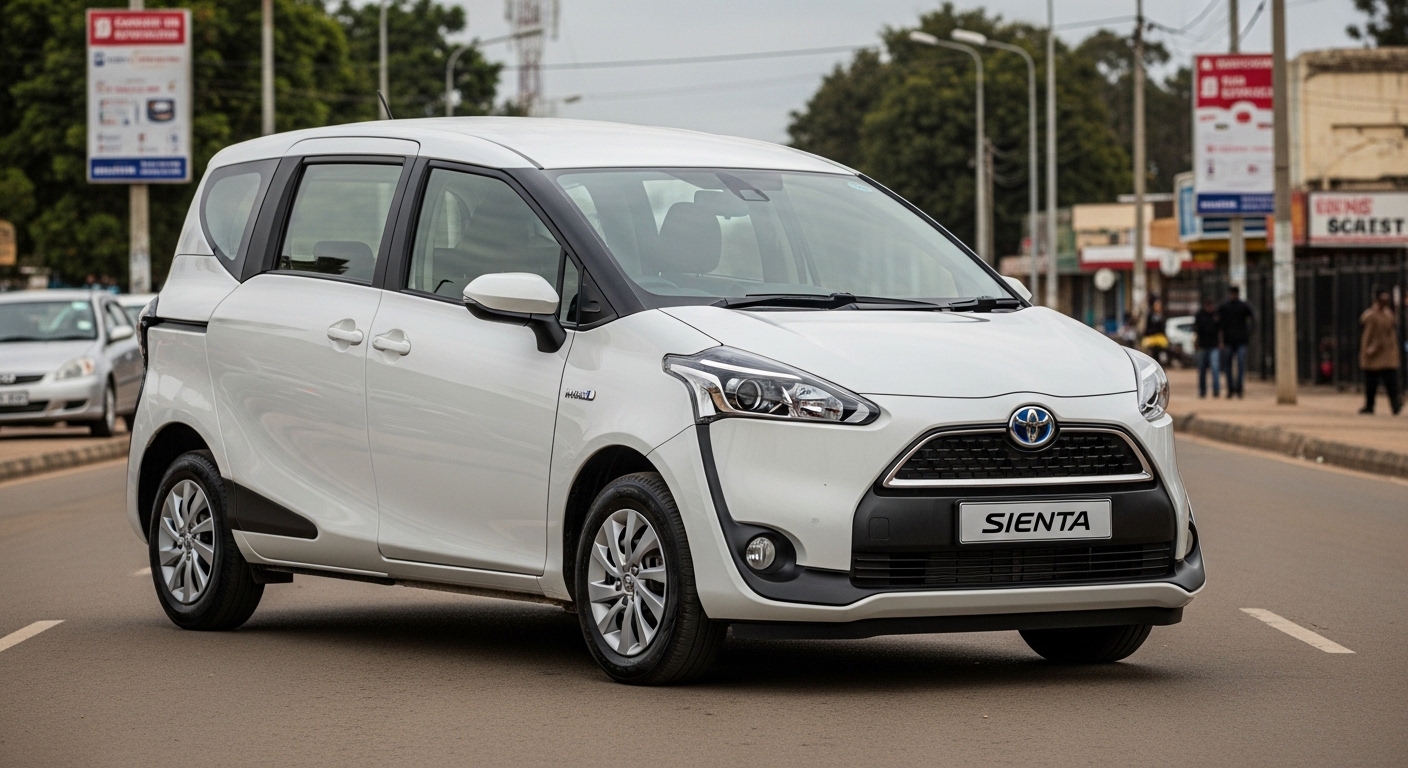 2016 Toyota Sienta Hybrid
In 2026, the selected Sienta page recorded a 1,500cc 1NZ-FXE engine, 74 PS, front-wheel drive, automatic transmission and seven seats (2016 Toyota Sienta vehicle page, 2026). The vehicle records 96,000km and auction grade 4. Check sliding-door operation, third-row condition, tyres, suspension and hybrid warnings.
The third row is best judged against your actual passenger needs. More seats and more body hardware can mean greater inspection and parts exposure than an Aqua. The Sienta suits families and people-moving duties, but it makes less sense for someone who normally drives alone.
Toyota C-HR Hybrid, best SUV-style option but not the most practical
The Toyota C-HR Hybrid suits buyers who want crossover styling and a higher seating position. It is a road-focused vehicle, not a serious off-road SUV.
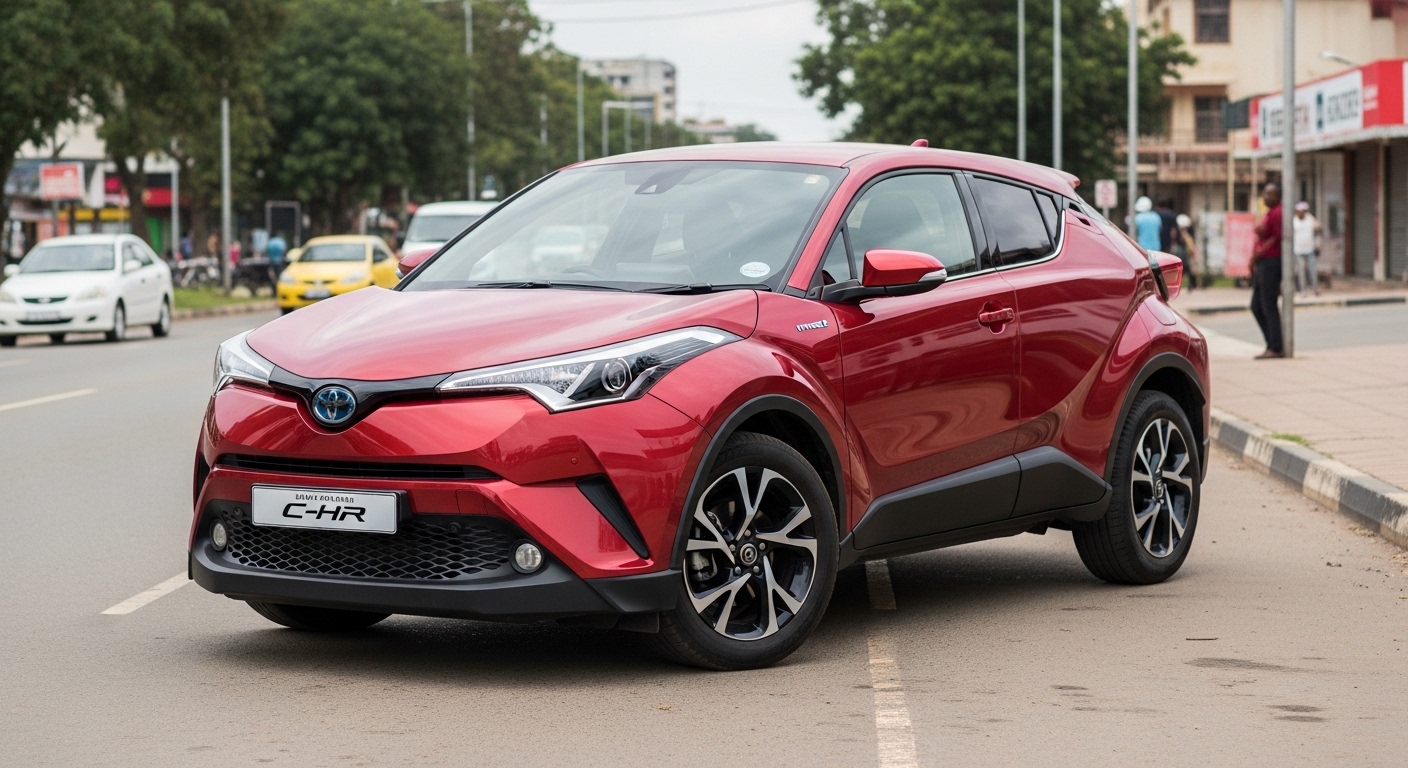 2019 Toyota C-HR Hybrid
In 2026, the selected C-HR page recorded a 1,800cc 2ZR-FXE engine, 98 PS, front-wheel drive, automatic transmission and five seats (2019 Toyota C-HR vehicle page, 2026). Toyota’s C-HR material lists 25.8 km/L under WLTC and 30.4 km/L under JC08 for a matching specification (Toyota, C-HR vehicle information, 2019).
Rear visibility, rear-seat space and boot practicality are weaker than the Fielder or Prius. The selected example records 110,000km and auction grade 4. It suits buyers prioritising design and seating position, but it is poorer value for buyers focused on minimum landed cost or rough-road clearance. Read the Toyota C-HR Malawi buying guide for more road-use detail.
Citation capsule: The Sienta is the practical choice when seven seats matter, while the C-HR is a style and seating-position choice. Neither should be selected from body shape alone. The exact drivetrain, engine capacity, ground clearance, tyres and inspection findings matter on Malawi roads.
Which Hybrid Is Best for Your Malawi Driving Pattern?
In August 2026, a live category snapshot showed 41 Aqua, 32 Prius, 25 C-HR, 16 Corolla, 15 Note, 10 Yaris and five Honda Fit listings, but the figures were only a dated feed snapshot (Japanese vehicle category pages, 2026). Your driving pattern matters more than that temporary count.
| If you... | Start with... | Why |
|---|---|---|
| Mostly drive around Lilongwe or Blantyre | Toyota Aqua | Compact body and manageable 1,500cc system |
| Travel regularly between cities | Toyota Prius | More settled family and highway character |
| Prefer a Corolla hybrid example | Toyota Corolla Hybrid example | Familiar Toyota layout and modest engine size |
| Need family boot space | Corolla Fielder Hybrid | Flexible wagon layout |
| Need seven seats | Toyota Sienta Hybrid | Compact people-mover format |
| Want a different hybrid layout | Nissan Note e-POWER | Check the exact drivetrain and service requirements |
| Need flexible small-car space | Honda Fit Hybrid | Compact body with versatile interior |
| Want a newer compact Toyota | Toyota Yaris Hybrid | Easy around town and newer-generation positioning |
| Want a newer family Toyota | Toyota Corolla Hybrid | Balanced size and familiar Toyota layout |
| Want crossover styling | Toyota C-HR Hybrid | Higher seating position and distinctive design |
The Toyota Aqua is the strongest general starting point for many urban buyers. The Prius makes more sense for regular longer trips, while the Fielder or Sienta suits family space. The Note is the interesting alternative for buyers who prefer electric-motor response.
[UNIQUE INSIGHT] Fuel economy does not settle the decision by itself. A larger hybrid can use little fuel but still cost more to import, while an older compact model can create more battery, suspension or body-condition risk.
Citation capsule: The best hybrid for Malawi depends on the driver’s route and household. Aqua suits urban commuting, Prius suits longer travel, Fielder suits cargo, Sienta suits seven passengers, and C-HR suits buyers who value crossover styling more than maximum practicality.
What Should You Check Before Importing a Used Hybrid?
In 2026, the selected Aqua page showed auction grade 3.5, while the selected Prius page showed grade 3.5 and the Note page showed grade 4 (Toyota Aqua vehicle page, 2026; Toyota Prius vehicle page, 2026; Nissan Note vehicle page, 2026). Those grades provide a starting point, not a complete condition diagnosis.
Vehicle and condition checks
Start with the official Japanese auction sheet. Confirm the auction grade, odometer, repair marks, interior notes, underbody comments and any recorded accident history. A grade should never replace detailed inspection reading.
Ask for available battery-health evidence and check for hybrid warning lights or dashboard messages. Also review the petrol engine, inverter cooling, suspension, tyres, brakes and underbody. Battery condition is only one part of an imported hybrid’s risk.
Check the exact engine capacity in cc, drivetrain and model code. This matters especially for Note e-POWER, Prius E-Four and other variants where 2WD and four-wheel-drive specifications differ. Carbarn’s guidance says normal imports should be right-hand drive. Confirm this eligibility requirement with the relevant Malawi authority before payment.
Parts deserve equal attention. Servicing and parts support can vary by model, generation and local supplier, so do not assume that a Toyota badge guarantees easy access. Ask a competent local technician about the exact generation, available parts and likely ordering time rather than only the badge.
Age and import eligibility
Carbarn’s current import guidance states that Malawi has no general import age limit (Malawi import rules, 2026). Because this is a regulatory point, confirm it with the relevant Malawi authority before relying on it. Older hybrids still need checks for corrosion, battery condition, repairs, suspension, tyres, parts and resale.
[PERSONAL EXPERIENCE] Inspection reports often make small details visible before payment. Tyre tread, paint repairs, bumper marks, underbody cleanliness and dashboard warnings can tell you more about a specific vehicle than a general model reputation.
Citation capsule: A mature hybrid system cannot compensate for poor vehicle condition. Before importing, review the auction sheet, auction grade, mileage, battery evidence, warning lights, accident history, tyres, suspension, underbody, engine capacity and exact drivetrain.
How Can You Compare Japanese Hybrid Vehicles Before Paying?
In 2026, Carbarn’s import guidance describes RoRo transport to Dar es Salaam in about 24 to 34 days, plus inland transport into Malawi (Malawi import rules and regulations, 2026). Treat the schedule as an estimate. The safest comparison starts with the exact vehicle, its reports, its estimated landed cost and the full route.
The Japan-to-Malawi journey is not a local showroom purchase. The vehicle travels from Japan to Dar es Salaam, then by road into Malawi. Allow for the sea journey, port processes, customs assessment, inland transport and registration planning.
The late-stage comparison should include:
- The exact year, variant, engine code and cc.
- Auction sheet and auction grade.
- In-house inspection findings.
- Odometer and body-condition notes.
- Hybrid battery evidence where available.
- Shipping and inspection charges.
- Estimated landed cost.
- Separate duty, VAT and customs-clearance costs.
- The vehicle’s suitability for your roads and household.
You can browse Japanese hybrid vehicles for Malawi, compare a Toyota Aqua vehicle example, review a Toyota Prius example, inspect a Nissan Note e-POWER example, or review a Honda Fit Hybrid example.
In the final paragraph of this process, Carbarn’s Japan-to-Malawi import service provides Japan-based vehicles for Malawi buyers, two reports before payment, a buyer dashboard for invoices, inspection documents, bill of lading and vessel tracking, RoRo shipping to Dar es Salaam, inland road transport, vehicle-specific estimated landed-cost information and guidance through the buying and import process. The listed vehicle price is not automatically the final cleared or on-road cost, because duty, VAT and customs clearance are paid separately where applicable. A vehicle-page estimate is planning information, not a tariff ruling; confirm the current MRA treatment and final customs assessment.
Citation capsule: Japanese hybrids for Malawi should be compared by exact vehicle, not only by model name. Review the auction sheet, inspection report, engine capacity, estimated landed cost and full Japan-to-Dar es Salaam-to-Malawi route before paying.
What Evidence Supports This 2026 Hybrid Shortlist?
In August 2026, the dedicated Corolla Fielder Hybrid page reported no current listings, while other category pages showed multiple Toyota, Nissan and Honda hybrid examples (Toyota Corolla Fielder Hybrid category, 2026). This is why the shortlist considers both buyer fit and sourceability.
The shortlist also replaces the Subaru Impreza Hybrid with the Toyota Sienta Hybrid. The supplied Impreza pages did not provide enough confidence that the listed variants were genuine hybrids, while the Sienta vehicle page clearly records hybrid fuel, a 1,500cc engine and seven seats.
Fuel figures in this guide are separated by test cycle. The Aqua, Fit, Note and C-HR figures use WLTC where stated. Older Prius and Fielder figures use older Japanese test information. JC08 and WLTC should not be mixed into one simple ranking.
The strongest general choices are therefore not identical. Aqua is the practical urban starting point. Prius is the longer-trip option. Fielder is the useful wagon. Sienta is the family people-mover. Note e-POWER offers a different electric-drive experience. Fit, Yaris, Axio, Corolla and C-HR fill more specific buyer needs.