A low Japanese vehicle price can look attractive until duty, VAT, customs clearance and inland transport enter the calculation. A hybrid can also reduce fuel use, but the cheapest-looking car is not always the cheapest one to bring into Malawi.
This guide compares five Japanese hybrids for different buyers. You’ll see how the Toyota Aqua, Nissan Note e-POWER, Honda Fit, Toyota Yaris and Toyota Prius differ in engine size, fuel economy, space, age and daily use.
Quick Answer
- The Toyota Aqua is a strong small-car starting point for urban driving.
- The Nissan Note e-POWER offers a newer-feeling alternative.
- The Honda Fit gives you more flexible cabin space.
- In 2024, Toyota Japan rated a specified Aqua configuration at 32.0 km/L WLTC (Toyota Japan, Aqua specifications, 2024).
- Compare landed cost and engine capacity, not only the Japanese vehicle price.
What makes a hybrid affordable in Malawi?
An affordable hybrid has a manageable landed cost, suitable engine capacity and condition you can verify. For a simple comparison, treat low exposure as a smaller, under-2000cc car with a lower purchase price; medium exposure as a newer or better-equipped compact; and high exposure as a larger car, older car needing repairs, or one with higher customs value. Under Carbarn's published rules, the under-2000cc tier lists 25% import duty, 15% excise duty and 16.5% VAT, with final figures confirmed on the proforma invoice (Carbarn import rules). Engine size, age, customs valuation, shipping and clearance can move any car between those bands.
Landed cost means the cost of bringing the vehicle into Malawi, but confirm exactly what an estimate covers. Carbarn says its displayed price includes the vehicle and shipping, while duty, VAT and customs clearance are paid separately; inland transport is a later route stage. A low Japanese auction price can therefore become poor value after the full calculation.
No blanket age prohibition was identified in the sources reviewed, but vehicle age can affect duty and classification. If an older Aqua or Prius example has a lower purchase price, age increases the importance of battery evidence, accident history, rust, suspension and service records.
WLTC and JC08 are different Japanese test cycles. WLTC is generally the more useful modern comparison, while JC08 figures should remain separate. Neither test guarantees fuel use on Malawi’s roads.
Read the Malawi vehicle import rules and duty guidance for current eligibility, tax and documentation information.
Five affordable hybrids compared
The shortlist covers five kinds of value, from compact city economy to longer-distance comfort. For landed-cost exposure, the Aqua and Note are the low-to-medium starting points; the Fit and Yaris sit in the medium group; and the older, 1,800cc Prius deserves the highest caution because age, customs value and engine capacity can raise the final bill. In 2026, official Japanese figures range from 27.6 km/L WLTC for a specified Honda Fit e:HEV FF version to 35.4 km/L WLTC for a specified Toyota Yaris Hybrid configuration (Honda Japan, Fit comparison, 2026; Toyota Japan, Yaris specifications, 2026).
| Model |
Engine-size consideration |
Official cited figure |
Best suited to |
Main trade-off |
| Toyota Aqua |
1.5-litre hybrid format |
32.0 km/L WLTC* |
Urban commuting |
Less rear and boot space |
| Nissan Note e-POWER |
1.2-litre petrol generator engine |
28.4 km/L WLTC* |
Newer-feeling city driving |
Compare the full import cost |
| Honda Fit Hybrid |
1.5-litre hybrid format |
27.6 km/L WLTC FF* |
Small-family practicality |
Figures vary by drivetrain |
| Toyota Yaris Hybrid |
1.5-litre hybrid |
35.4 km/L WLTC* |
Compact city use |
Limited rear space |
| Toyota Prius |
1.8-litre hybrid |
32.6 km/L WLTC* |
Intercity travel |
Compare the full import cost |
*These are current same-name Japanese-market reference figures, not specifications for every featured used car. They apply only to specified grades, wheels and drivetrains, and are not guaranteed fuel consumption.
Which affordable hybrid suits your driving?
No single model wins for every Malawian buyer. The five supplied 2026 vehicle records range from a 1,200cc Nissan Note to a 1,800cc Toyota Prius, with different auction grades, ages and body layouts. Your best choice depends on city use, passengers, road distance and the landed-cost variation you can accept.
Toyota Aqua: the strongest small-car starting point
Toyota Aqua models make a lot of sense if you mainly drive around Lilongwe or Blantyre. The compact hatchback is easy to park, sensible on fuel and practical for a commuter or small household. It is less convincing when you regularly carry large loads or travel on rough roads.
The supplied 2017 NHP10 example is a five-seat hatchback with 124,000 km and an official auction grade of 4, according to its 2017 Toyota Aqua auction listing. The 1.5-litre hybrid format is relevant to a duty-conscious comparison. In 2024, Toyota Japan recorded 32.0 km/L WLTC for a newer specified Aqua configuration. That is a same-name model reference, not the official figure for this 2017 NHP10 (Toyota Japan, Aqua specifications, 2024).
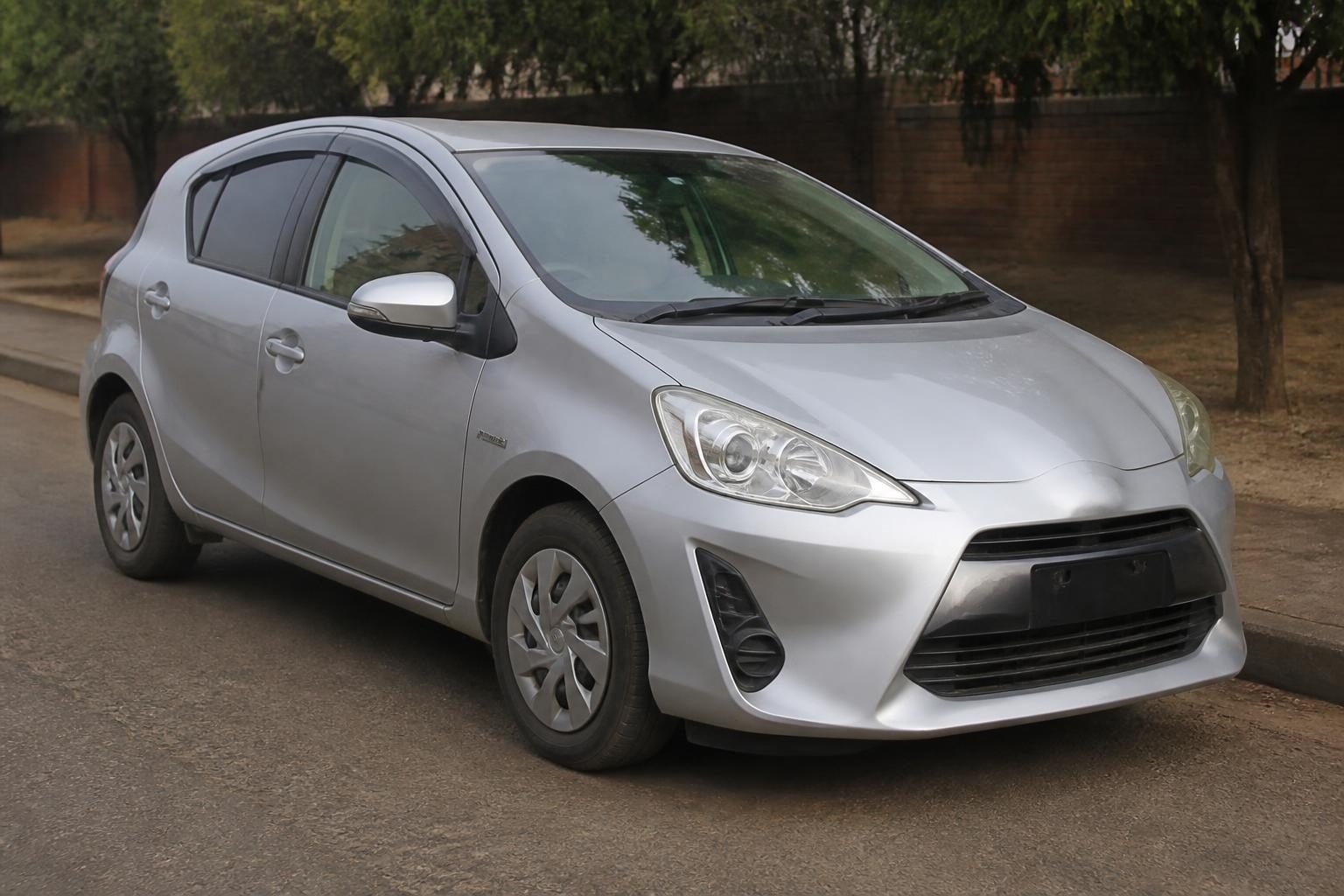 2017 Toyota Aqua
Check the exact fuel label, model code, battery-related evidence, underbody and suspension before committing. The Aqua has limited rough-road suitability, so check whether its size and clearance fit your regular routes before choosing it.
Nissan Note e-POWER: a newer-feeling compact alternative
Nissan Note models suit buyers who want a newer-feeling compact car with smooth electric-motor response. In an e-POWER system, the petrol engine generates electricity while an electric motor drives the wheels. That gives the Note a different feel from a conventional Toyota hybrid.
The supplied 2021 E13 example has a 1,200cc petrol engine used as a generator, 105,200 km and auction grade 4, according to its 2021 Nissan Note e-POWER auction listing. In 2026, Nissan Japan lists the Note X at 28.4 km/L WLTC and 33.8 km/L JC08. Keep those test cycles separate when comparing models (Nissan Japan, Note fuel-economy information, 2026).
The trade-off is familiarity. Before buying, ask a local hybrid specialist whether they can diagnose and service the Nissan e-POWER system. Compare the Note's full import cost with an Aqua or Fit rather than assuming its newer design will cost more.
Honda Fit Hybrid: the practical small-family choice
Honda Fit hybrid models are probably the best fit for buyers who need flexible cabin space without moving up to a Prius. The hatchback is easy around town and useful for small families. Check Honda's specification details if folding-seat practicality is a deciding factor.
The supplied 2018 GP5 listing is identified as a 1,500cc hybrid, with 109,000 km, five doors and auction grade 3.5 (2026 Honda Fit vehicle listing). Honda’s current specifications list a 1.496-litre e:HEV powertrain. The cited current e:HEV LUXE figures are 27.6 km/L WLTC for FF and 23.5 km/L WLTC for 4WD. They are not official figures for this older GP5 (Honda Japan, Fit comparison, 2026).
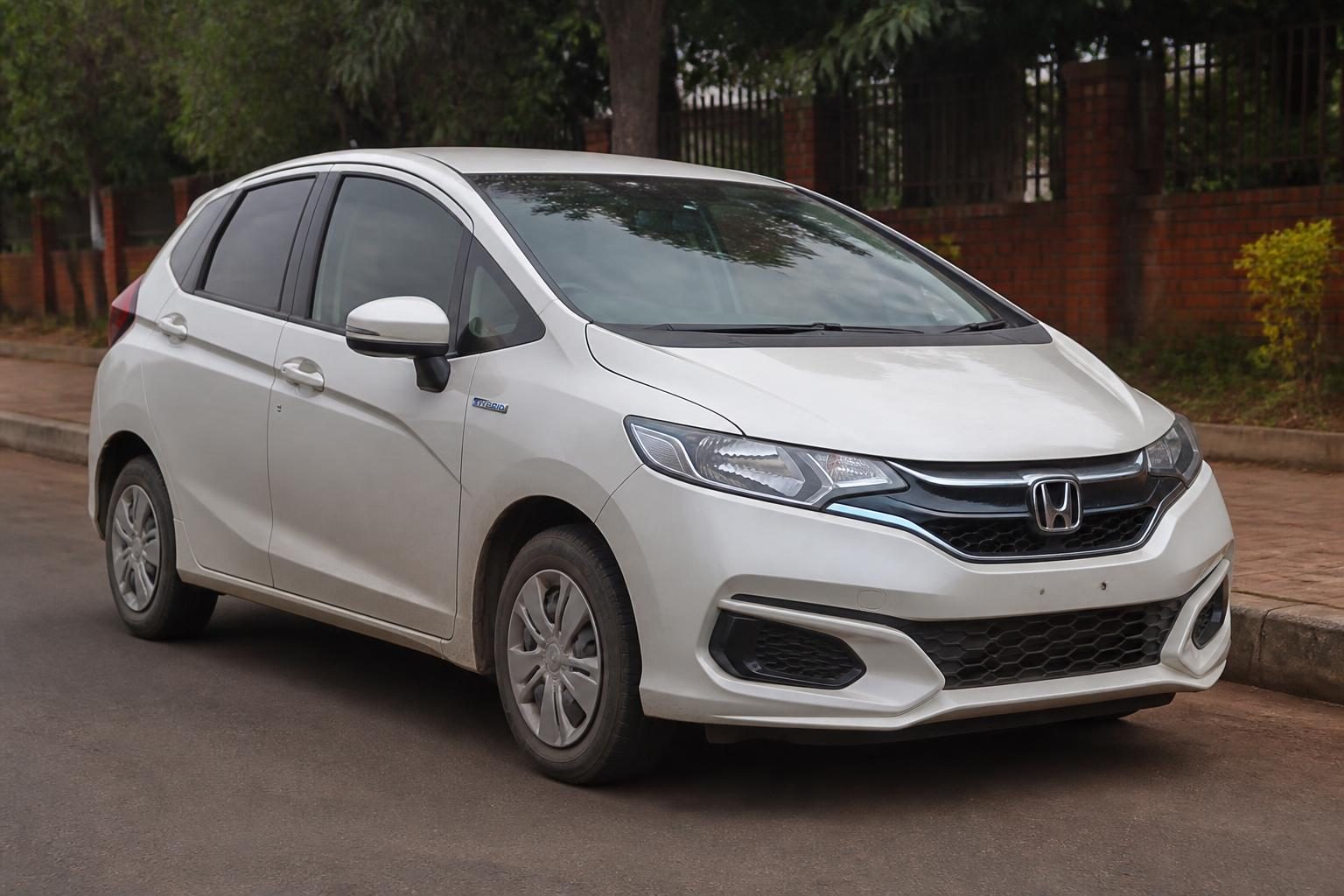 2018 Honda Fit
Those figures apply to specified e:HEV grades, so confirm the exact GP5 specification on any vehicle page. Choose the Fit if flexibility matters more than absolute fuel economy. Check the drivetrain, battery evidence, tyres and underbody condition.
Toyota Yaris Hybrid: a compact city option
The 2021 Toyota Yaris vehicle listing gives buyers a newer compact Toyota option for city driving. Its small footprint makes parking easier, while the hybrid system suits short commutes and stop-start traffic. Rear-seat space is the main compromise.
The supplied MXPH10 example has a 1.5-litre hybrid system, 110,967 km and auction grade 3.5. In 2026, Toyota Japan published 35.4 km/L WLTC for one specified Yaris Hybrid configuration (Toyota Japan, Yaris specifications, 2026). That figure depends on the exact grade, wheels and drivetrain.
The Toyota Vitz listings also include petrol vehicles, so don't assume a Vitz or Yaris listing is a hybrid. Check the fuel label and model code carefully.
Toyota Prius: better for space and longer trips
Toyota Prius models make more sense for buyers who regularly carry passengers or travel between Lilongwe, Blantyre and other cities. Its larger body may suit those needs, but compare dimensions, condition and the full import cost rather than assuming it is more comfortable or cheaper to land than an Aqua.
The supplied 2012 ZVW30 example is an 1,800cc, five-seat hybrid with 114,000 km and auction grade 4 (2026 Toyota Prius vehicle listing). In 2026, Toyota Japan rated a specified current 1.8-litre 2WD Prius at 32.6 km/L WLTC. That is a same-name model reference, not the official figure for this 2012 ZVW30 (Toyota Japan, Prius specifications, 2026).
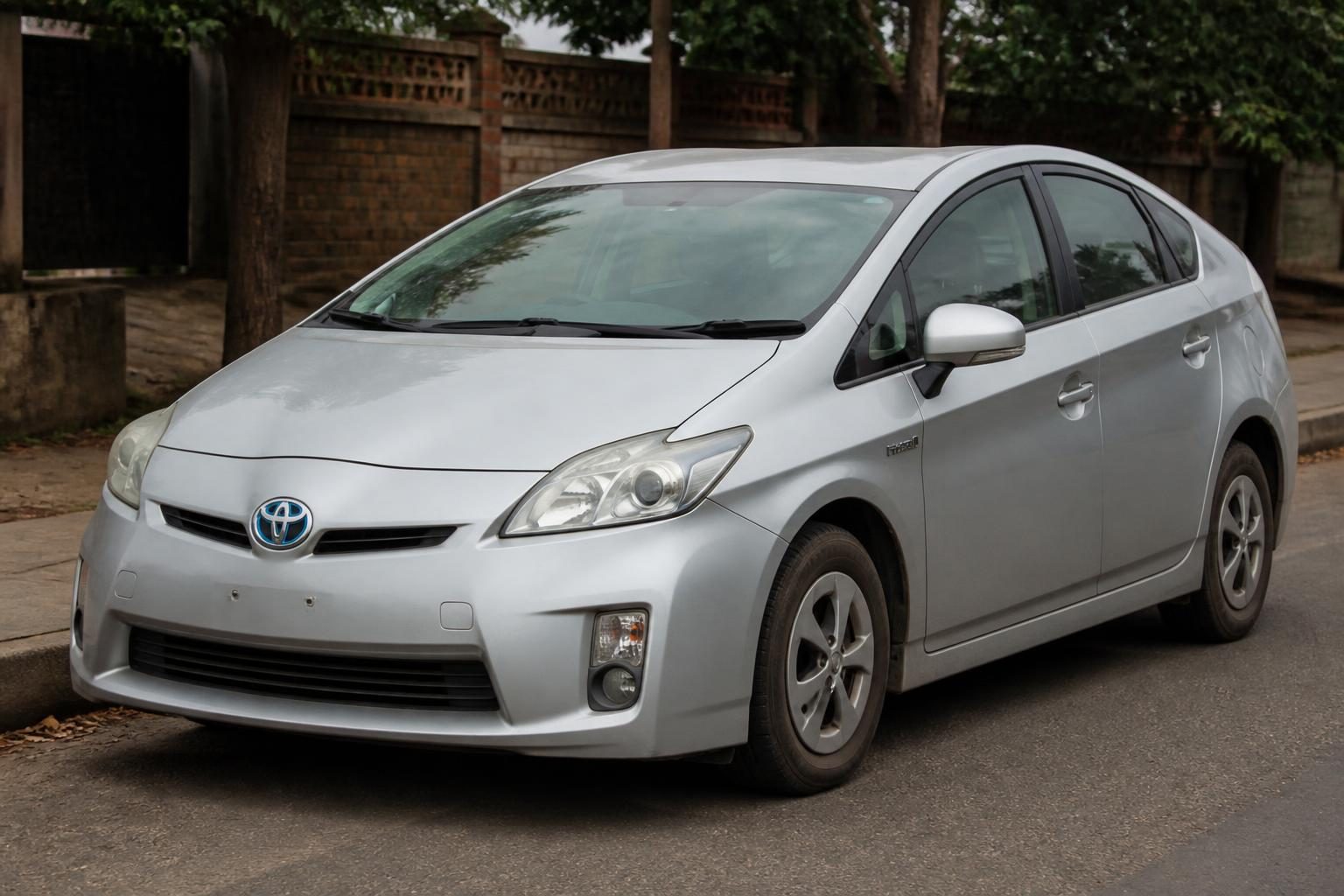 2012 Toyota Prius
No blanket age prohibition was identified in the sources reviewed, but vehicle age can affect duty and classification. Still, battery evidence, suspension, accident history and underbody condition matter more than age alone. A Prius may be poor value if your driving is mostly short urban trips and your landed-cost ceiling is strict.
Matching the hybrid to your needs
The right model depends more on your routine than its badge. In 2026, the official figures above show that every shortlisted hybrid has a different balance of fuel economy, space and price exposure. A buyer carrying passengers between cities should not choose the same way as someone making short daily trips around town.
| Buyer priority |
Strong starting point |
Why |
| Compact urban economy |
Toyota Aqua |
Small body and 1.5-litre hybrid format |
| Newer-feeling compact driving |
Nissan Note e-POWER |
Smooth electric-motor response |
| Flexible small-family use |
Honda Fit |
Practical cabin and cargo layout |
| Easy parking and commuting |
Toyota Yaris Hybrid |
Compact dimensions |
| Passenger space and intercity travel |
Toyota Prius |
Larger body; compare the exact dimensions and condition |
Before choosing, check the auction grade, odometer, accident comments, tyres, underbody, battery-related inspection information, exact engine capacity and drivetrain. Official fuel figures are laboratory results. They are useful for comparison, but they won’t predict your exact consumption on Malawian roads.
Use the Toyota specifications and engine-size reference pages to check the model and variant details.
What will you still pay after the Japanese vehicle price?
The advertised vehicle price is only one part of the Malawi buying calculation. Under Carbarn's published import guidance, the under-2000cc tier lists 25% import duty, 15% excise duty and 16.5% VAT. Excise rises with engine capacity, so confirm the exact classification and final figures on the proforma invoice before payment (Carbarn import rules).
The import route is Japan to Dar es Salaam by RoRo, followed by road transport into Malawi. Carbarn's Japan import guide gives a safer planning figure of about 24 to 34 days to Dar es Salaam, plus inland transport. This is an estimate, not a guarantee. Duty, VAT and customs clearance are separate from the vehicle price.
A smaller engine can help, but it does not settle the final bill. Customs valuation, vehicle classification, engine capacity, age and clearance charges all matter. Use the individual vehicle page’s estimated landed cost, then confirm the final figures on the proforma invoice.
[INTERNAL-LINK: how the Japan-to-Malawi buying process works → selection, payment, inspection, shipping and tracking]
How can a guided Japan import service help you compare hybrids?
A useful buying service should give you evidence before payment, not only a vehicle photograph. The buying process described on the Japan import guide includes two reports, shipping information and access to documents through a dashboard.
Each listed vehicle is Japanese stock with an official Japanese auction sheet and an in-house inspection report available before payment. Carbarn says the listed price covers the vehicle and shipping, while duty, VAT and customs clearance are separate; confirm any inspection charges on the proforma invoice. Buyers can use the dashboard for invoices, inspection sheets, bill of lading and vessel tracking. Support runs through Japan, with RoRo shipping to Dar es Salaam and road transport into Malawi.