Toyota Aqua in Malawi 2026: Cheap to Run, But What About Battery Life, Ground Clearance and Resale?
Toyota Aqua in Malawi 2026: Cheap to Run, But What About Battery Life, Ground Clearance and Resale?
Read Our Blogs today and Learn More
Loading ...
Frequently Asked Questions (FAQs)
The Toyota Aqua can suit urban Malawi buyers who value low fuel use and compact dimensions. Toyota’s first-generation catalogue lists a 1,496cc hybrid system and five seats (Toyota Japan Aqua vehicle catalogue, 2026). Its modest clearance and small body make it less suitable for rough roads and heavy loads.
Do not buy on an assumed battery-replacement timetable. Toyota says its hybrid batteries are engineered to last for the vehicle’s life, but that is general manufacturer guidance, not a promised interval for an imported Aqua (How long do Hybrid batteries last?, Toyota Cyprus, 2026). Check the individual battery, warning-light status and hybrid-system operation instead.
Ownership cost depends on local labour, parts availability and the condition of the individual car. Hybrid-system faults, suspension, tyres and battery-related repairs can all change the bill. Toyota Cyprus says its hybrid system includes a battery and recommends a Hybrid Health Check (How long do Hybrid batteries last?, 2026). Arrange qualified inspection where possible.
Toyota lists 140mm for the 2WD Aqua and 155mm for 4WD, measured at the engine under-cover (Aqua minimum ground-clearance FAQ, Toyota Japan, 2026). The first-generation NHP10 examples discussed here are FF/2WD, making 140mm the relevant figure. Passengers and luggage affect the practical measurement, so treat the Aqua as a low hatchback rather than a high-clearance vehicle.
The listing page’s 4/5 resale score is an internal market indicator, not evidence of a Malawi-wide resale percentage. Resale confidence depends on battery evidence, body condition, mileage, auction grade and records. A documented grade 4 example may reassure buyers more than a newer car with visible defects.
I am a Turkish-Australian automotive writer with a passion for hybrid vehicles and rugged 4WD adventures. My writing combines detailed technical insights with a love for outdoor exploration and Aussie driving culture. Having guest posted for leading automotive sites, my mission is to educate and inspire drivers considering greener and tougher vehicle options.
Published Date
September 10, 2026
Fuel costs make the Toyota Aqua attractive to many Malawian buyers. The concern starts when a cheaper example is already several years old. A worn hybrid battery, tired suspension or damaged underside can quickly change the ownership calculation.
For a buyer in Lilongwe, Blantyre or elsewhere, three questions matter most. Is the hybrid system healthy? Can the low hatchback cope with your usual roads? Will the next buyer trust its condition and records? This guide uses official Japanese specifications and live vehicle examples to answer those questions.
The Toyota Aqua suits urban buyers who value fuel economy, compact size and easy parking.
First-generation examples use a 1,496cc petrol-electric hybrid system, automatic CVT and front-wheel drive (Toyota Japan Aqua vehicle catalogue, 2026).
Battery age alone proves very little. Inspection evidence matters more than an eight- or ten-year rule.
Toyota lists 140mm ground clearance for 2WD versions, measured at the engine under-cover (Aqua minimum ground-clearance FAQ, Toyota Japan, 2026).
Buy the cleanest, best-documented example you can afford, not simply the cheapest one.
Is the Toyota Aqua a good fit for Malawi in 2026?
The Toyota Aqua is a five-seat, 1,496cc petrol-electric hybrid hatchback developed primarily for efficient urban driving. Toyota Japan’s catalogue identifies the first-generation model with a CVT and front-wheel drive (Toyota Japan Aqua vehicle catalogue, 2026). That makes it a compact, efficient town car, but not a universal Malawi vehicle.
The Aqua makes a lot of sense around Lilongwe and Blantyre. It is easy to manoeuvre, simple to park and well suited to daily commuting. The hybrid system can also reduce petrol use when traffic involves repeated braking and acceleration.
The compromises are just as clear. Rear-seat and boot space are modest, while the low body needs care around potholes, steep ramps and rough roads. A family carrying heavy luggage every week may find a larger hatchback or higher vehicle more comfortable.
The live Toyota Aqua listings in Malawi cover 2012 to 2019 examples, with odometers shown from 17,000km to 135,000km in the listing snapshot checked on September 9, 2026. That wide spread means condition and specification deserve close attention.
For a deeper look at engine size, drivetrain and variant details, compare the Toyota specifications before choosing a listing.
How cheap is the Toyota Aqua to run?
Toyota lists 37.0km/L for specified first-generation Aqua variants on the Japanese JC08 test cycle (Toyota Japan Aqua vehicle catalogue, 2026). That figure explains the model’s appeal, but it is not a guaranteed fuel-consumption result on Malawian roads.
The hybrid system is designed to make use of repeated slowing and electric assistance in town traffic. That operating pattern can suit short commutes and congested urban routes, but this article does not treat it as a measured Malawi fuel-saving result.
Actual fuel use changes with speed, passengers, tyres, road surface and driving style. Fast intercity driving, full luggage and poor maintenance can narrow the advantage. Why assume every Aqua will return the same figure?
At 1,496cc, the Aqua sits at the stated 1,500cc threshold, but the exact tariff treatment for a hybrid should be confirmed with MRA because recent budget changes affect hybrid excise bands. Check the current Malawi import rules and landed-cost guidance, and treat any vehicle-page estimate as provisional. The listed vehicle price is not the final on-road total.
What should you know about Toyota Aqua battery life?
Toyota says its hybrid batteries are engineered to last for the life of the vehicle (How long do Hybrid batteries last?, Toyota Cyprus, 2026). That is general manufacturer guidance, not a guarantee that every older imported Aqua will have a healthy battery.
Battery age is therefore a screening point, not a verdict. An older Aqua can still be a sensible purchase if its inspection evidence is strong. Conversely, a newer car with warning lights or unclear history may deserve more caution.
An Aqua battery should be judged through evidence from the individual vehicle, not through its model year alone. Toyota’s general guidance says hybrid batteries are engineered to last for the life of the vehicle, but this does not guarantee the condition of an imported car. Ask whether the auction sheet is available, check for warning lights and water damage, and request a proper hybrid health check where possible. An auction grade describes overall vehicle condition, not battery capacity. A grade 4 or 4.5 Aqua may still need separate hybrid-system testing. Battery age can raise a question, but it cannot answer it.
Ask whether the Japanese auction sheet is available. Check for warning lights, accident repairs, water damage and any record of hybrid-system work. Where possible, request a proper hybrid health check from someone familiar with Toyota systems.
Battery questions to ask before paying
Is a battery-health report available?
Does the petrol engine switch off normally during low-speed driving?
Does the battery gauge move steadily rather than rapidly between full and empty?
Is there unusual cooling-fan noise near the rear seat area?
Has the car had previous battery, inverter, ABS or hybrid-system repairs?
Does the inspection mention warning lights or water damage?
Uneven acceleration, poor fuel economy, frequent engine running and rapid battery-charge changes are non-specific prompts for inspection. They can occur during normal operation or reflect another fault, so none proves battery failure. Ask for proper diagnosis rather than treating these clues as a battery test.
An auction grade also does not measure battery capacity. Grade 4 or 4.5 can describe the vehicle’s overall auction condition, while the hybrid system still needs separate checking.
Is the Toyota Aqua’s ground clearance enough for Malawi roads?
Toyota’s Aqua ground-clearance FAQ lists 140mm for 2WD and 155mm for 4WD, measured at the engine under-cover in an unladen condition (Aqua minimum ground-clearance FAQ, Toyota Japan, 2026). The first-generation NHP10 examples covered here are FF/2WD, so the 140mm figure is the relevant starting point. Passengers, fuel and luggage can change the practical figure.
For Malawi roads, 140mm suits careful paved-town driving but offers less margin on rough routes. The Aqua is a low hatchback, so steep driveways, large speed humps, potholes and washouts can bring the front lip or under-cover into contact with the road. Toyota’s figure is measured unladen, which means passengers and luggage can reduce the available space beneath the vehicle. A driver who mainly travels around Lilongwe or on paved parts of Blantyre may find the clearance manageable with sensible speed and route choice. Someone who regularly uses badly rutted rural roads, carries heavy loads or needs a high driving position should look at a different type of vehicle. The official 140mm figure is a useful starting point, not a promise that every route will be comfortable.
That makes the Aqua manageable for paved town driving, but less forgiving on rough routes. Steep driveways, large speed humps, potholes and washouts can bring the front lip or under-cover into contact with the road.
The car is also more vulnerable when fully occupied. Heavy passengers and luggage reduce the space beneath the vehicle, especially where the road surface drops sharply. Careful speed and route choice matter more than fitting unsupported suspension modifications.
Driving pattern
Aqua fit
Why
Lilongwe town commuting
Strong
Compact and easy to manoeuvre
Mostly paved Blantyre driving
Good
Low stance is manageable with care
Paved intercity travel
Good if well maintained
Tyres, suspension and battery condition matter
Regular rough rural routes
Mixed to poor
Greater risk of scraping and underbody damage
Heavy loads or frequent full occupancy
Limited
Small hatchback body and low stance
Tall driving position required
Weak
It is not a high-clearance vehicle
The official figure should be checked against the exact drivetrain and model specification. The main advice remains simple: the Aqua is a low hatchback, not an SUV.
Does the Toyota Aqua hold its value in Malawi?
The live Aqua market page gives the model a 4/5 resale indicator, but it also rates rough-road suitability at 1/5 (Toyota Aqua listings in Malawi, 2026). Those are market guidance scores, not a Malawi-wide resale study.
Toyota familiarity and fuel economy may appeal to future buyers, but that is an informed buying-guide view rather than evidence of a Malawi-wide resale advantage. Compact dimensions suit drivers who mainly use urban roads. Still, resale confidence depends on what the next buyer can verify.
Positive factors include a clear auction sheet, credible mileage, clean bodywork, service invoices and evidence that the hybrid system works correctly. Keep import documents and inspection reports together. They reduce uncertainty when you eventually sell.
Warning lights, peeling paint, accident repairs, worn tyres and unclear battery history can reduce buyer confidence. A lower price today may not be good value if it leaves you with suspension or hybrid repairs later.
Which listed Toyota Aqua looks like the better buy?
The better Aqua is the example with the strongest balance of condition, mileage, reports and price. The newest listing is not automatically the safest choice, and the cheapest one may carry more future risk.
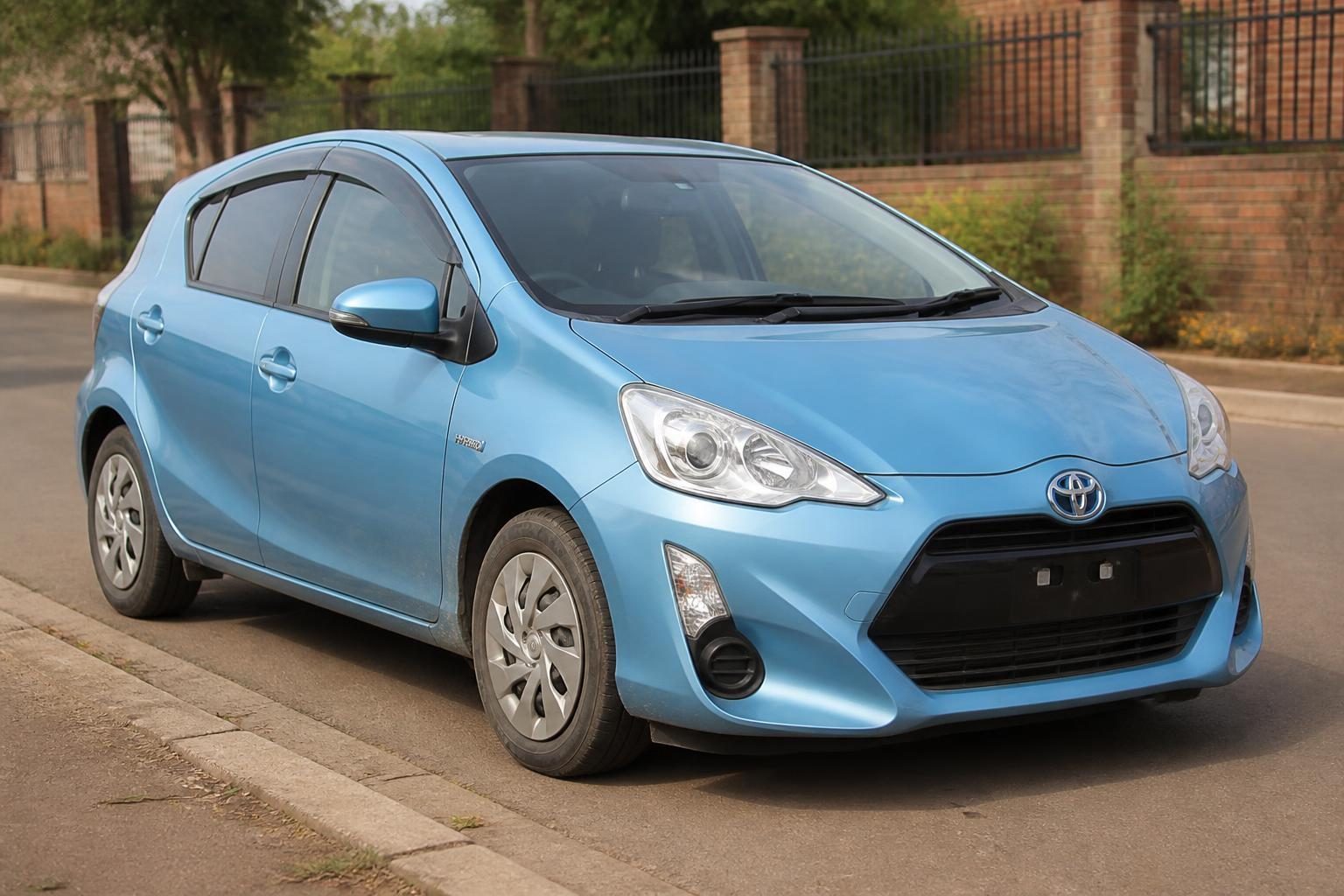
The selected 2016 Toyota Aqua, 71,000km example
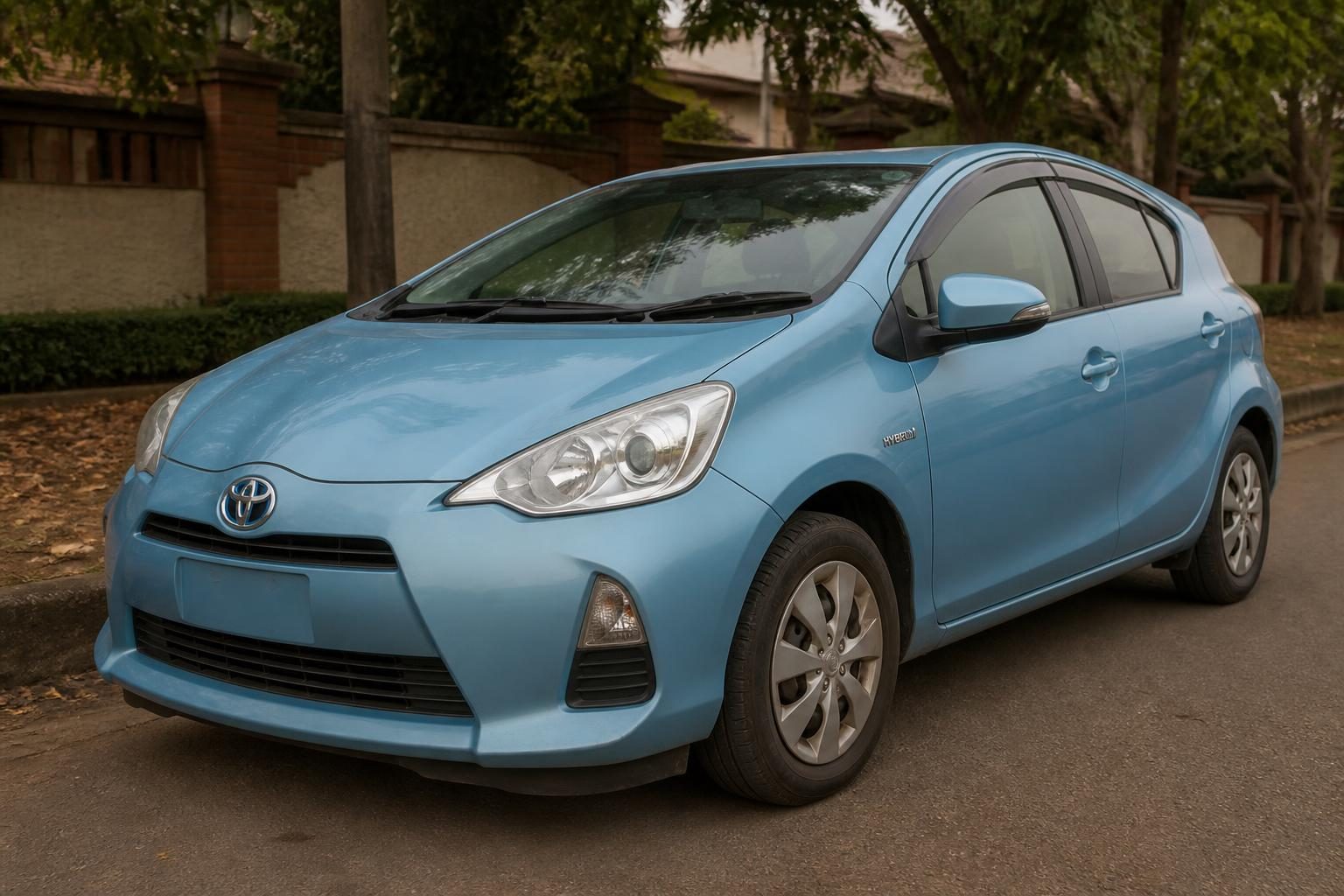
The 2016 Toyota Aqua is a useful reference vehicle for this decision. This is the 2016 example with 71,000km and auction grade 4.5. Its live page records a hybrid powertrain, 1,500cc engine, automatic transmission, 2WD drivetrain, pink exterior, 71,000km and auction grade 4.5 in the listing data checked on September 9, 2026.
2016 Toyota Aqua
2016 Toyota Aqua
The 71,000km odometer reading gives it a useful position for a 2026 buyer, while the grade provides condition evidence. Neither figure confirms battery health. The buyer should still ask about hybrid warnings, cooling-fan noise and available inspection information.
The 2017 example has lower mileage, but its inspection notes a front-bumper dent, roof oxidation, door-handle clear-coat peeling and a door scratch. The separate 2016 grade-4 example has higher mileage, but its inspection records a clean underbody and no damage found.
The 2014 example offers a lower purchase band and grade 4, but its 128,200km odometer and noted body dents deserve attention. These figures show why year alone is a poor buying shortcut.
Prices change with auctions and exchange rates. Use the live pages for the current vehicle or shipping-inclusive price, then confirm the CIF basis, duty, VAT and customs-clearance treatment. The quoted vehicle price does not establish the final landed or on-road cost, and current hybrid tariffs should be confirmed with MRA before payment.
Who should buy a Toyota Aqua, and who should skip it?
The Toyota Aqua suits buyers who mainly drive on paved roads, carry one to four people and value fuel economy. Toyota’s first-generation catalogue lists five seats and a 1,496cc hybrid system, which explains its urban focus (Toyota Japan Aqua vehicle catalogue, 2026).
Choose an Aqua if you want a compact commuter, can assess hybrid evidence and do not need a tall driving position. It is probably a strong fit for regular Lilongwe or Blantyre driving.
Look elsewhere if you regularly use badly rutted roads, carry heavy loads or need more rear-seat and boot space. A Toyota Vitz is worth comparing for buyers who prefer a compact hatchback. A Honda Fit is worth checking if cabin space matters more, while a small SUV may suit rougher routes, subject to its exact clearance, tyres and condition.
Comparing Toyota Aqua imports
Before choosing an Aqua, check the auction sheet, inspection report, vehicle details and estimated landed cost. The route is Japan to Dar es Salaam by RoRo, followed by inland transport into Malawi, so the final bill includes more than the vehicle itself.
With Carbarn Malawi, each listed vehicle is shown with an official Japanese auction sheet and an in-house inspection report available before payment. The dashboard provides invoices, inspection documents, bill of lading and vessel tracking. The quoted price covers the vehicle and shipping, while duty, VAT and customs clearance are paid separately. Confirm any inspection inclusion in the quote. The published estimate is about 24 to 34 days to Dar es Salaam, plus inland transport into Malawi, but port, vessel and inland-delivery timing can vary. Compare the Toyota Aqua listings, how to buy and Malawi import rules before requesting a final quote.



 2016 Toyota Aqua
 2016 Toyota Aqua