Japan Customs recorded 1,786 used passenger cars exported to Malawi between January and September 2026, against 5,722 for the same nine months of 2025. Both figures come from Japan Customs trade statistics, checked on 21 November 2026; the 2026 figures are Japan Customs' first detailed release, which it revises in March 2027. If you're in Lilongwe or Blantyre weighing up a car from Japan, this is the official count behind that route.
Japan records the destination declared at export, so the figure is not every car that reached Malawi. This post does not explain why the two years differ. It covers what the count shows, the route a car takes, and what to check before you pay.
Quick Answer
- Japan Customs recorded 1,786 used passenger cars (HS 8703) exported to Malawi in Jan–Sep 2026, against 5,722 in Jan–Sep 2025. Checked 21 November 2026.
- Japan counts the declared destination. Malawi-bound cars booked under another country are not in the figure.
- This post does not explain the change between the two years.
- Judge any car on its own auction sheet and inspection report. You can browse used cars from Japan for Malawi.
What did Japan Customs count?
Japan Customs counted used passenger vehicles under tariff code HS 8703 that left Japan with Malawi as the declared destination, from January to September. The figure is a count of export declarations, not of arrivals. A car that reaches Malawi under another country's booking is not in it.
| Period |
Used passenger cars recorded as bound for Malawi |
| Jan–Sep 2026 |
1,786 |
| Jan–Sep 2025 |
5,722 |
Source: Japan Customs trade statistics, HS 8703, destination Malawi, checked 21 November 2026. The Jan–Sep 2026 figure is Japan Customs' first detailed release, which it revises in March 2027; the 2025 figure is fixed.
How should you read a figure like this?
Treat the count as context, not a verdict on the route. It is an official count for one category and one period. It doesn't tell you why the number moved, what cars cost, or whether any model is a good buy.
- It says nothing about prices, landed costs or any particular model.
- It misses cars that reached Malawi under another country's declaration, for example a car booked to Tanzania and then driven across the border.
Judge any purchase on the individual car and its documents.
What is the route into Malawi?
Malawi is landlocked, so a car from Japan travels by sea on roll-on roll-off (RoRo) vessels to Dar es Salaam in Tanzania, then by road into Malawi.
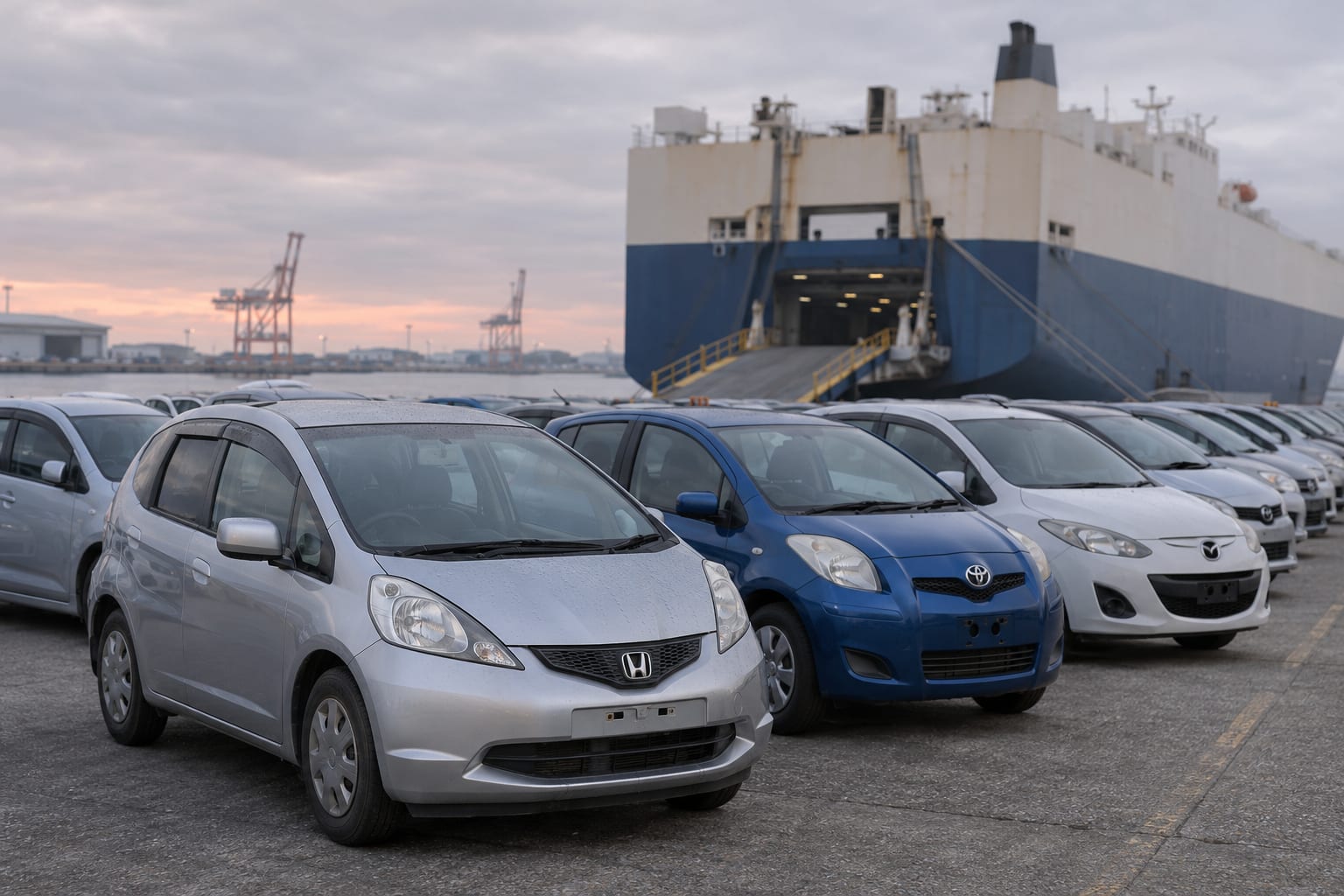 Illustration: Compact cars lined up on a quay beside a roll-on roll-off carrier.
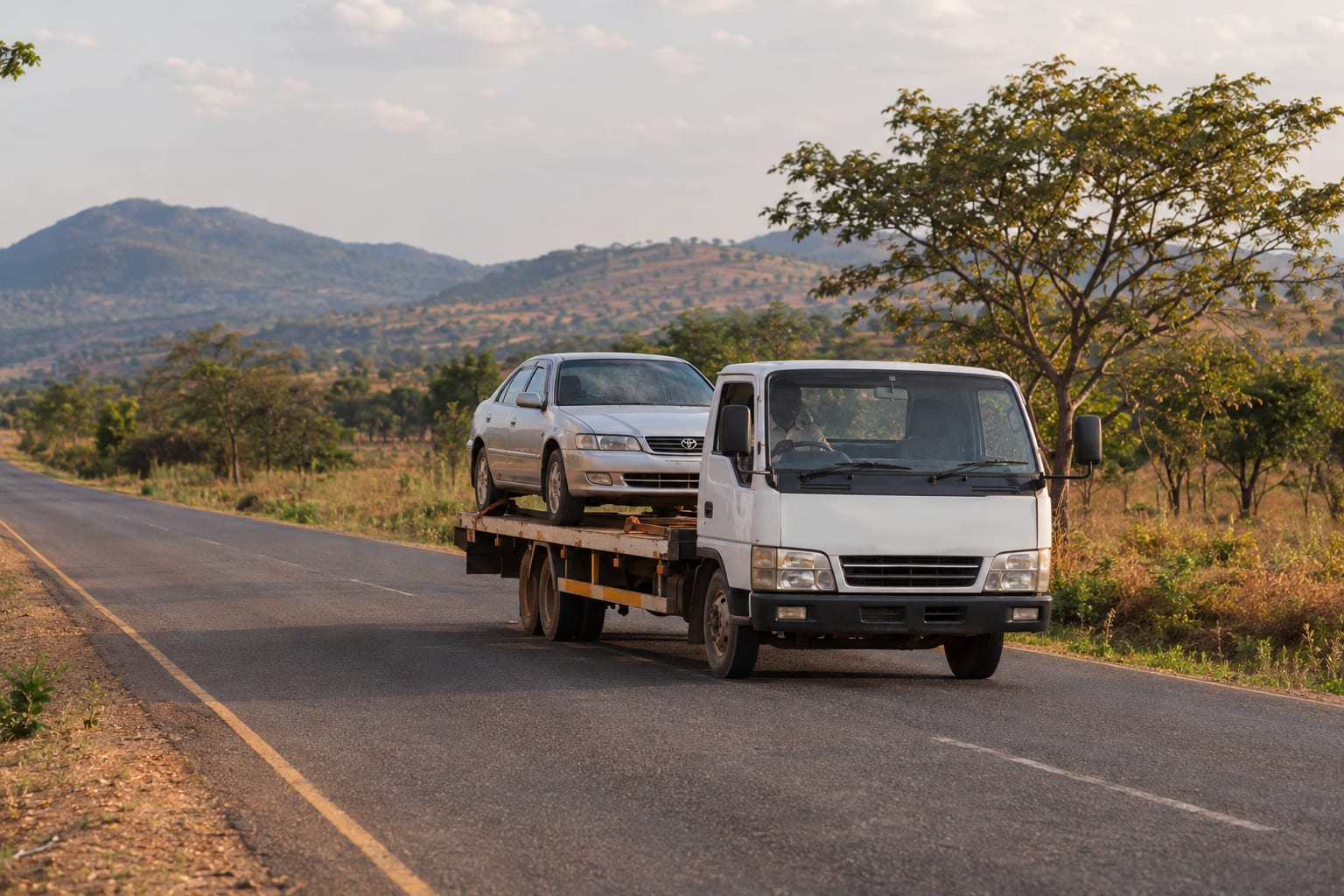 Illustration: A flatbed transporter carries a silver sedan through hilly countryside.
The five steps from choosing a car to tracking the vessel are set out in the how to buy guide.
What should you check before you buy a car from Japan?
Check the auction sheet and its grade, and a second inspection report, before you pay.
Auction sheet and grade
An auction sheet is the condition report written by the Japanese auction house. It records the odometer, repairs, dents and an overall auction grade, where higher means better condition.
A second inspection report confirms the car still matches its sheet and catches anything the auction missed.
Duty and the listed price
Duty, excise and VAT are paid separately on top of the listed price, and the Malawi Revenue Authority (MRA) assesses the final figure at clearance. Read the import rules and regulations page before you buy.
Buying from Japan through Carbarn
Carbarn is a Yokohama-based exporter that sells used Japanese cars to Malawian buyers. Carbarn owns every car it lists. Before you pay, you see the official auction sheet and the Carbarn inspector's own report.
The listed price covers the vehicle, shipping to Dar es Salaam and inspection. Duty, VAT and customs clearance are paid separately in Malawi. Full payment is required up front on a proforma invoice.
Start with the full inventory of used cars from Japan, or narrow it to Toyota cars for Malawi.
What this does not show
The count is a record of export declarations for one tariff code and one period. It leaves several things out.
- It does not explain why the Jan–Sep 2026 figure differs from Jan–Sep 2025.
- It does not count arrivals. A car declared to another country, such as Tanzania, and then driven into Malawi is recorded under that country.
- It covers passenger cars under HS 8703 only, not trucks or buses.
- It says nothing about prices, landed costs or whether any model is a good buy.
- Japan Customs revises the 2026 figure in March 2027.
Method and sources
- Japan Customs trade statistics, used passenger vehicles under HS 8703 with Malawi as the declared destination, Jan–Sep 2026 (first detailed release; revised in March 2027) and Jan–Sep 2025 (fixed). Checked 21 November 2026.
- Carbarn's published pages on how to buy, import rules and regulations, and payment, for the route and payment terms described above. Checked 21 November 2026.